
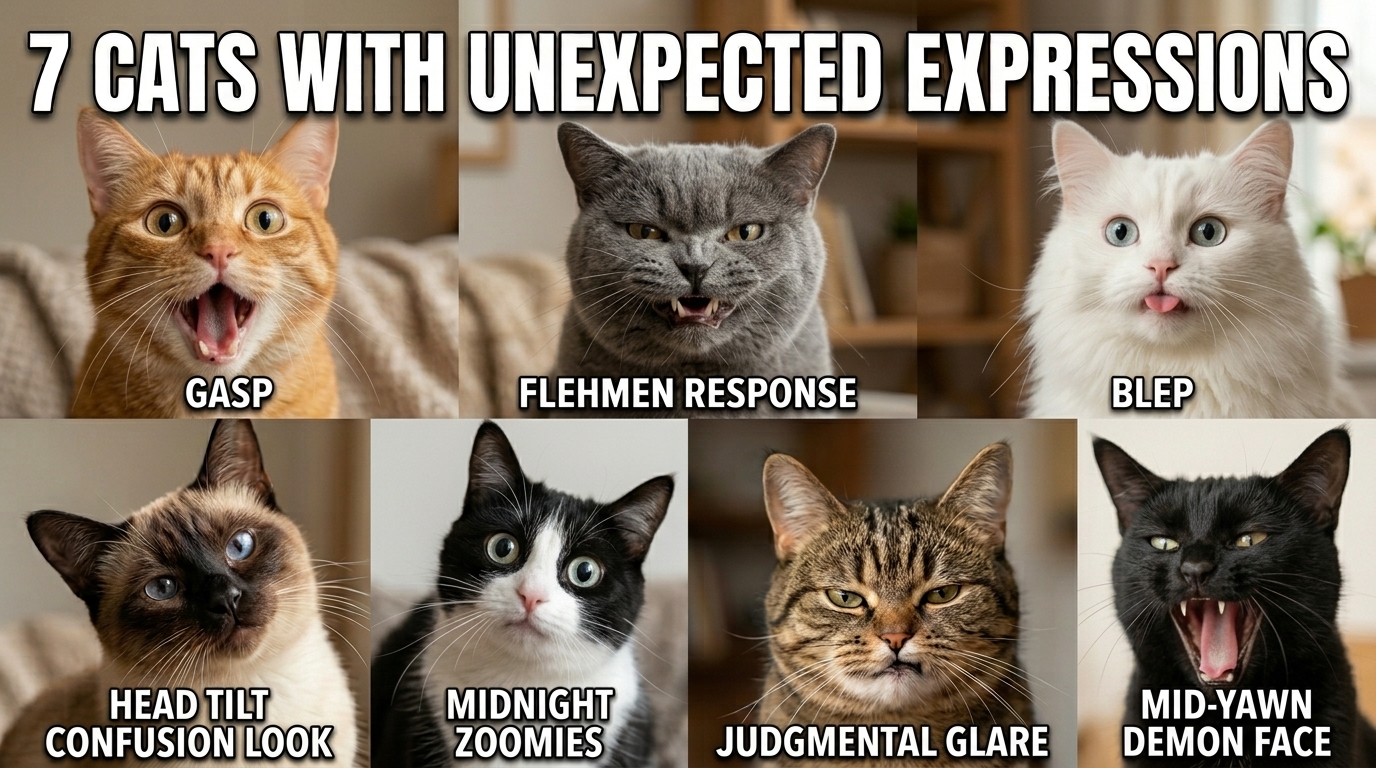
The Dramatic Gasp
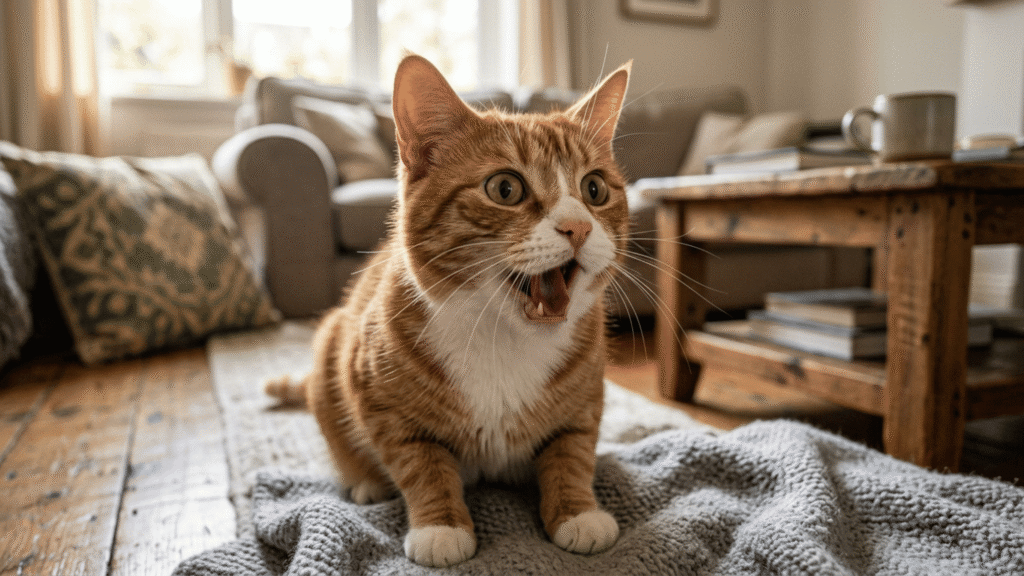
We like to think of cats as dignified, stoic creatures who gracefully navigate our living rooms with aristocratic grace. However, every cat owner knows there are moments when that illusion shatters completely. Enter the “Dramatic Gasp”—the wide-eyed, jaw-dropped look that makes it appear as though your cat has just witnessed a scandalous betrayal or a plot twist straight out of a soap opera.
Why Cats Make the Gasping Face
While to us it looks like pure dramatic flair, this unexpected expression usually happens when a cat experiences a sudden sensory overload. Scientific research shows that cats possess around 300 unique facial expressions. When a cat quickly drops its lower jaw and opens its eyes wide, it’s often processing a sudden sound, tasting an unfamiliar scent, or reacting to a sudden movement across the room.
Common Triggers for the “Gasp”:
- The Sneeze Interruption: Catching a cat right in the middle of a sneeze freeze.
- The Fleeting Bug: Spotting a fly buzzing at top speed across the ceiling.
- The Sneak Attack: Realizing another pet in the house was standing directly behind them.
The Visual Impact on Social Media
Photos and videos of cats making the “shocked” face are among the highest-performing pet content across platforms. The contrast between a cat’s usual calm demeanor and a goofy, shocked reaction creates instant comedy that readers can’t help but re-pin and share.
The Flehmen Response (The Smelling Shock)
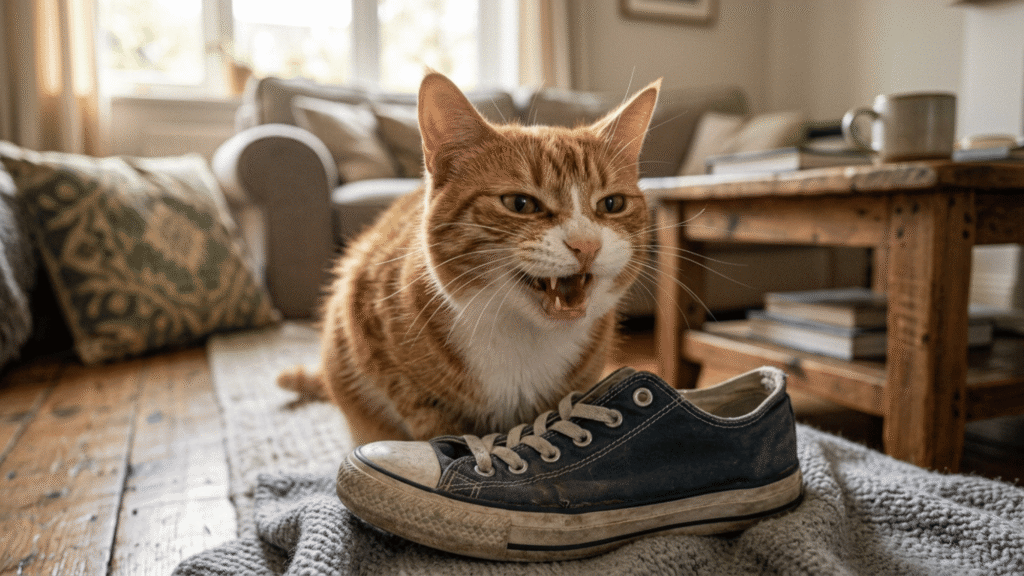
If you have ever caught your cat sniffing a blanket, a shoe, or even your hand, only to immediately pull back with a curled lip, squinted eyes, and open mouth, you have witnessed the Flehmen Response. While it looks like your cat is offended by an unpleasant odor, the reality behind this unexpected expression is fascinating.
What Is the Flehmen Response?
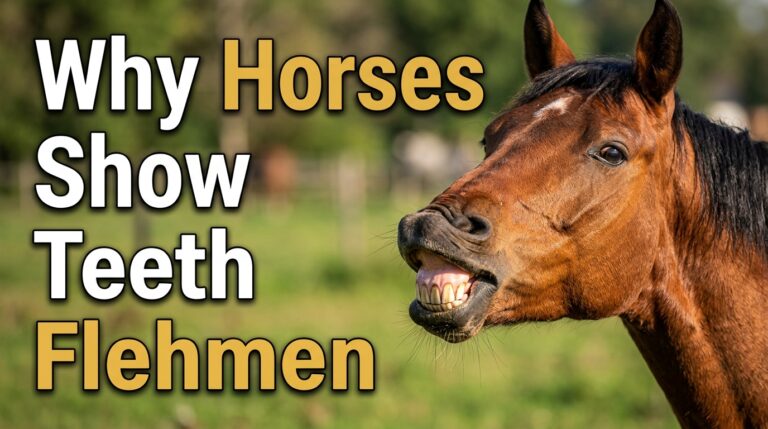
The Flehmen response (often dubbed the “stink-face”) is a biological mechanism. Cats have a specialized olfactory sense organ located in the roof of their mouth called the Vomeronasal Organ (or Jacobson’s Organ).
When a cat encounters an intriguing or complex scent—usually containing pheromones—they curl their upper lip and pull back their whiskers to draw air directly toward this organ.
Why It Looks So Hilarious
To human observers, the Flehmen face looks like absolute disgust or complete shock. In reality, your cat is analyzing chemical signals left behind by other animals or unusual environment scents.
Where You’ll See It Most Often:
- After sniffing fresh laundry or newly brought-in shoes.
- Interacting with new cat trees or scratchers.
- Sniffing another pet’s bed or coat.
Understanding this expression gives owners a fun glimpse into how cats experience the world through smell rather than sight alone!
The Blep (The Forgotten Tongue)
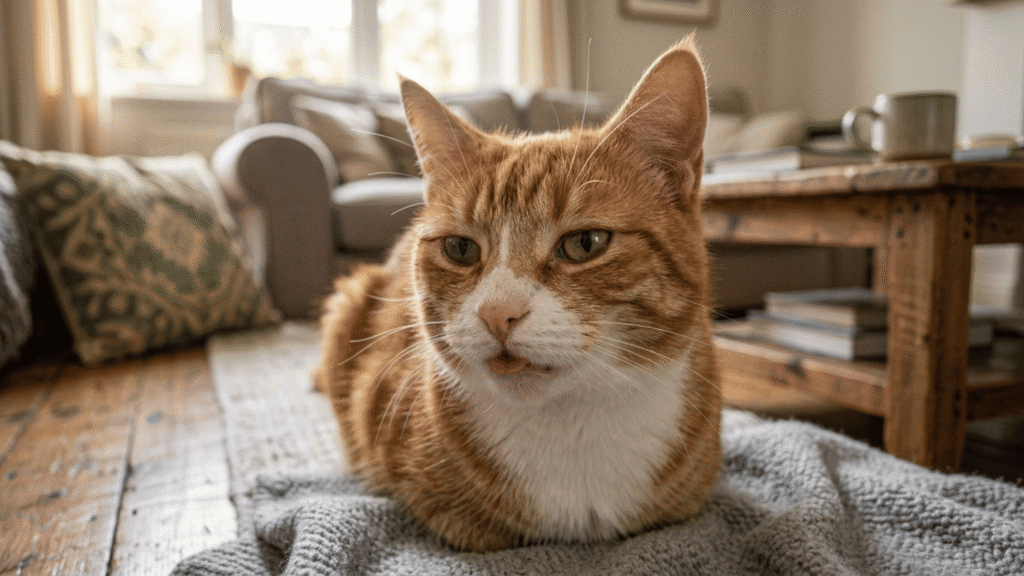
There is almost nothing cuter or more unexpected than looking over at your cat to find a tiny pink tip of their tongue sticking out of their mouth. In internet culture, this expression is universally known as a “Blep.” But why do cats suddenly forget to put their tongues back in?
Reasons Behind the Infamous Blep
- Relaxation & Distraction: Most often, a blep occurs when a cat was grooming itself and got suddenly distracted by a noise or movement. Their jaw muscles relax so deeply that they simply forget to retract the tongue!
- Missing Teeth or Flehmen Residue: Older cats or those with missing front teeth naturally have less structure to keep the tongue tucked away.
- Deep Sleep Stages: Just like humans, cats enter deep REM sleep cycles where their facial muscles lose tension completely.
When to Pay Attention
While the occasional blep is 100% harmless and viral-worthy, a tongue that stays out constantly alongside drooling can sometimes indicate dental issues or jaw discomfort. For 99% of cats, however, it’s just a cute, quirky glitch in their daily routine.
The Midnight Zoomies Face (The Crazy Eyes)
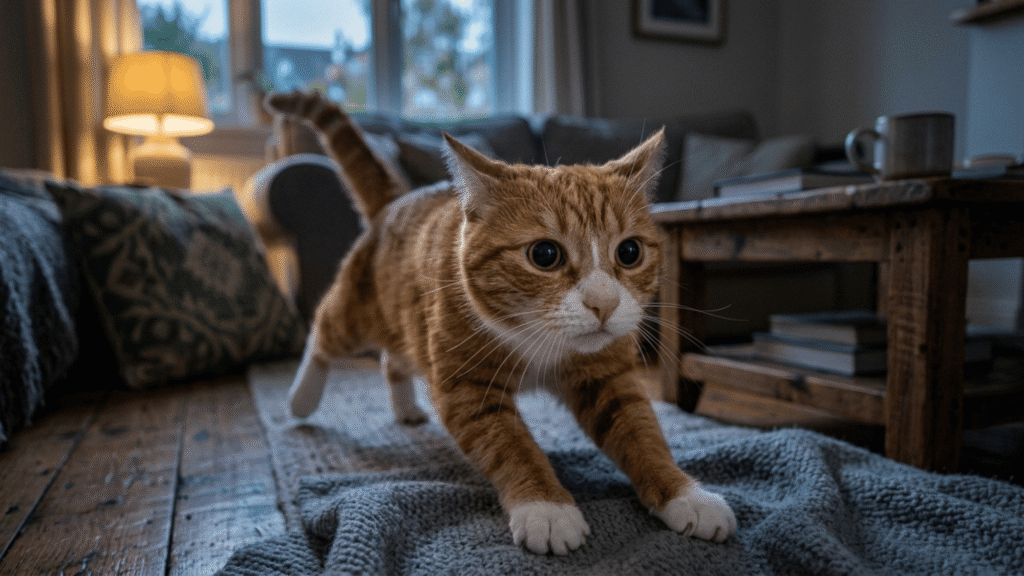
It usually happens at 10 PM or 3 AM: your cat’s pupils dilate until their eyes are entirely black, their ears pin back into “airplane mode,” and they sprint across the living room carpet at lightspeed. The facial expression accompanying the “Zoomies” is a blend of wild excitement and sheer chaotic energy.
The Anatomy of the Zoomie Face
During a zoomie episode, a cat’s face completely shifts:
- Dilated Pupils: Highly expanded to take in maximum light and track fast-moving target visual cues.
- Pinned Ears: Flattened sideways or backward to streamline movement and signal high arousal.
- Forward Whiskers: Whiskers stiffened forward to navigate obstacles while running.
What Causes the sudden outburst?
Scientifically known as Frenetic Random Activity Periods (FRAPs), zoomies are a natural release of pent-up energy. Indoor cats who spend long hours resting accumulate energy that needs an outlet. When that energy bursts, the resulting facial expressions are a raw display of their wild predator instincts playing out in a living room.
The Judgmental Glare
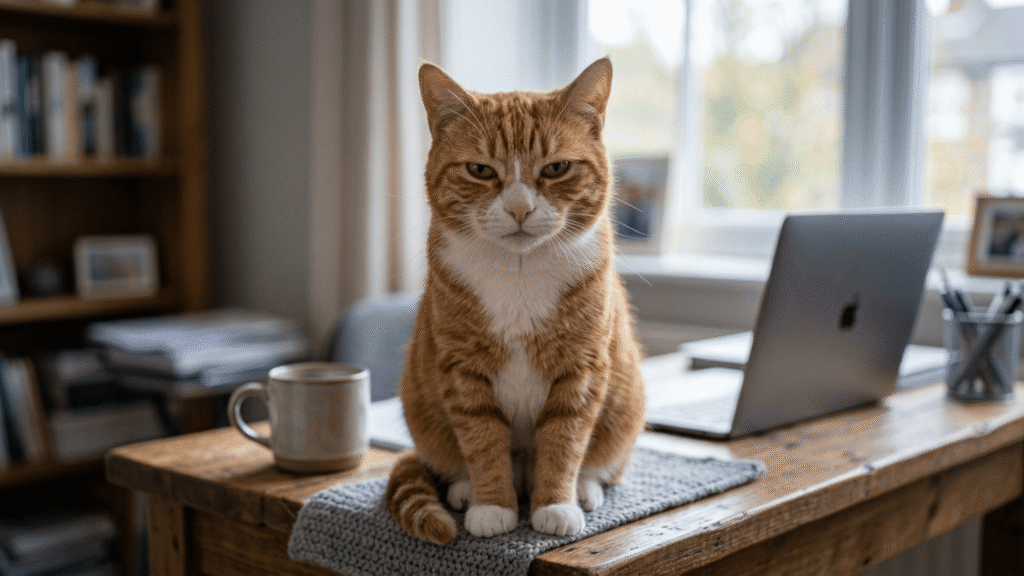
Few things are as unnerving—and hilarious—as looking up from your desk to find your cat staring at you with narrow eyes, a flat mouth, and a look of quiet disapproval. Known as the Judgemental Glare, this unexpected expression has inspired thousands of internet memes.
Decoding the “Judging” Expression
While it looks like disdain to humans, a feline “glare” often means something very different in cat language.
- The Slow Blink: If the eyes are slowly closing and opening, this isn’t judgment—it’s actually the ultimate sign of feline love and trust, often called a “cat kiss”!
- The Empty Bowl Stare: If the eyes are wide and unblinking, your cat might be signaling that their schedule (or dinner bowl) is slightly off track.
- Observational Focus: Cats naturally spend hours monitoring their environment. A deadpan face often just means they are resting their facial muscles while keeping an eye on you.
Turning Judgment Into Bonding
Understanding these subtle facial cues helps owners distinguish between a cat that wants space and a cat that is quietly asking for affection or play.
The Mid-Yawn “Demon” Face
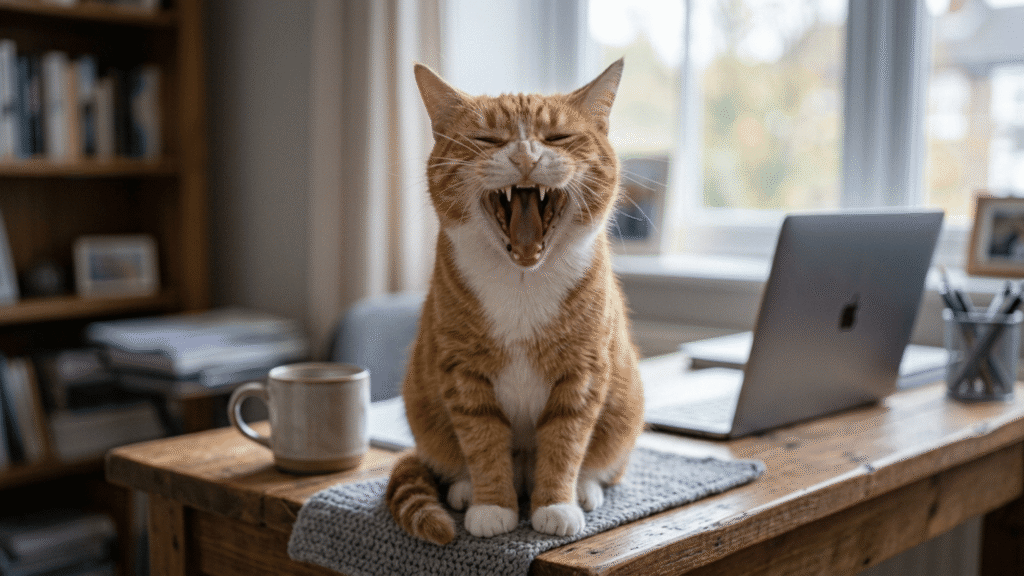
Cats are the definition of cuteness—until you catch them on camera midway through a yawn. In a single millisecond, a sweet feline transforms into a tiny dragon with bared fangs, squished eyes, and a wrinkled nose. These split-second expressions are viral gold for Pinterest and blog creators alike.
Why Cat Yawns Look So Intense
A cat’s jaw structure is designed for predatory efficiency. When a cat stretches its jaw during a deep yawn:
- Fangs on Display: Their canine teeth are fully revealed.
- Nose Wrinkling: Facial skin pulls backward, creating dramatic wrinkles around the muzzle.
- Eye Squinting: The eyes squeeze shut, completely altering their facial proportions.
Capturing the Perfect Snapshot
Because yawning happens in seconds, capturing these hilarious expressions requires fast shutter speeds or snapping stills from a video recording. The resulting photos show the humorous contrast between our cozy domestic pets and their wild instincts.
The Confusion Tilt
When you play an unusual sound—like a squeaky toy, a bird call, or a high-pitched voice—your cat might perk up their ears, widen their eyes, and slowly tilt their head to one side. This expression of pure curiosity is one of the most endearing reactions a pet owner can capture.
The Psychology Behind the Head Tilt
Why do cats make this curious expression?
- Audio Alignment: Cats use their outer ear flaps (pinnae) to pinpoint where a sound is coming from. Tilting the head shifts the angle of their ear canals, helping them calculate distance and height.
- Visual Clarity: Tilting the head can help cats adjust their visual angle to get a better look at your mouth or the object making the sound.
- Human Interaction: Cats quickly learn that making cute faces gets them positive attention, treats, or play!
How to Trigger the “Curious” Face Safely
Play soft, novel sounds like gentle whistling or rustling paper to engage your cat’s natural curiosity without causing stress or alarm.



5