
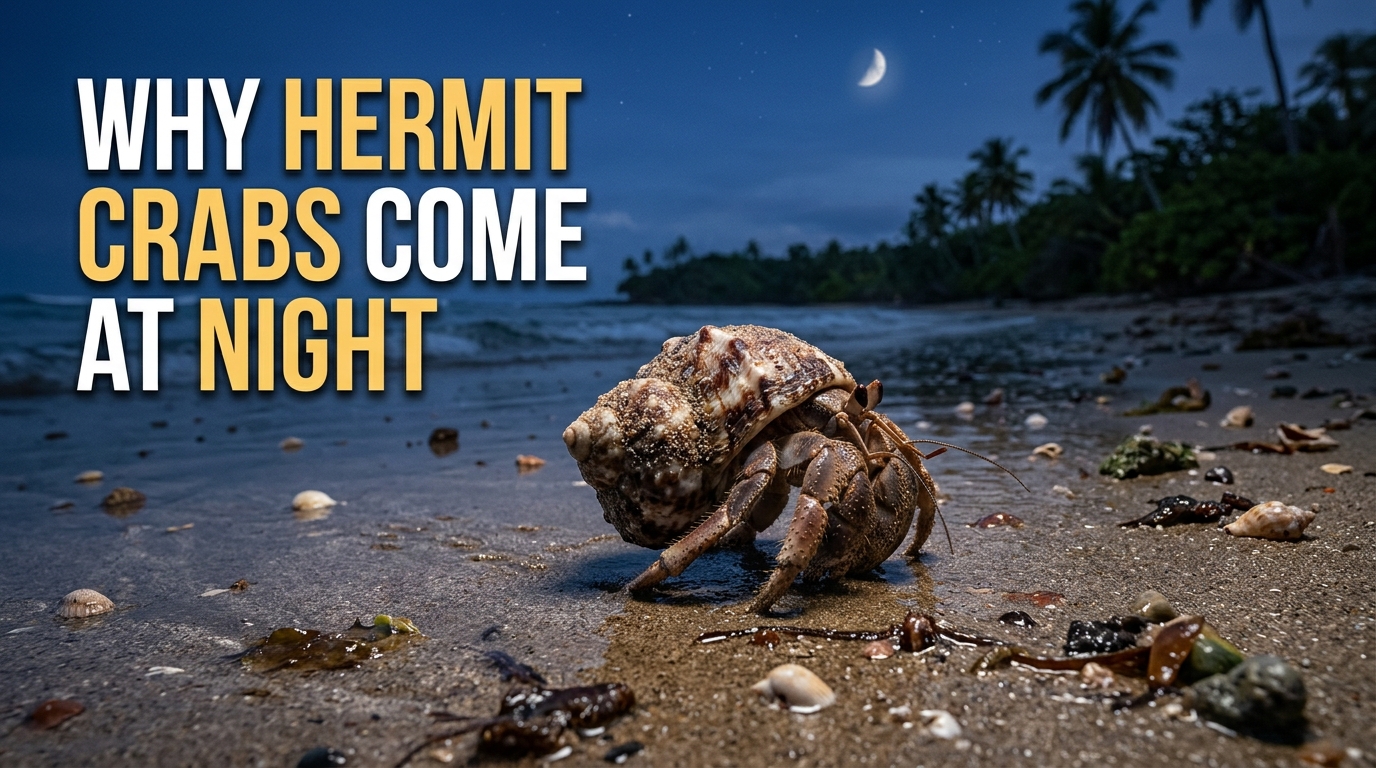
Why Hermit Crabs Come Out at Night
Have you ever wondered why hermit crabs seem to disappear during the day but suddenly become active after sunset? These fascinating little creatures often spend daylight hours hiding beneath rocks, inside burrows, or among pieces of driftwood. When darkness arrives, they may emerge to search for food, explore their surroundings, and look for new places to hide.
But nighttime activity is more than just a strange habit. It can help hermit crabs avoid certain predators, reduce exposure to heat, and find food under favorable conditions. Their behavior also reveals how these small animals have adapted to life on beaches, in forests, and in other habitats.
Let’s explore why hermit crabs come out at night and discover what makes their after-dark adventures so interesting.
Nighttime Helps Hermit Crabs Avoid Predators
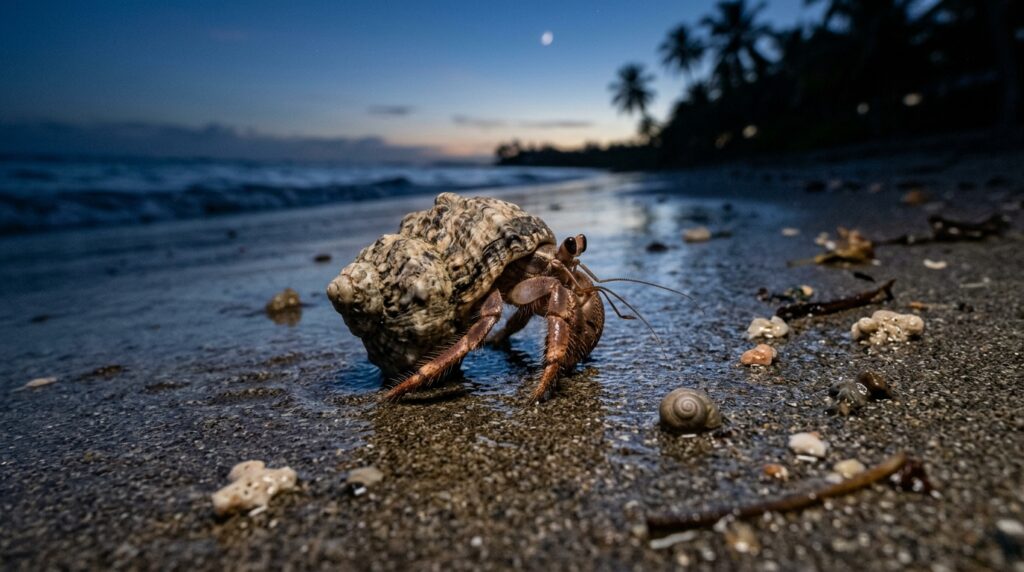
One important reason many hermit crabs become active at night is predator avoidance. Depending on their species and habitat, hermit crabs may face threats from birds, larger crabs, fish, and other animals.
Darkness can make a moving hermit crab less noticeable to predators that hunt mainly during daylight. By searching for food after sunset, a crab may reduce the chance of being spotted.
However, nighttime is not completely safe. Some predators are nocturnal too, so hermit crabs still need to remain alert and find suitable shelter.
Cooler Temperatures Help Them Stay Moist
For many land hermit crabs, hot daytime conditions can be challenging. These animals need to maintain adequate moisture for their bodies and respiratory structures to function properly.
As temperatures fall in the evening, the risk of drying out may decrease. Cooler air and damp surfaces can make nighttime movement more manageable, especially in warm tropical environments.
This is particularly important for land hermit crabs living in places where the daytime sun can quickly heat the ground. Staying hidden during the hottest hours and emerging later can help them conserve moisture.
Not every species follows the same schedule, though. Temperature, humidity, rainfall, and seasonal changes can all influence when a hermit crab becomes active.
They Search for Food After Sunset
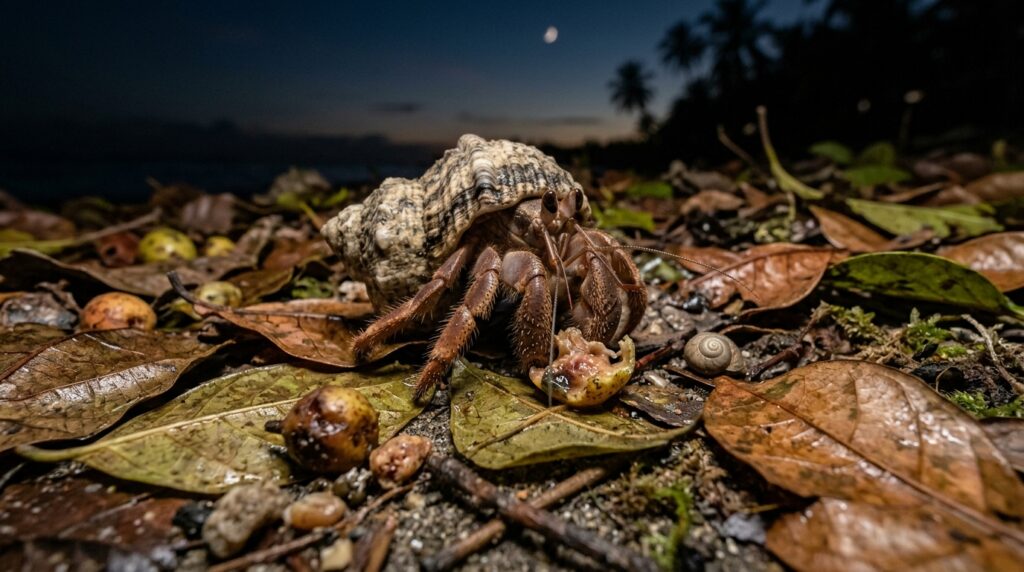
Hermit crabs are often opportunistic feeders. Depending on the species, their diet may include decaying leaves, fallen fruit, algae, dead plant material, and other organic matter. Some aquatic species also eat small animals.
Nighttime can offer excellent opportunities to find food. Fallen fruit and decaying vegetation may be easier to explore when the environment is cooler and less disturbed by daytime activity.
Hermit crabs use their antennae and sensory structures to investigate their surroundings. When they discover something edible, they can use their small claws to handle and consume it.
Their feeding habits also make them useful members of many ecosystems because they help break down organic material and recycle nutrients.
Darkness Gives Them More Opportunities to Explore
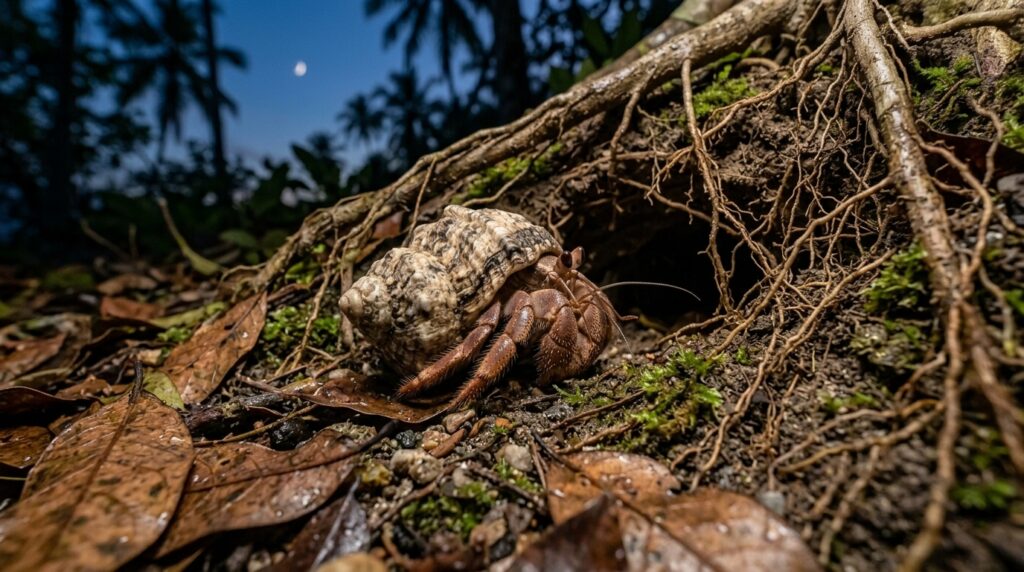
Hermit crabs don’t spend every night searching for food. They may also move around to explore their environment, investigate new hiding places, or interact with other crabs.
These activities are important because a suitable hiding place can provide protection from predators and harsh environmental conditions.
Some hermit crabs may travel considerable distances between feeding areas and shelter. Others remain close to their preferred hiding spots.
Their movement patterns depend on their species, surroundings, and access to food and moisture. What looks like random wandering may actually be part of their normal search for resources.
They May Look for Better Shells
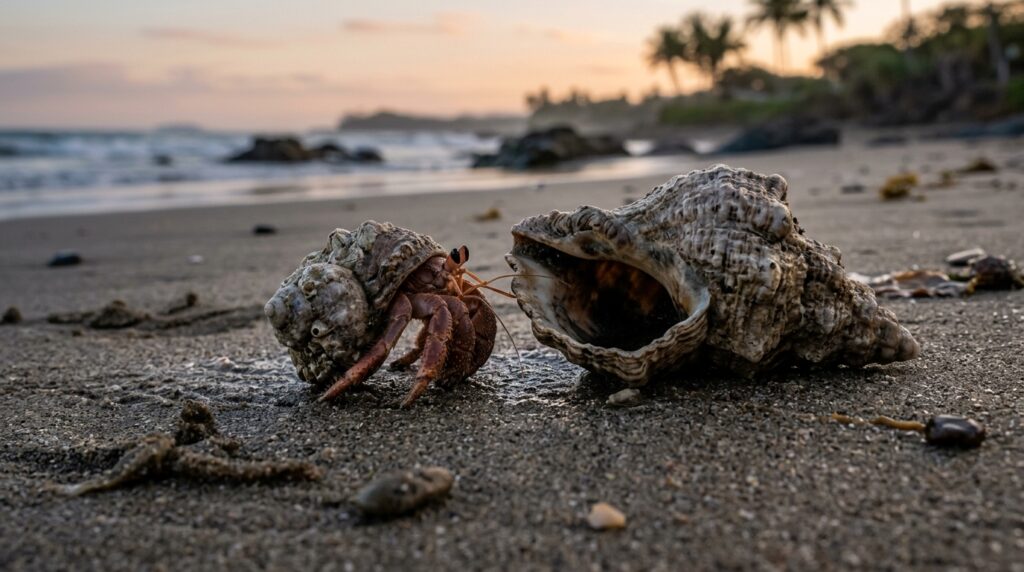
An important behavior to understand when observing hermit crabs.
Hermit crabs are famous for carrying empty shells on their backs. Unlike true crabs, their soft abdomens are not fully protected by a hard external covering, so a suitable shell provides essential protection.
As a hermit crab grows, its current shell may become too small. It may also look for a shell that offers better protection or fits its body more comfortably.
When an appropriate shell becomes available, a crab may inspect it before deciding whether to move inside. Some hermit crabs also gather around a desirable shell, and certain species can participate in coordinated shell exchanges.
Nighttime movement may provide opportunities to search for shells, but shell searching is not exclusively a nighttime activity. The timing varies by species and environmental conditions.
Humidity and Rain Can Influence Their Activity
Nighttime is often more humid than the hottest part of the day, especially in tropical environments. Rain can also increase surface moisture and create favorable conditions for land hermit crabs.
When the ground is damp, crabs may find it easier to move around without losing moisture as quickly. This can encourage them to leave their hiding places and explore.
However, humidity alone does not determine their behavior. Some crabs remain active during daylight when conditions are suitable, while others may stay hidden even on humid nights.
The relationship between moisture and activity is especially important for understanding land hermit crabs in coastal and tropical habitats.
Are All Hermit Crabs Nocturnal?
No. Although many land hermit crabs are mainly active at night, not all hermit crabs follow a strictly nocturnal lifestyle.
Different species have different activity patterns. Some aquatic hermit crabs are active during the day, at night, or during both periods. Their routines can depend on tides, food availability, predator activity, temperature, and light levels.
Even individual crabs may change their behavior when their environment changes.
For example, a hermit crab in a humid, sheltered environment may behave differently from one living in a hot, exposed area. Captive hermit crabs may also adjust their activity according to the lighting, temperature, and humidity of their enclosure.
Therefore, nighttime activity is common in some hermit crabs, but it should not be treated as a universal rule.
Why Do Pet Hermit Crabs Hide During the Day?
If you keep pet hermit crabs, you may notice that they spend much of the day beneath climbing structures, inside hides, or buried in their substrate.
This is often normal behavior. Pet land hermit crabs may be more active after the room becomes dark and quiet.
However, daytime hiding alone does not prove that a crab is healthy. The enclosure must also provide suitable humidity, temperature, fresh water, saltwater prepared for marine animals, appropriate food, and enough space to behave naturally.
For terrestrial pet hermit crabs, access to both fresh and properly prepared saltwater is important. They also need suitable substrate for digging and molting, as well as several appropriately sized empty shells.
Avoid digging up a buried crab simply because it has not appeared for several days. Hermit crabs may bury themselves while molting, and disturbing them during this vulnerable process can cause serious harm.
If a crab shows additional signs of distress, such as an unusual foul odor or unexplained loss of limbs, investigate its care conditions and seek advice from an experienced exotic-animal veterinarian when appropriate.
Conclusion
Hermit crabs come out at night for several reasons, including avoiding certain predators, finding food, exploring their surroundings, and reducing exposure to hot, dry conditions. Their activity patterns are shaped by their species, habitat, humidity, temperature, and access to shelter.
Although many land hermit crabs are primarily nocturnal, not every species follows the same routine. Some are active during the day, while others change their schedules according to environmental conditions.
The next time you see a hermit crab exploring after sunset, remember that its nighttime adventure may be an important part of its survival.