Why Horses Show Teeth Flehmen
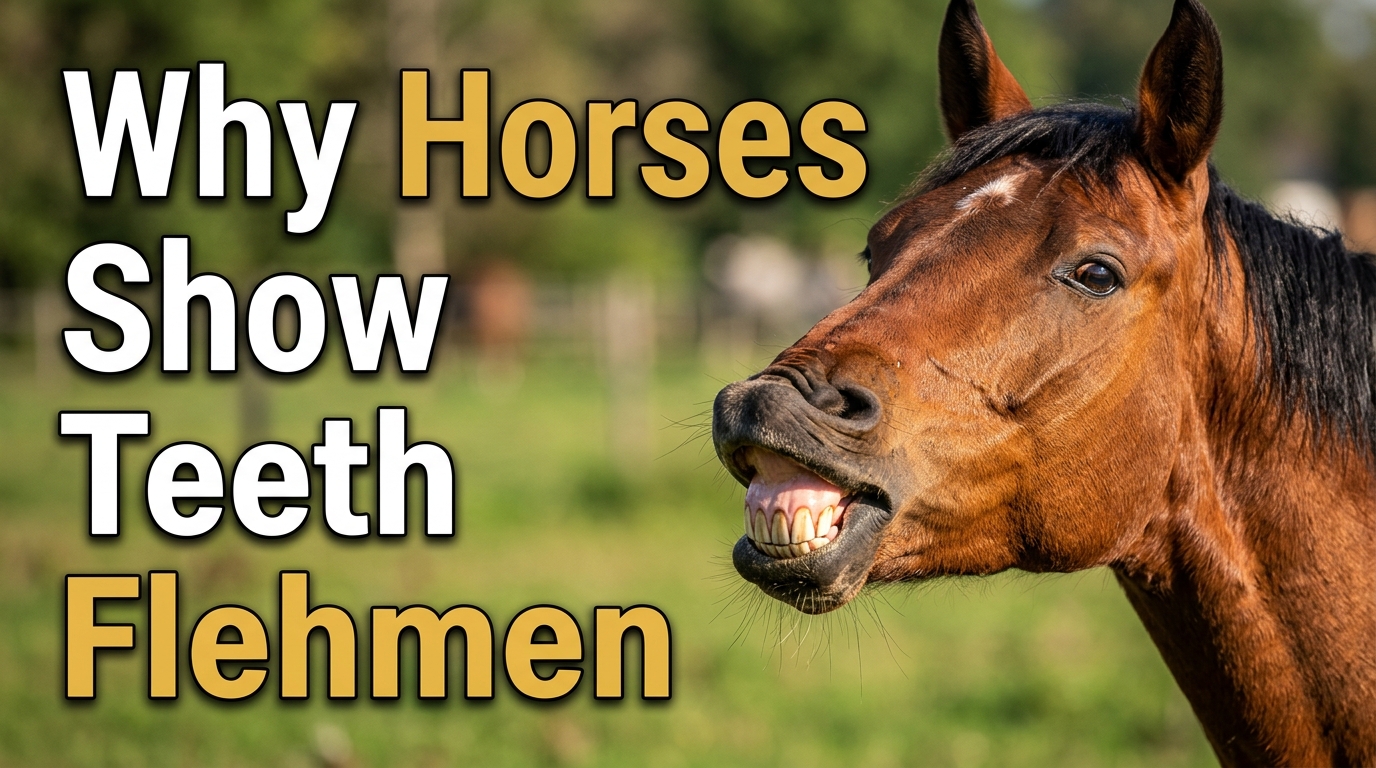
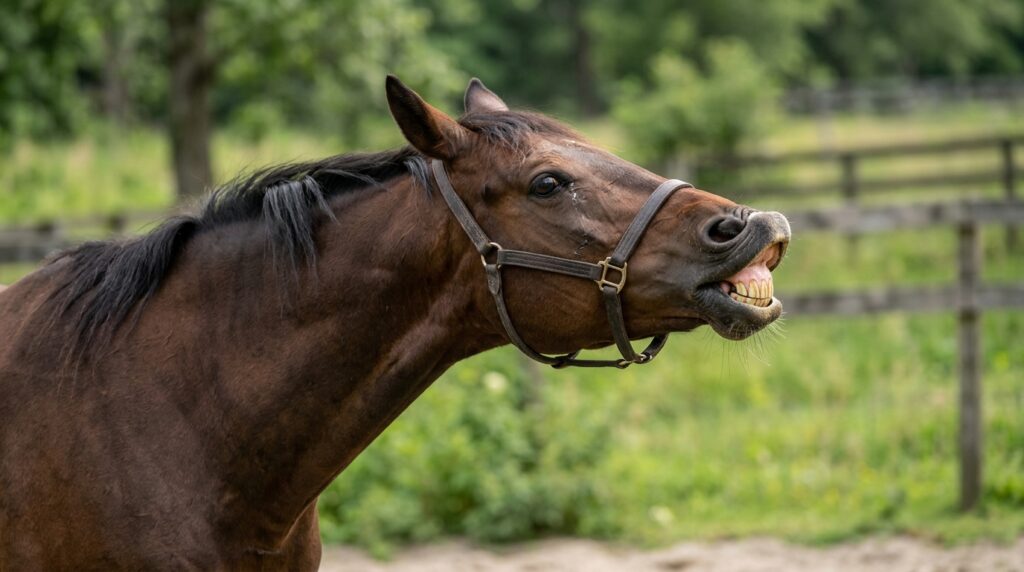
Have you ever seen a horse lift its head, stretch its neck, curl back its upper lip, and expose its teeth as if it were making a funny face? This unusual expression can look like a grin, a laugh, or even a sign that something smells terrible.
However, horses are not smiling or showing their teeth because they find something funny. This distinctive behavior is called the flehmen response, and it helps horses investigate certain scents and chemical signals in their environment.
The expression may look amusing, but it serves an important biological purpose. From detecting reproductive signals to gathering information about unfamiliar smells, flehmen offers a fascinating glimpse into how horses experience the world.
Let’s explore why horses show their teeth, when this behavior occurs, and how to tell it apart from other facial expressions.
What Is the Flehmen Response in Horses?
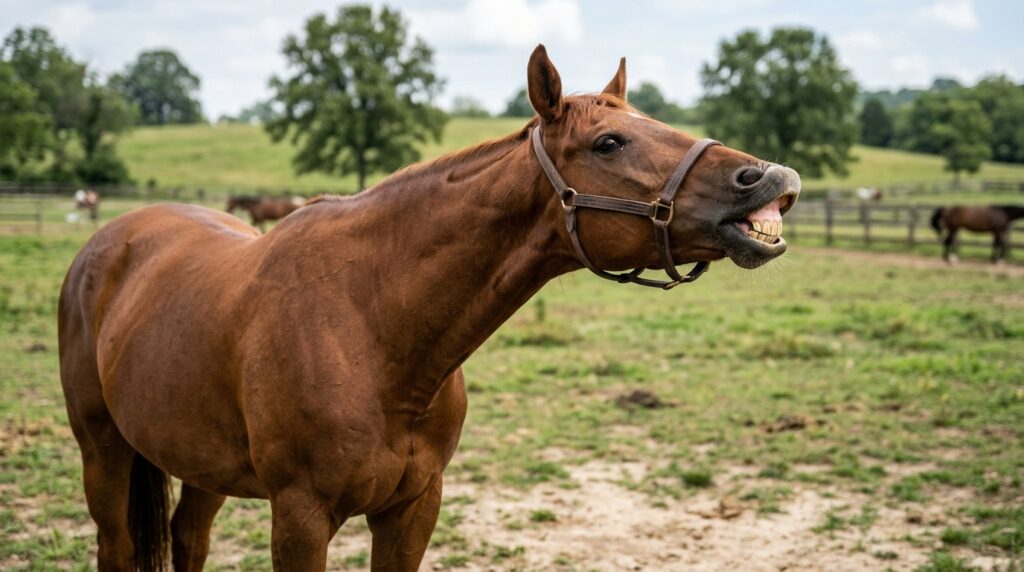
The flehmen response is a behavior in which a horse raises its head, extends its neck, lifts its upper lip, and often exposes its front teeth. The horse may hold this position for several seconds before returning to normal.
This behavior helps direct certain scent-related chemicals toward a specialized sensory structure called the vomeronasal organ.
Unlike ordinary smelling, which primarily involves the main olfactory system, the flehmen response is associated with investigating particular chemical cues. These cues can carry useful information about other horses and their surroundings.
Although the expression may appear dramatic, it is a normal behavior in many horses and other mammals.
Horses Use Flehmen to Investigate Smells
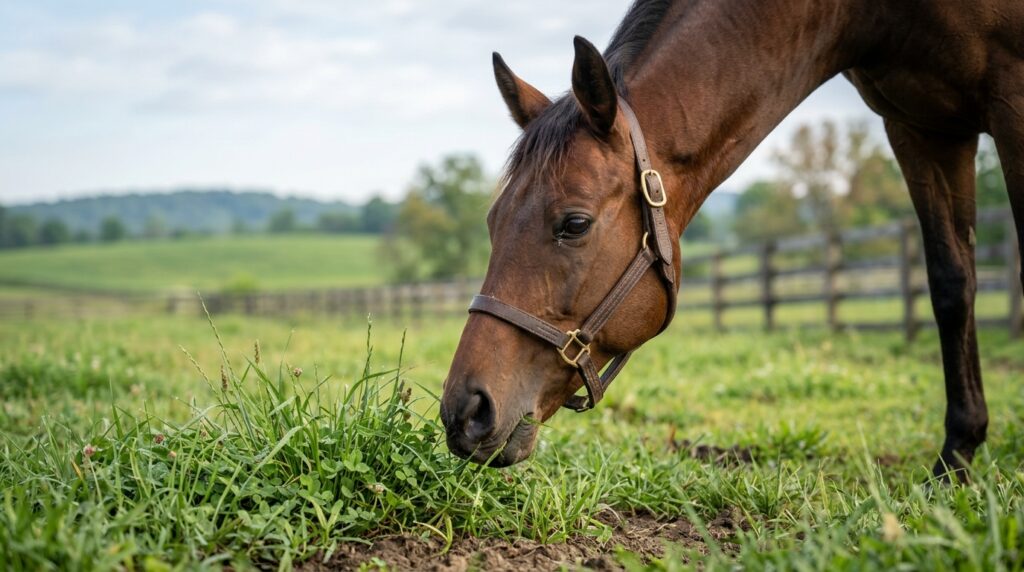
The response is especially noticeable when a horse encounters an unfamiliar scent.
Horses rely heavily on their sense of smell to gather information about their environment. They may investigate urine, manure, reproductive odors, unfamiliar animals, or other scent sources.
When a horse encounters an interesting smell, it may pause, raise its head, and perform the flehmen response. The posture helps it investigate certain chemical signals more effectively.
This behavior is not necessarily a sign that the smell is unpleasant. In many cases, the horse is simply gathering information.
For example, a horse may perform flehmen after sniffing a patch of grass where another horse has urinated. The behavior may help it investigate chemical information that ordinary sniffing alone does not fully explain.
Reproductive Signals Are a Major Reason
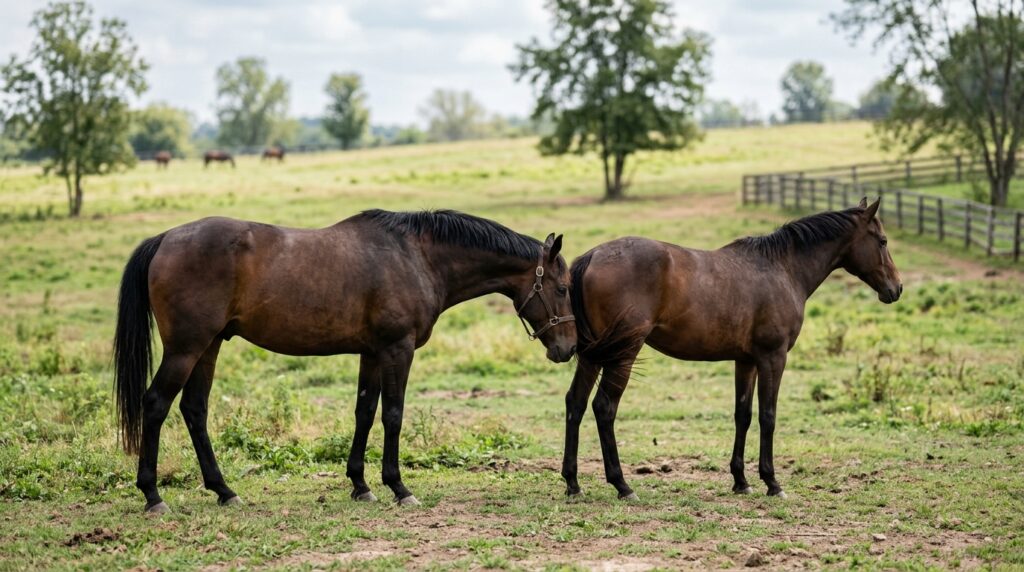
One of the best-known reasons horses perform flehmen is to investigate reproductive odors.
Stallions may show this response after smelling the urine or reproductive secretions of a mare. These odors can contain chemical signals associated with the mare’s reproductive condition.
The response can help the stallion gather information relevant to mating behavior.
Mares may also display flehmen, including when investigating scents associated with other horses. The behavior is not restricted to males, although its frequency and context can differ between sexes.
It is important to remember that flehmen alone does not prove that a mare is in heat or that a stallion is ready to mate. Horses use several behavioral and physiological signals, and a single facial expression cannot provide a complete assessment of reproductive status.
The Vomeronasal Organ Helps Horses Detect Chemical Signals
To understand flehmen properly, it helps to know a little about the horse’s anatomy.
Horses have a specialized sensory structure called the vomeronasal organ, also known as Jacobson’s organ. It is associated with detecting certain chemical cues, including signals that may be relevant to social and reproductive behavior.
During flehmen, the horse raises its head and curls its upper lip in a way that is thought to help move scent-bearing material toward the sensory system involved in this response.
This is different from simply taking a deep breath through the nose.
The vomeronasal system is found in various mammals, including cats, cattle, goats, and deer. These animals may display similar lip-curling expressions when investigating certain scents.
Although the general function is well established, the exact role of individual chemical signals can vary by species and context.
Both Male and Female Horses Can Show Flehmen
A common misconception is that only stallions perform flehmen. In reality, both male and female horses can display this behavior.
Stallions may show it frequently when investigating mares or reproductive scents. Mares can also respond to unfamiliar odors, urine, and other chemical cues.
Geldings may perform flehmen too. Castration does not eliminate every form of scent-investigating behavior, because horses continue to use smell to explore their environment.
The frequency of flehmen depends on several factors, including age, hormones, experience, and the type of scent being investigated.
If you observe a horse performing the behavior, consider what it has just smelled rather than assuming its sex or reproductive state explains everything.
Why Do Horses Show Their Teeth After Smelling Urine?
Urine can contain chemical compounds that provide information about the animal that produced it. When a horse smells another horse’s urine, it may detect cues related to identity, sex, reproductive condition, or other biological characteristics.
If the scent is particularly interesting, the horse may perform flehmen.
This is one reason the behavior is often seen in breeding environments, where horses encounter reproductive odors more frequently.
However, horses do not perform flehmen every time they smell urine. They may simply sniff and move on, depending on the scent and circumstances.
Flehmen is best understood as a specialized investigation behavior rather than an automatic response to every odor.
How Can You Recognize Flehmen?
The flehmen response has several recognizable features.
-
Raised head: The horse lifts its head, often while extending its neck.
-
Curled upper lip: The upper lip rolls upward, sometimes exposing the front teeth.
-
Brief pause: The horse may remain still for several seconds while investigating the scent.
-
Focused attention: The behavior often follows sniffing or close investigation of an object, animal, or patch of ground.
-
Return to normal: The horse usually lowers its lip and resumes ordinary behavior afterward.
The combination of an elevated head and curled upper lip is particularly characteristic.
Still, not every display of exposed teeth is flehmen. Context matters, especially when the horse is showing signs of discomfort or aggression.
Is Flehmen a Sign of Pain or Aggression?
Usually, flehmen is a normal scent-investigating behavior. By itself, it is not generally a sign of pain or aggression.
However, horses can show their teeth for other reasons. They may threaten another horse, react defensively, or display discomfort when handled or touched.
Pain can also cause unusual facial expressions and changes in behavior, but these should not automatically be labeled as flehmen.
Pay attention to the whole horse. Flattened ears, tense muscles, repeated attempts to bite, unusual head movements, reduced appetite, or reluctance to move may indicate a problem unrelated to scent investigation.
If a horse repeatedly opens its mouth, grinds its teeth, or shows unusual facial movements without an obvious scent-related trigger, veterinary assessment may be appropriate.
The key difference is context: a brief lip curl after sniffing something is generally normal, while repeated or unexplained signs of discomfort deserve closer attention.
Do Other Animals Perform the Flehmen Response?
Horses are not the only animals known for this expression. Several mammals display similar lip-curling behavior when investigating chemical cues.
Examples include:
-
Cats: May curl their lips after smelling urine or another unfamiliar odor.
-
Cattle: Can perform flehmen when investigating reproductive scents.
-
Goats and sheep: May use the response when evaluating odors associated with reproduction.
-
Deer: May show flehmen when investigating scent cues from other animals.
The exact purpose and frequency vary between species, but the shared behavior demonstrates how important chemical communication is in the animal world.
What looks like a funny face to humans can be a sophisticated way for an animal to gather information.
Conclusion
When horses show their teeth by curling their upper lip, they may be performing the flehmen response. This behavior helps them investigate particular chemical signals, often including reproductive scents and odors from other horses.
Both male and female horses can display flehmen, and the expression is generally a normal part of scent investigation. It should not automatically be interpreted as a smile, a sign of disgust, or evidence of aggression.
The next time a horse raises its head and curls its lip after sniffing something, you will know that it may be doing far more than making a funny face. It is gathering information through a specialized sensory system that humans cannot directly experience in the same way.