Why Do Pigs Like Mud?
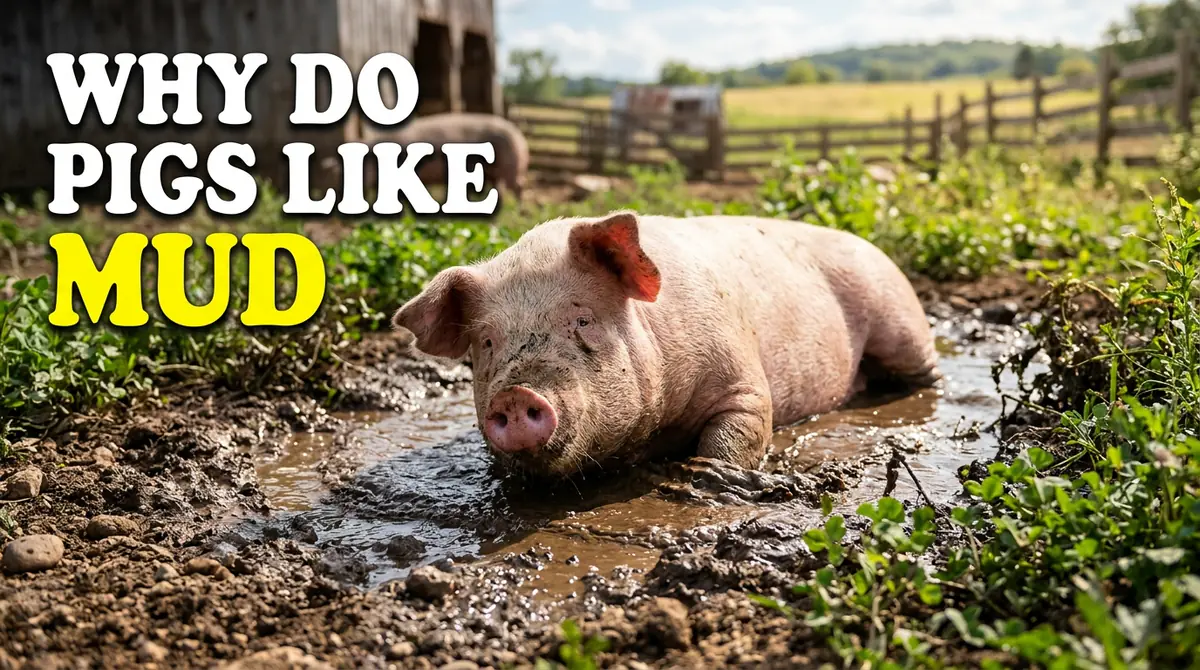
When people imagine pigs, one familiar picture often comes to mind: a pig happily rolling around in a muddy puddle. This behavior may look messy, but it serves several important purposes.
Pigs do not roll in mud simply because they enjoy being dirty. Mud can help them regulate their body temperature, protect their skin from sunlight, and reduce irritation caused by insects. For an animal that has limited ability to cool itself through sweating, a muddy wallow can be particularly valuable.
But there is more to this behavior than keeping cool. Mud wallowing is also a natural activity that allows pigs to explore their environment and express normal behavior.
Let’s discover why pigs love mud, how wallowing helps their bodies, and why access to a suitable wallowing area matters for their welfare.
1. Mud Helps Pigs Stay Cool
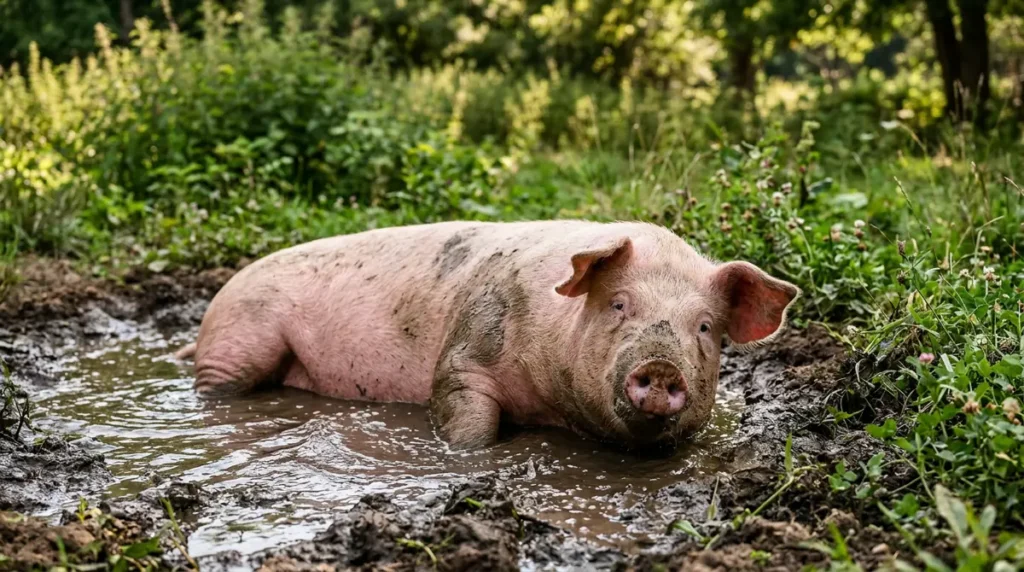
The biggest reason pigs wallow in mud is temperature regulation.
Unlike humans, pigs cannot rely on widespread sweating to cool their bodies efficiently. They have functional sweat glands, but their capacity for evaporative cooling through sweating is limited.
When the weather becomes hot, pigs may seek shade, drink water, lie on cool surfaces, or enter a muddy wallow.
As water in the mud evaporates from their skin, it removes heat from the body. The mud may also provide a cooler surface than sun-heated ground, depending on the conditions.
This cooling benefit is especially important during hot weather, when pigs can be vulnerable to heat stress.
A suitable wallow gives pigs an opportunity to cool themselves through natural behavior rather than depending entirely on human intervention.
2. Mud Helps Protect Their Skin From Sunlight
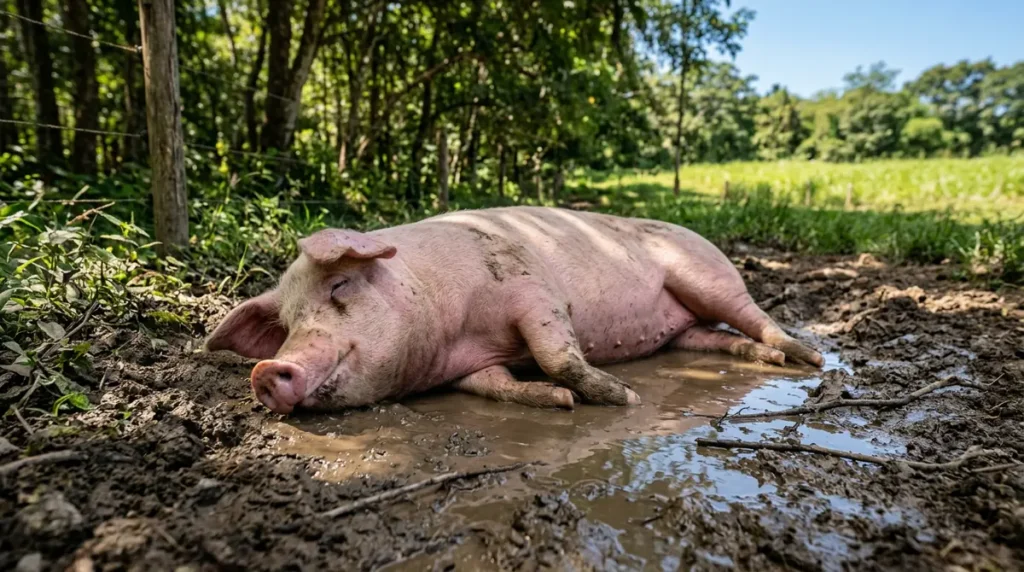
Mud can provide a useful protective coating, particularly for pigs with light or sparse hair.
Pigs can suffer from sunburn, especially when their skin is lightly pigmented or their hair offers limited protection.
A coating of mud can help shield the skin from direct sunlight. Once the mud dries, it may form a layer that reduces the amount of sunlight reaching the skin.
However, mud is not a complete substitute for shade. Its protective effect depends on how thickly it covers the skin, how long it remains in place, and the surrounding conditions.
Providing shade remains important, particularly in outdoor environments with strong sunlight.
For pigs raised outdoors, access to both a wallow and shaded resting areas can help them manage hot weather more comfortably.
3. Wallowing Can Help Reduce Insect Irritation
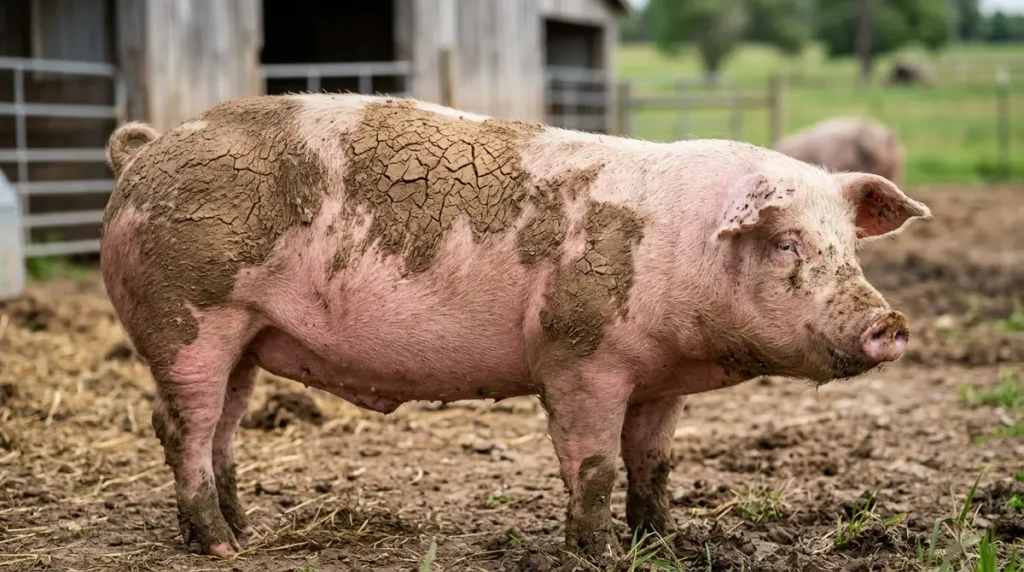
Flies and other biting insects can make life uncomfortable for pigs. These pests may irritate the skin, disturb resting, and sometimes transmit disease.
Mud coating may help reduce contact between some insects and the pig’s skin. It can also provide temporary physical protection against biting insects, although its effectiveness varies.
Pigs may also rub against surfaces or use other behaviors to relieve irritation.
It is important not to rely on mud alone for insect control. Good sanitation, appropriate housing, and veterinary-recommended pest management may still be necessary.
If pigs have persistent itching, skin lesions, hair loss, or signs of parasites, they should be examined rather than assuming that a wallow will solve the problem.
4. Pigs Enjoy Wallowing as a Natural Behavior
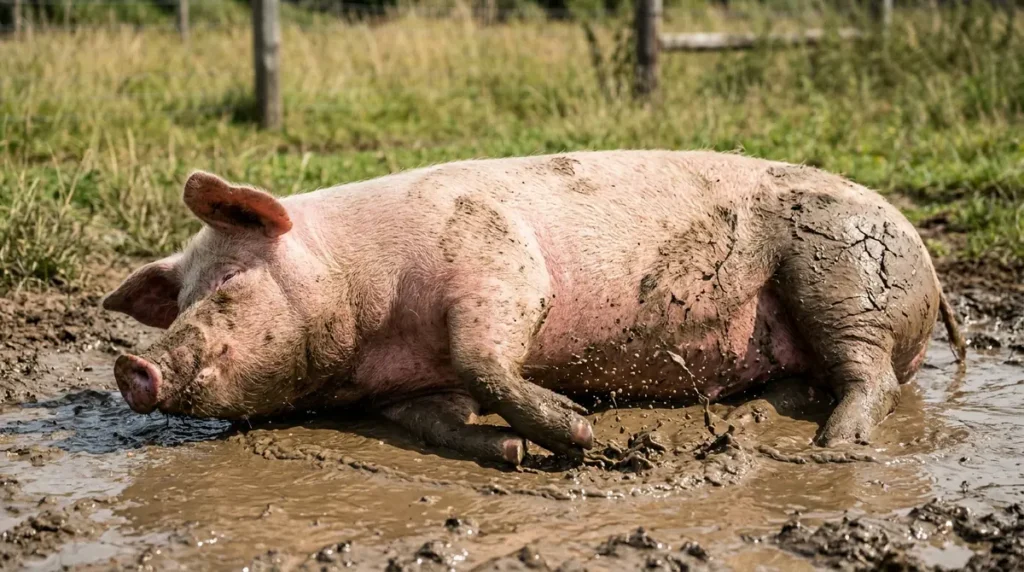
Wallowing is more than a cooling method. It is also a normal behavior for pigs.
Pigs naturally investigate their surroundings with their snouts, explore different surfaces, root through soil, and interact with their environment. A wallow offers opportunities to perform several of these behaviors.
They may enter the mud, roll onto their sides, rub their bodies against the ground, and return to the wallow repeatedly.
These activities can provide sensory stimulation and allow pigs to behave in ways that are important to their welfare.
A pig that enjoys wallowing is not necessarily showing a preference for dirt over cleanliness. It is using its environment to meet physical and behavioral needs.
5. Mud Can Help Remove Some Parasites and Irritants
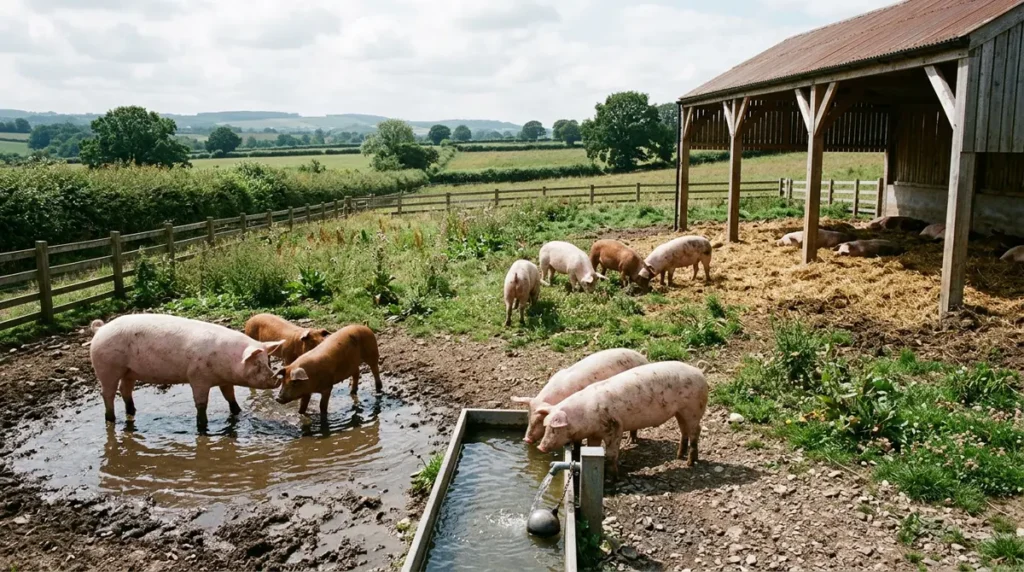
Mud and rubbing can sometimes help dislodge insects, loose skin material, and other substances from the body. The coating may also reduce direct contact between certain pests and the skin.
However, the idea that mud automatically kills parasites is misleading.
Mud does not reliably eliminate internal worms, mites, lice, or every other parasite. Some parasites require specific treatment, and a contaminated wallow can even create hygiene problems.
Pigs need proper veterinary care, parasite management, and a clean environment alongside opportunities to wallow.
A healthy wallowing area should not become a stagnant, heavily contaminated pool that exposes animals to unnecessary risks.
6. Why Do Pigs Roll Around Instead of Just Sitting in Mud?
Rolling helps pigs coat more of their bodies with mud and bring the wet material into contact with different areas of their skin.
By shifting from side to side, they can cover their flanks, backs, and other body surfaces. The mud may then help cool and protect these areas.
Rolling and rubbing may also provide sensory stimulation. The behavior allows pigs to interact with the texture and temperature of their surroundings.
A pig may repeat the process as the mud dries, the weather changes, or its body becomes warmer.
This is why a wallow can be more than a place to drink or rest. It offers a specific surface for an activity pigs are naturally motivated to perform.
7. Do Pigs Like Mud More Than Water?
Not necessarily. Pigs may use water, wet soil, mud, shade, and other cool surfaces to manage heat.
The appeal of mud is that it combines moisture with a coating that can remain on the skin after the pig leaves the wallow. Clean water may provide cooling, but it does not always offer the same coating or rubbing opportunities.
The surrounding temperature, humidity, wallow design, and availability of shade can influence what a pig chooses.
Some pigs may prefer a particular wallow, while others may spend more time resting in shade or using other cool surfaces.
The important point is that pigs seek ways to manage their temperature, and mud can be a particularly useful option.
8. Do Baby Pigs and Adult Pigs Both Like Mud?
Pigs at different ages can show wallowing behavior, but their needs and vulnerability to temperature changes differ.
Adult pigs may use wallows regularly during hot weather because of their body size and limited ability to cool themselves through sweating.
Young piglets need special attention because they can lose body heat quickly and require suitable warm resting areas. A cold, wet environment can be dangerous for them, even when older pigs are comfortable in it.
Housing and wallowing opportunities should therefore be appropriate for the pigs’ age, health, and environmental conditions.
A wallow that benefits adult pigs during summer should not be assumed to be suitable for newborn piglets.
9. What Happens When Pigs Cannot Access Mud?
When pigs are kept in environments without a suitable wallow, they may lose an opportunity to perform a natural behavior and regulate their body temperature in this way.
This does not mean that every pig without mud will become ill. Good management can provide alternative cooling methods, including shade, ventilation, cool resting surfaces, and appropriately designed water-based cooling systems.
However, during hot weather, inadequate cooling can increase the risk of heat stress. Pigs may become less active, breathe rapidly, or show other signs of distress.
Providing appropriate environmental enrichment also matters. Rooting materials, sufficient space, comfortable resting areas, and opportunities to explore can support natural behavior.
For outdoor pigs, a well-managed wallow can contribute to both comfort and welfare.
10. How Can Farmers Provide a Safe Wallowing Area?
A suitable wallowing area should help pigs cool down without exposing them to unnecessary hazards.
Useful considerations include:
-
Choose a suitable location: Place the wallow where pigs can access it safely and where the surrounding ground does not become dangerously slippery.
-
Provide shade: A shaded resting area gives pigs another way to escape direct sunlight.
-
Manage water quality: Avoid allowing the wallow to become excessively contaminated with waste or stagnant water.
-
Prevent overcrowding: Ensure that pigs have enough space to use the area without constant competition.
-
Monitor temperature: During heat waves, provide additional cooling and observe pigs for signs of heat stress.
-
Maintain good hygiene: Clean and manage the area according to the number of animals, drainage, and local conditions.
The goal is not simply to give pigs a muddy place to lie down. It is to create an environment that supports cooling, safe movement, and normal behavior.
Conclusion
Pigs like mud because wallowing helps them stay cool, provides some protection from sunlight, may reduce insect irritation, and allows them to perform a natural behavior.
Their attraction to mud is closely connected to their biology. Because pigs cannot cool themselves efficiently through sweating, a suitable wallow can be especially helpful during hot weather.
However, mud is not a cure-all for parasites or skin problems, and it cannot replace shade, clean water, appropriate housing, or veterinary care.
The next time you see a pig rolling happily in a muddy puddle, remember that this familiar sight reflects a combination of survival, comfort, and natural animal behavior.