What Are Cat Zoomies? The Veterinary Science Behind FRAPs
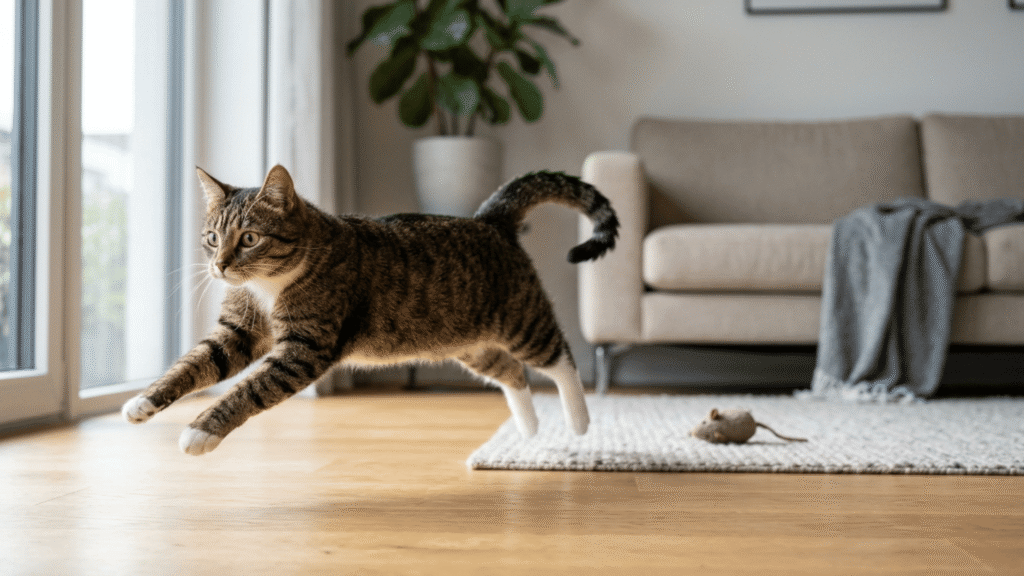
If you have ever seen your peaceful, sleeping feline suddenly sprint across the room, leap off the sofa, and perform acrobatic wall-bounces for no apparent reason, you have witnessed cat zoomies.
While cat owners use terms like “the midnight crazies” or “feline frenzy,” veterinary behaviorists use a scientific term: Frenetic Random Activity Periods (FRAPs).
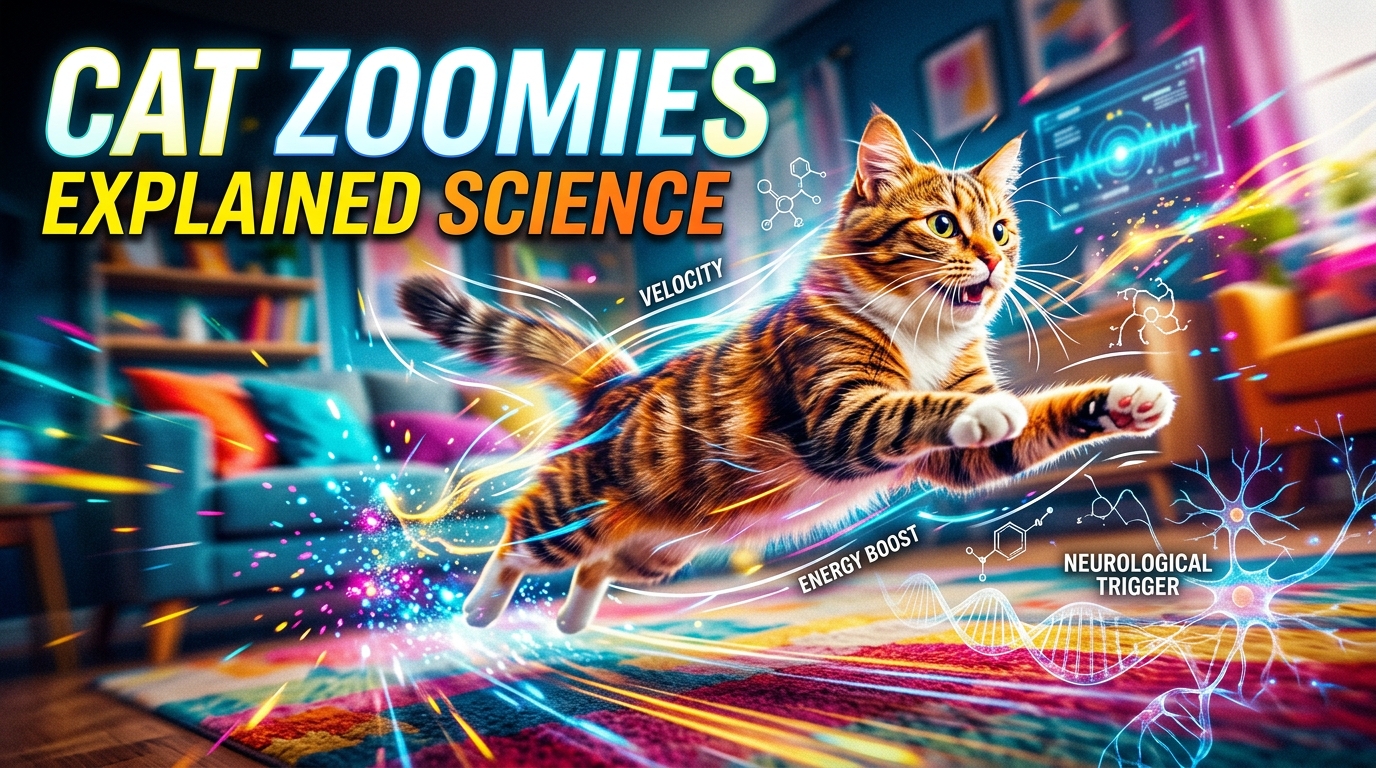
The Science of FRAPs Explained
FRAPs are sudden, intense bursts of movement that occur without warning. During a FRAP episode, a cat’s brain experiences a surge of chemical energy—primarily endorphins and adrenaline.
Why Feline Brains Need Energy Releases
- Neurological Discharge: Cats are built for explosive energy. In the wild, stalking and hunting require short, high-intensity exertion. Indoor house cats accumulate unused energy that needs a fast, physical outlet.
- Endorphin Spikes: Sprinting releases feel-good hormones that promote mental relief and contentment.
- Musculoskeletal Conditioning: Sudden acceleration, sharp turns, and jumping maintain muscle tone, joint flexibility, and cardiovascular health.
Key Takeaway: Zoomies are a normal, healthy physiological reset mechanism for felines.
Why Do Cats Get 3 AM Zoomies? Crepuscular Biology
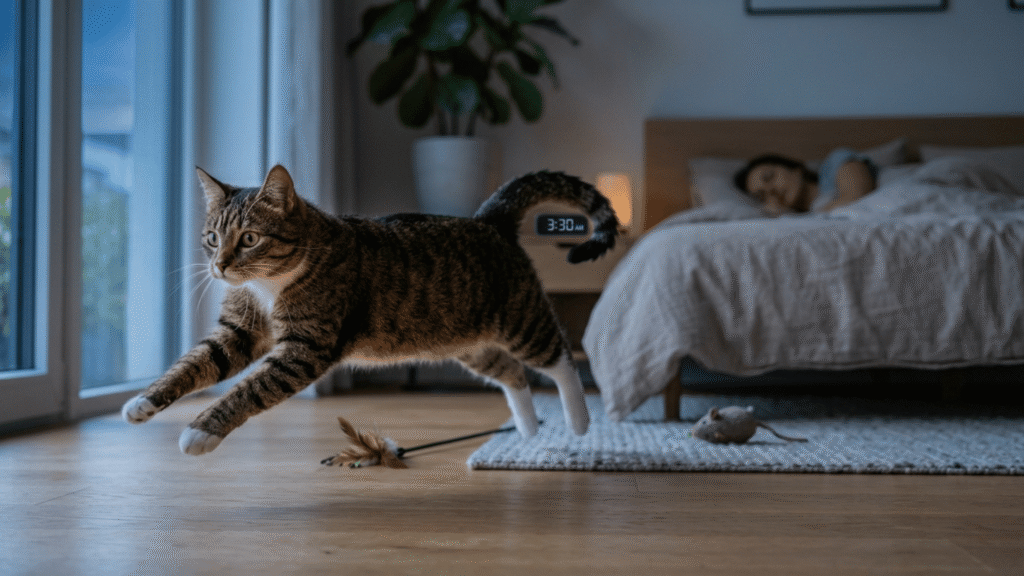
Why do cat zoomies happen precisely when you are trying to sleep? The answer lies in evolutionary biology and circadian rhythms.
Crepuscular vs. Nocturnal Animals
Contrary to popular belief, cats are not strictly nocturnal; they are crepuscular.
- Crepuscular activity means cats are naturally wired to be most active during twilight—dawn and dusk.
- In nature, prey animals (like rodents and birds) are active during these hours, making it the optimal hunting time.
- When house cats wake up around 3 AM to 5 AM, their internal biological clock is telling them it is time to hunt, track, and chase.
How to Shift Your Cat’s Schedule
- Evening Play Sessions: Use wand toys 30 minutes before bedtime to simulate a hunt.
- Post-Play Meal: Feed your cat immediately after play. The “Hunt $\rightarrow$ Catch $\rightarrow$ Eat $\rightarrow$ Groom $\rightarrow$ Sleep” cycle aligns with their natural digestive instincts.
The Poop Zoomies: Vagus Nerve Stimulation & Relief
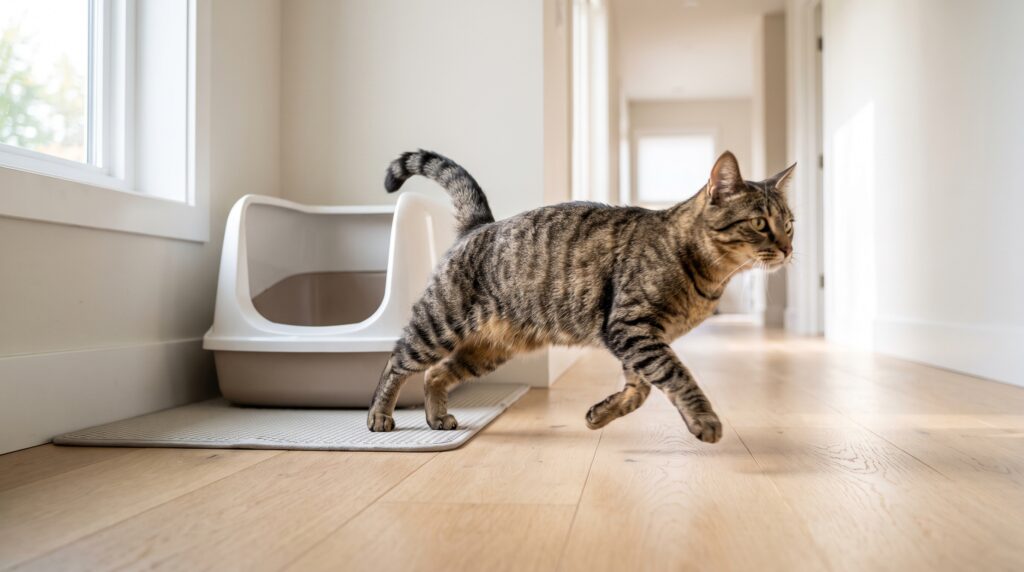
One of the funniest feline habits is the post-litter box sprint. Your cat finishes using the litter box and immediately rockets down the hallway.
The Vagus Nerve Connection
Science points to the vagus nerve—a key component of the parasympathetic nervous system.
- Nerve Stimulation: Defecation stimulates the vagus nerve, which runs from the brain through the digestive tract.
- Physiological Release: This nerve stimulation can cause a sudden drop in heart rate and blood pressure followed by a “euphoric” feeling of physical relief.
- Evolutionary Instinct: Leaving a freshly deposited scent mark makes a cat vulnerable to larger predators in the wild. Running away quickly after using the bathroom is an instinctual survival tactic.
When Poop Zoomies Signal a Problem
If your cat vocalizes, strains, or runs frantically before using the box, it could indicate constipation, urinary tract infections (UTIs), or digestive discomfort.
The Predator Within: How Zoomies Mimic Hunting Sequences
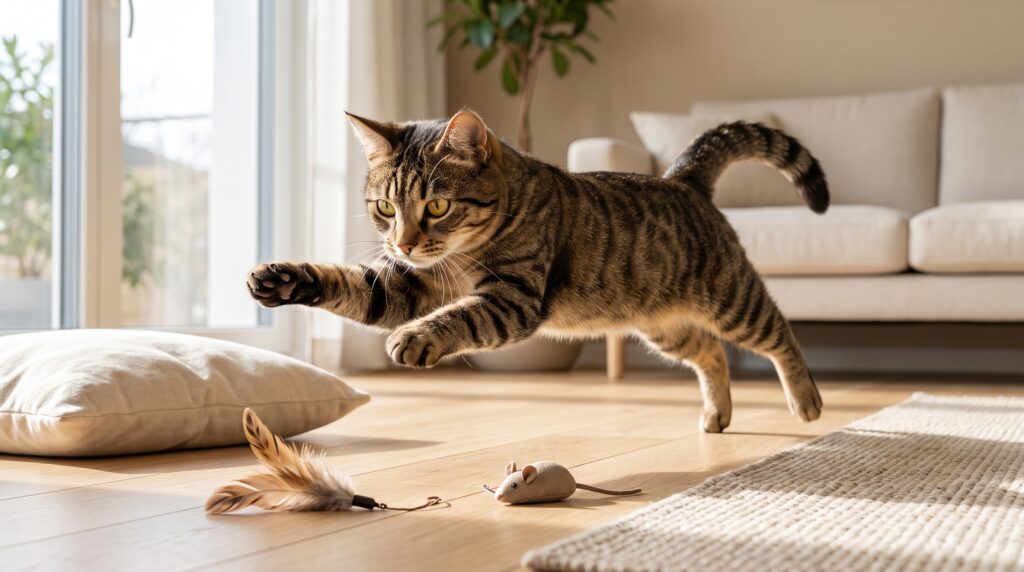
Even the most pampered indoor cat retains the genetic wiring of an obligate carnivore and apex small-predator.
| Hunting Stage | Corresponding Zoomie Behavior |
| Stalking | Lowered body, dilated pupils, slow creeping movement |
| Pouncing | Sudden leaps, rear-leg wiggles, grabbing rugs or air |
| Sprint / Capture | High-speed dashes across rooms, running up walls |
| Kill Bite | Shaking toys, bunny-kicking pillows |
The Predatory Motor Pattern
Cats experience Frenetic Random Activity Periods because their predatory motor sequence gets triggered without a real target.
- When a cat chases invisible prey across your hardwood floor, their brain is executing innate sequence patterns.
- Without daily opportunities to practice these movements, the stored predatory impulse builds up like steam in a pressure cooker until it bursts out as zoomies.
Age, Kittens, and Seniors: Zoomies Across Cat Life Stages
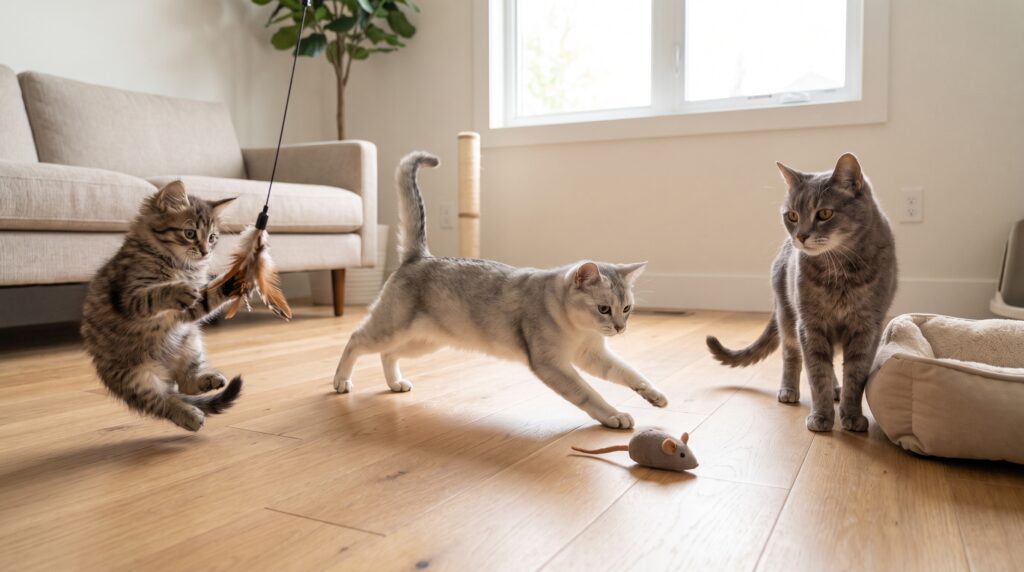
Cat zoomies change as your pet ages. Understanding how age affects energy levels helps you provide the right support.
- Kittenhood (0 – 12 Months)
- Frequency: Multiple times per day.
- Purpose: Motor skill development, spatial awareness practice, muscle strengthening.
- Adulthood (1 – 7 Years)
- Frequency: Once or twice daily (often post-nap or evening).
- Purpose: Stress relief, weight maintenance, routine energy discharge.
- Senior Years (8+ Years)
- Frequency: Occasional short bursts.
- Purpose: Brief moments of joy or pain relief.
- Medical Warning: Sudden new zoomies in senior cats can be a symptom of hyperthyroidism or cognitive dysfunction. Always consult a vet if an older cat suddenly becomes hyperactive.
Environmental Triggers: What Secretly Sparks a FRAP?
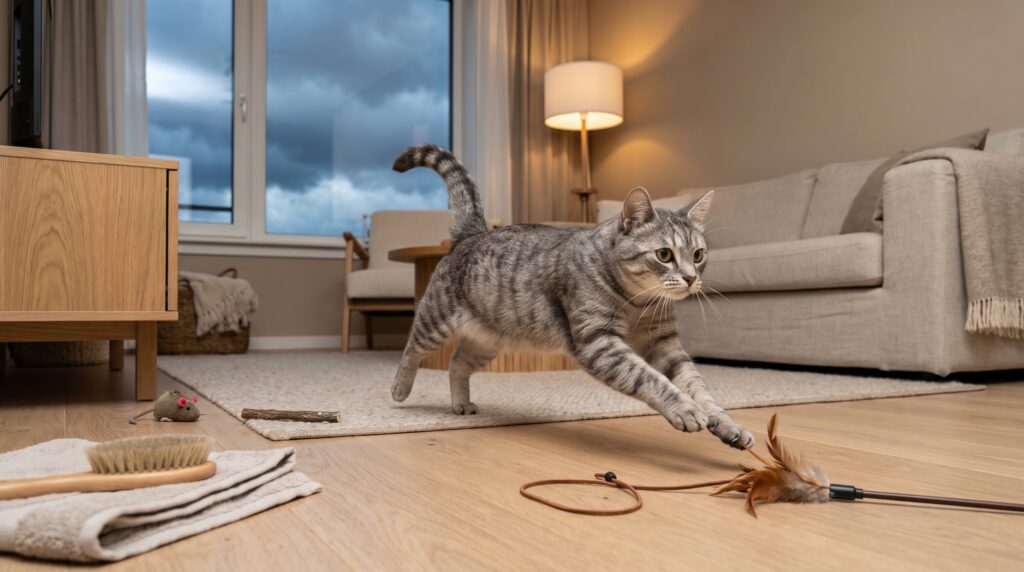
Zoomies do not always happen randomly—they are frequently ignited by specific environmental cues.
Common Environmental Triggers
- Post-Bath or Post-Grooming: Water or heavy brushing alters the cat’s fur weight and scent profile. Sprints dry the fur and release emotional tension.
- Weather & Barometric Pressure: Sudden temperature drops or storm fronts stimulate sensory nerve endings, making cats playful and alert.
- Catnip and Silvervine: Nepetalactone (the active compound in catnip) triggers olfactory receptors, leading to sensory surges.
- Stress & Overstimulation: After an uncomfortable event (vet visit, household noise), zoomies serve as an emotional “shake-off” mechanism.
How to Manage and Channel Cat Zoomies Safely
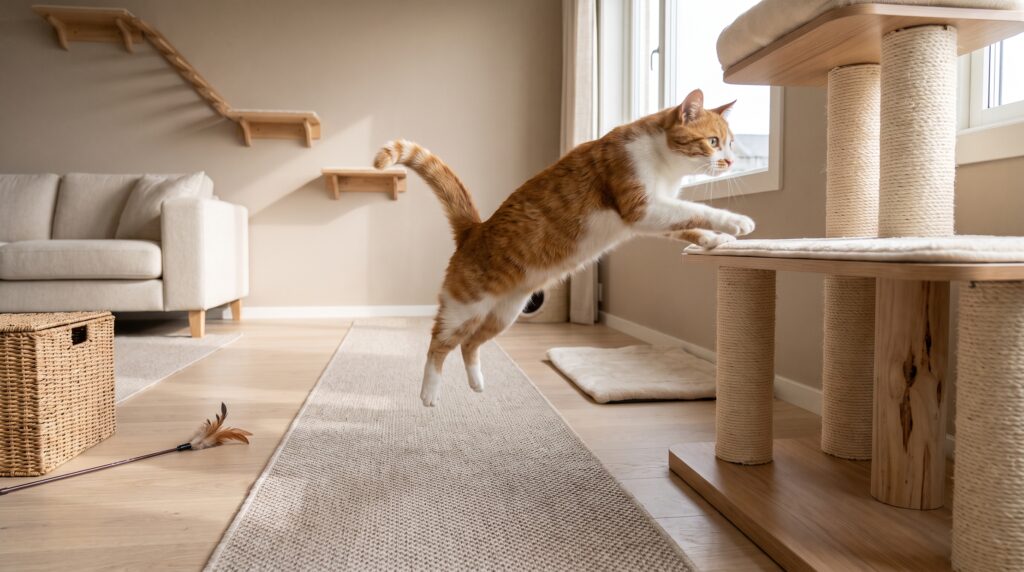
While zoomies are normal and healthy, high-speed running on slippery floors or near breakables can lead to accidental injuries.
Step-by-Step Safety Protocol
- Add Non-Slip Runners: Lay down rugs on hard floors to provide traction and prevent joint strains or slipped disks.
- Clear High-Frequency Sprint Paths: Keep hallways and landing zones free of sharp objects, glass, or unstable furniture.
- Never Chase or Scold: Chasing a cat during zoomies escalates fear and panic, making them run faster and more recklessly.
- Provide Vertical Outlets: Install sturdy cat trees and wall shelves so zoomie energy moves upward safely.
Summary Checklist for Cat Parents
- Are zoomies normal? Yes, they are healthy FRAPs.
- When to consult a vet: If zoomies are accompanied by crying, weight loss, distress, or sudden onset in old age.