The Evolutionary Roots — How Wolves Turned into Man’s Best Friend
Introduction
Ever wonder why your dog looks at you like you are the center of the universe? Long before dogs were sleeping on memory-foam beds, their ancestors were wild wolves roaming the ice age landscape. The transformation from wild predator to devoted companion is one of the most remarkable evolutionary journeys in history.
- Co-Evolution: The Survival Advantage
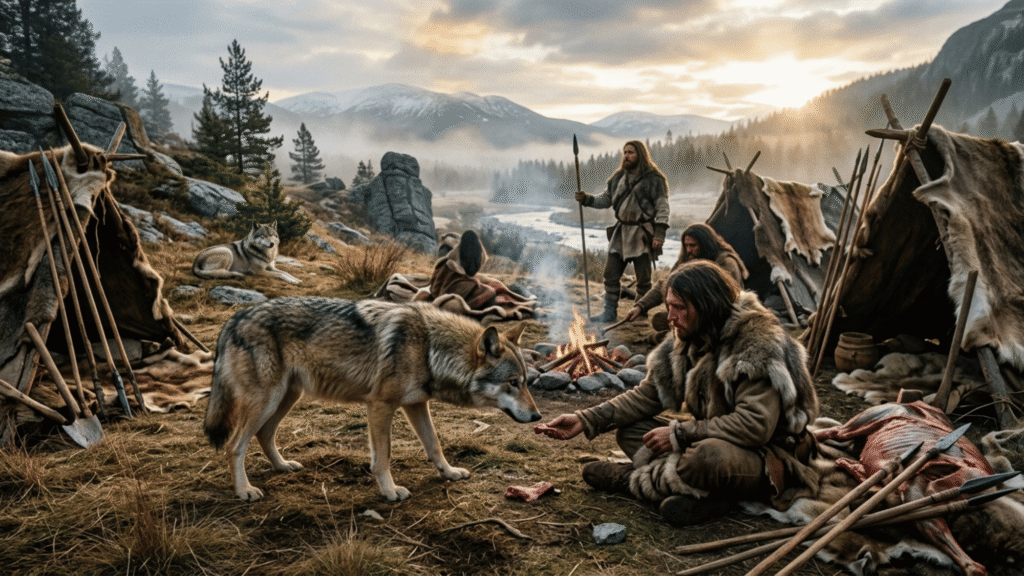
Over 15,000 to 30,000 years ago, friendly wolves began scavenging around human campsites. Humans offered shelter and leftover food, while these early canines provided protection and extra help during hunts.
- Mutual Survival: Wolves that were less aggressive gained access to calories.
- Selection for Friendliness: Humans selectively bred canines that showed low fear and high cooperation.
- Genetic Divergence
Geneticists have discovered that domestic dogs possess key genetic mutations in regions linked to social behavior (specifically near genes like WBSCR17), making them naturally hypersociable compared to wild wolves.
Takeaway
Dog loyalty isn’t an accident—it’s an evolutionary strategy refined over tens of thousands of years.
The Chemistry of Love — Oxytocin and Canine Brains
Introduction
When you look into your dog’s eyes, do you feel an instant rush of affection? Science shows that this reaction is mutual and driven by biochemistry.
- The Oxytocin Gaze Loop
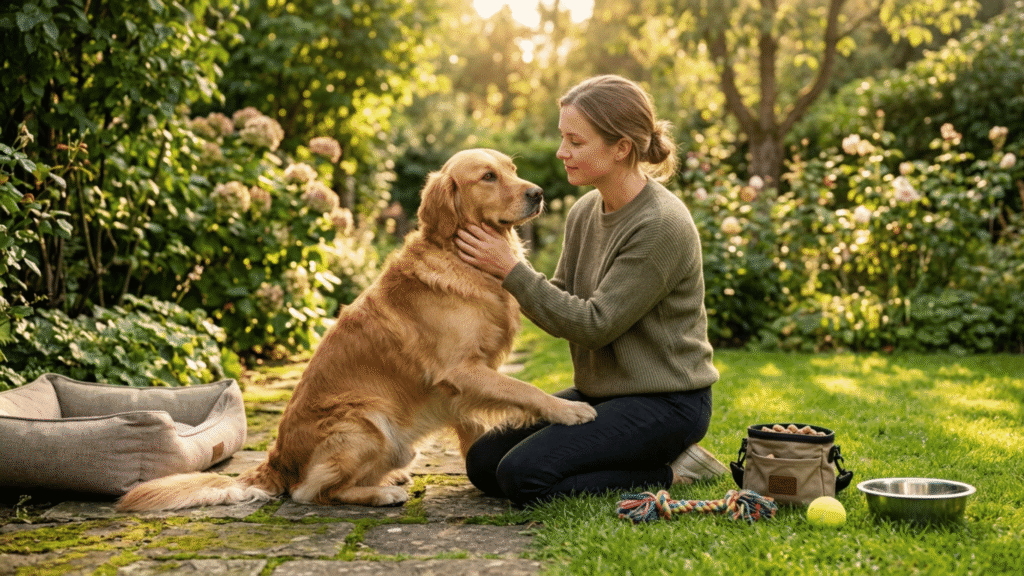
In 2015, researchers published a landmark study in Science showing that mutual eye contact between dogs and humans triggers a surge of oxytocin (the “love hormone”) in both species.
- How it works: When your dog gazes into your eyes, your oxytocin levels spike.
- The result: You pet your dog, causing their oxytocin levels to climb as well.
- Human-Infant Equivalent: This is the exact same neurological loop that binds mothers to their newborns.
- Dopamine and Scent Processing
Brain scans using functional MRI (fMRI) reveal that a dog’s caudate nucleus—the reward center of the brain—activates most strongly when smelling their owner’s scent, even compared to the scent of tasty food or familiar dogs.
Takeaway
Your dog’s loyalty is backed by brain chemistry—they are literally hardwired to feel joy around your scent and gaze.
Debunking the Alpha Myth — Pack Mentality vs. Family Bond
Introduction
For decades, popular culture insisted that dog loyalty was about dominance: you had to be the “Alpha” to command respect. Modern veterinary science and canine behaviorists have completely debunked this idea.
- Where the “Alpha” Myth Came From
The concept of the dominant alpha wolf was based on flawed 1930s studies of unrelated wolves held in captivity. In the wild, natural wolf packs are simply family units led by parents—not aggressive dictators.
- Secure Base Effect: You Are Their Safe Haven
Instead of viewing you as a dominant pack leader, dogs view you as a primary caregiver—a phenomenon known as the Secure Base Effect.
- When dogs feel scared, they run to their owners for comfort, just like young children do with parents.
- Dogs display lower cortisol (stress hormone) levels when their owner is nearby.
Takeaway
Loyalty is built on trust and security, not force or dominance.
How Dogs Read Human Emotions and Body Language
Introduction
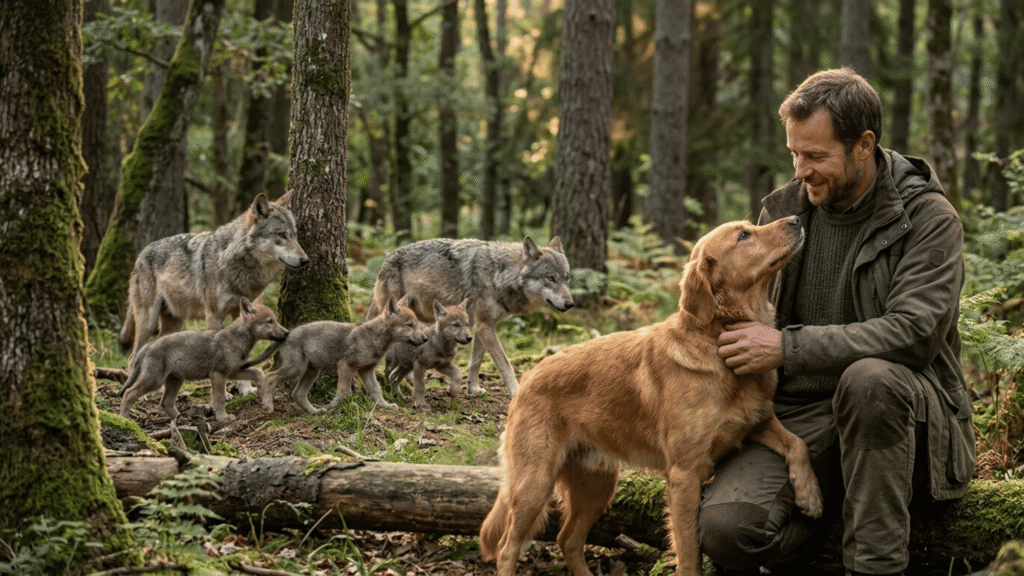
Have you ever noticed your dog comforting you when you’re feeling down? Dogs are among the only animals that actively monitor human facial expressions, gestures, and tone of voice.
- Visual Cues: Reading Faces and Gestures
Dogs excel at reading human social signals:
- Left-Gaze Bias: Dogs look at the right side of human faces first to decode emotional states, recognizing smiles, frowns, and tension.
- Pointing and Eye Gaze: Unlike chimpanzees, dogs instinctively understand when a human points toward an object.
- Emotional Contagion
Dogs experience a psychological phenomenon called emotional contagion—they absorb and reflect their owner’s emotional state.
If an owner’s heart rate spikes due to stress, their dog’s heart rate often rises in response, proving how closely attuned dogs are to our wellbeing.
Takeaway
Dogs are hyper-perceptive emotional sponges—their loyalty stems from their deep empathy for human mood changes.
Breed vs. Nurture — Are Some Dogs Naturally More Loyal?
Introduction
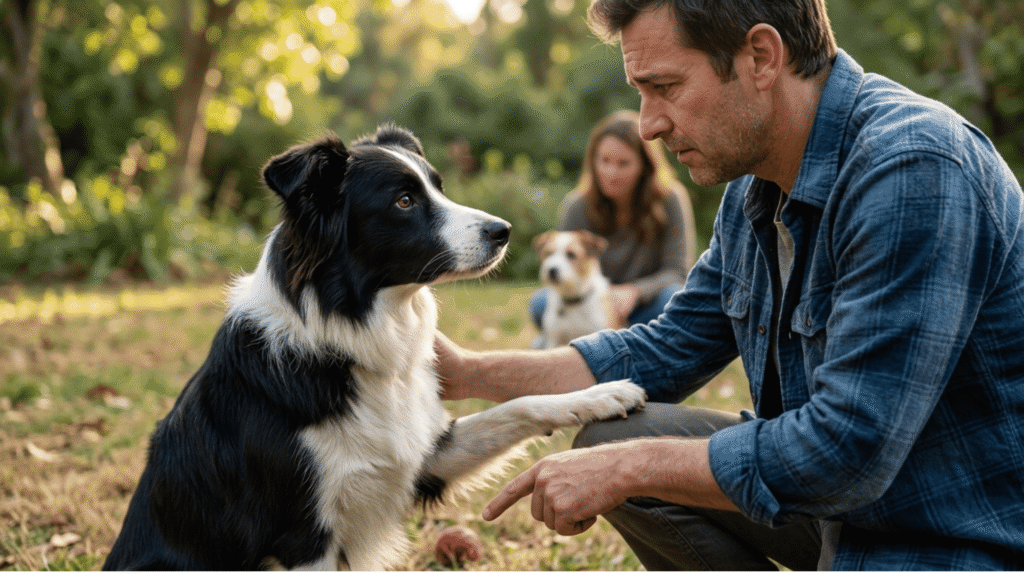
Are German Shepherds inherently more loyal than Golden Retrievers? While genetics shape working traits, science shows that nurture plays an equal, if not greater, role in personal devotion.
- Genetic Working Roles
Selective breeding has emphasized distinct traits across breeds:
| Dog Group | Working Trait | Loyalty Expression |
| Herding Breeds (e.g., Border Collie, Sheltie) | Close handler cooperation | Intense shadow-like attachment (“Velcro dogs”) |
| Guardian Breeds (e.g., Rottweiler, Mastiff) | Territory & family protection | Fiercely protective, aloof with strangers |
| Hounds & Terriers (e.g., Beagle, Jack Russell) | Independent hunting | High affection, but easily distracted by scent |
- The Power of Early Socialization
While breed predispositions exist, early socialization (between 3 to 16 weeks of age) and consistent positive reinforcement shape a dog’s long-term attachment style far more than genetics alone.
Takeaway
Breed genetics set the baseline, but daily positive interactions ultimately forge true loyalty.
Can Dogs Love Multiple People? (The Science of Multi-Person Households)
Introduction
Families often wonder: Does the dog have a “favorite” person, or can they be equally loyal to everyone in the home?
- Primary vs. Secondary Attachment
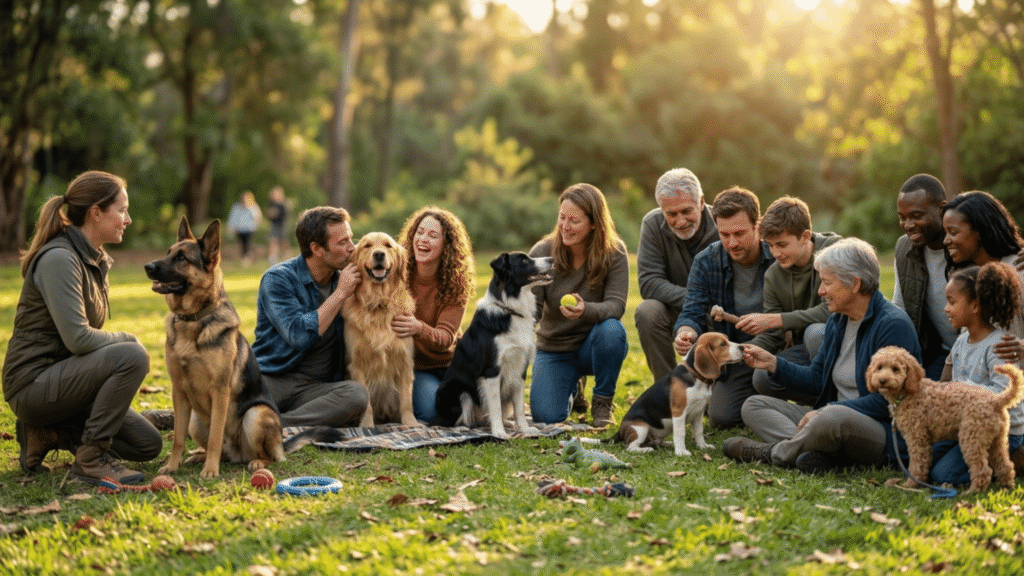
Dogs are capable of loving an entire household, but they often form a primary attachment with one person based on key factors:
- Quality of Interaction: Play, training, and focused attention build stronger bonds than just filling the food bowl.
- Consistency: Dogs lean toward individuals who provide predictable, low-stress environments.
- Socializing Window: A dog may favor someone whose personality matches the person who raised them during puppyhood.
- How Dogs Express Favorite Person Status
Signs you are your dog’s primary human:
- Maintaining eye contact in quiet moments.
- Sleeping close to your side or on your clothes.
- Seeking you out first when startled.
Takeaway
Dogs can form deep bonds with multiple family members, but they naturally gravitate toward the person who offers the highest quality social engagement.
5 Science-Backed Ways to Strengthen Your Dog’s Loyalty
Introduction
Loyalty is a two-way street. If you want to deepen your connection with your dog, science points to specific daily habits that build trust and lifelong devotion.
- Engage in Direct Eye Contact and Gentle Petting
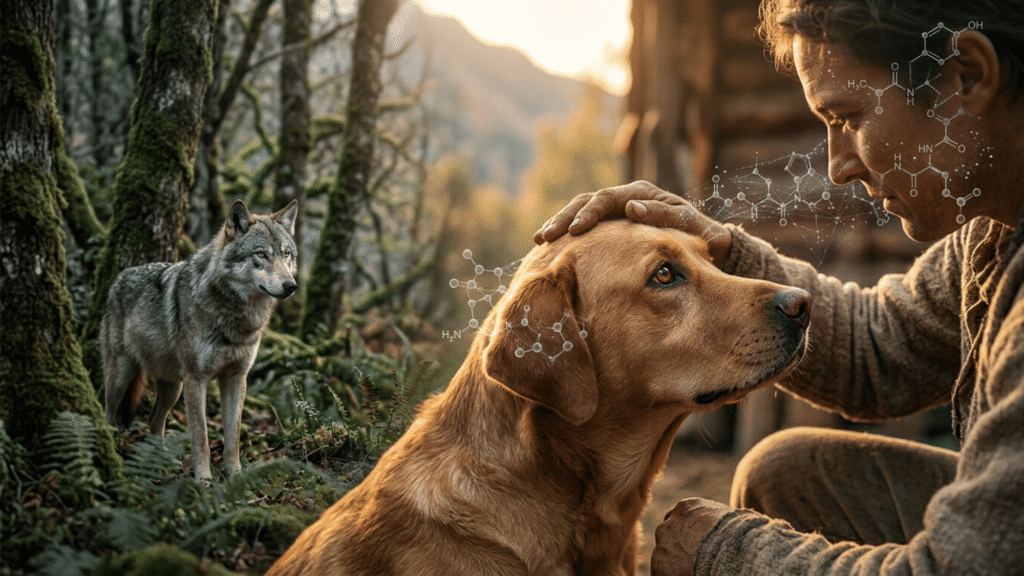
Spending 5–10 minutes daily making gentle eye contact while petting your dog releases mutual oxytocin, lowering stress for both of you.
- Use Positive Reinforcement Training
Force-free, reward-based training builds trust. Aversive techniques (e.g., shock collars, physical punishment) create fear and damage the secure base bond.
- Play Interactive Games
Structured games like tug-of-war, fetch, and scent work stimulate dopamine release and teach your dog that fun and reward stem directly from you.
- Maintain Predictable Routines
Dogs crave predictability in feeding, walks, and rest. Routine lowers anxiety and reinforces your role as a reliable provider of safety.
- Respect Their Boundaries
Learning to read subtle canine stress signals (lip licking, yawning, turning away) builds mutual trust, letting your dog know you respect their comfort zone.
Takeaway
Loyalty is not bought with food alone; it is cultivated through trust, positive experiences, and consistent communication.