# Straight-Haired Poodle: Appearance, Genetics, Grooming, Temperament, and Care Guide
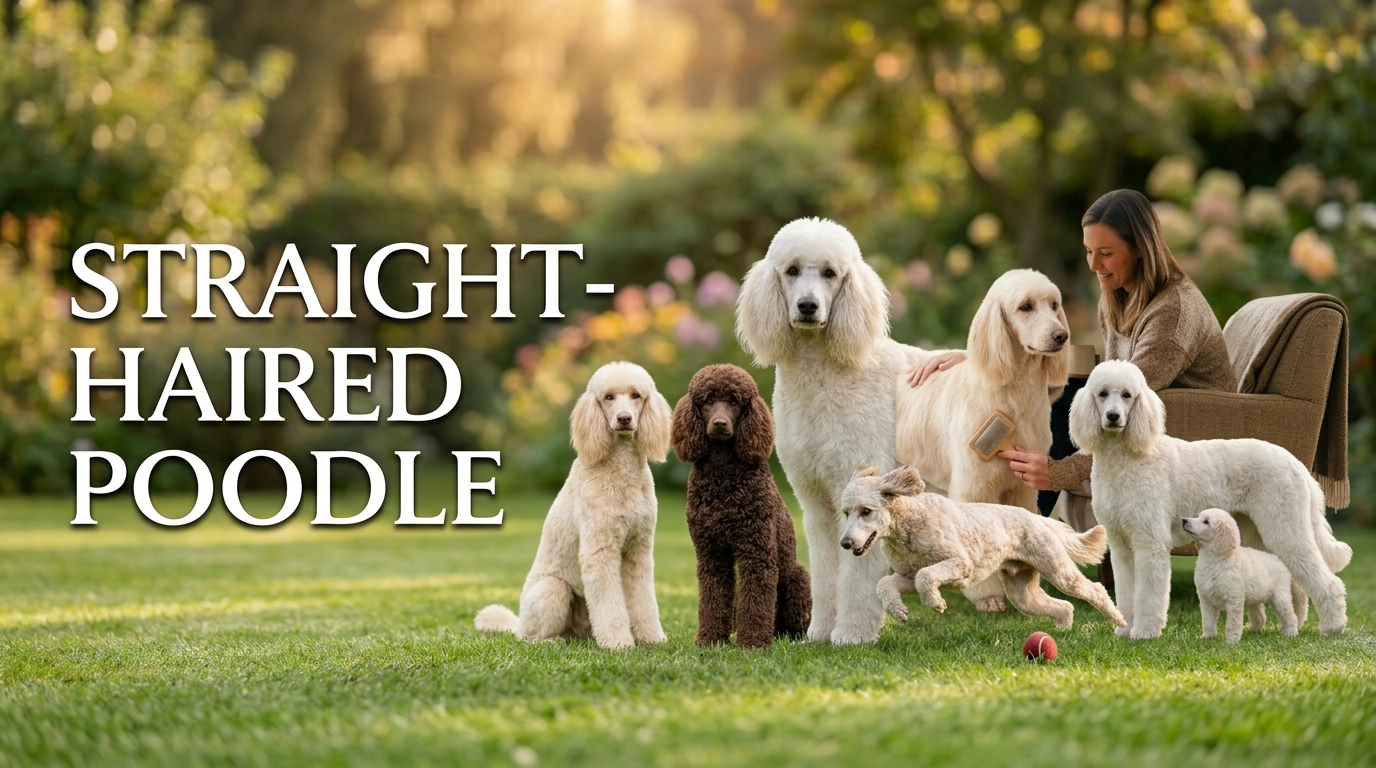
When most people imagine a Poodle, they picture a dog with a curly coat, an elegant appearance, and a distinctive haircut. But did you know that some Poodles can have a much straighter coat than the breed is famous for? A straight-haired Poodle can look surprisingly different from the traditional curly-coated Poodle, often resembling a fluffy companion dog with soft, flowing, or slightly wavy hair.
Whether you have seen a Poodle with straight hair, are considering adopting one, or simply want to understand why some Poodles do not have the familiar curls, there is much more to discover about these dogs than their appearance alone.
Straight-haired Poodles raise several interesting questions. Are they purebred Poodles? Is straight hair a genetic variation? Do they need less grooming than curly-coated Poodles? And can their coat texture change as they grow older?
In this guide, we will explore everything you need to know about straight-haired Poodles, including their appearance, coat genetics, temperament, grooming requirements, health, exercise needs, and how to determine whether a straight-coated dog is actually a Poodle.
## What Is a Straight-Haired Poodle?
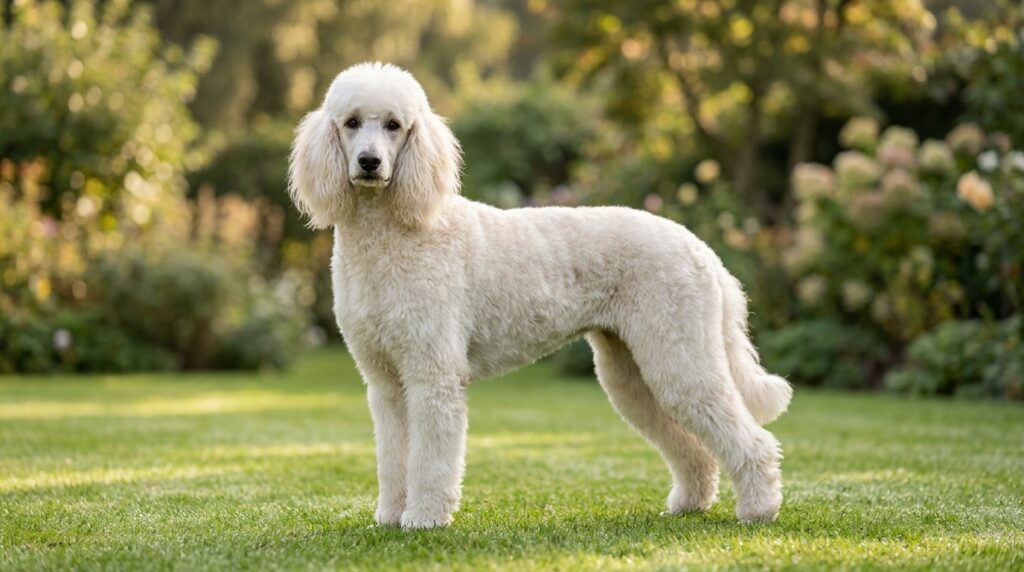
A straight-haired Poodle is a dog with a Poodle-like appearance whose coat is predominantly straight rather than tightly curled. The hair may fall smoothly along the body, appear soft and fluffy, or develop loose waves around the ears, legs, and tail.
The term “straight-haired Poodle” is descriptive rather than an officially recognized coat variety within the major Poodle breed standards. Standard, Miniature, and Toy Poodles are all expected to have curly or corded coats under traditional breed standards.
However, individual Poodles can display unusual coat textures, particularly during puppyhood or because of genetic variations. Some dogs advertised as straight-haired Poodles may also be Poodle mixes, which can inherit different coat characteristics from either parent.
The important distinction is that **straight hair alone does not establish whether a dog is purebred or mixed-breed**. Pedigree records and, where appropriate, genetic testing provide more useful information about ancestry.
## What Does a Straight-Haired Poodle Look Like?
Straight-haired Poodles can have a noticeably different appearance from the tightly curled dogs commonly seen in dog shows.
Their coat may hang more naturally around the face, ears, chest, and legs. Depending on the dog’s genetics and coat length, it can create a soft, relaxed appearance rather than the rounded silhouette associated with traditional Poodle grooming.
### 1. Coat Texture
The most obvious characteristic is the texture of the hair.
A straight-coated dog may have hair that lies relatively flat along its back and sides. Other dogs have a mixture of straight and wavy hair, especially around the ears and hindquarters.
Coat texture can vary considerably between individual dogs. Even puppies from the same litter may develop different-looking coats as they mature.
### 2. Face and Expression
Straight-haired Poodles often have an expressive face with dark, alert eyes and a relatively long muzzle. Their ears usually hang down alongside the head, and longer hair can make the ears appear especially fluffy.
When the coat grows around the forehead and cheeks, the dog may develop a softer, teddy-bear-like appearance. However, facial shape varies by individual and is not proof of a particular breed.
### 3. Body Shape
A purebred Poodle generally has an elegant, balanced build, a relatively long neck, a straight back, and an athletic body.
A straight coat can make these features less obvious because the hair may hang over the outline of the body. Some dogs appear stockier or rounder simply because of their coat length and grooming style.
### 4. Coat Colors
Straight-haired dogs with Poodle ancestry may have many of the colors associated with Poodles, including:
– Black
– White
– Apricot
– Red
– Brown
– Cream
– Silver
– Gray
Some Poodle mixes may also display parti-color patterns, phantom markings, or combinations of colors inherited from their other parent.
Color alone cannot establish whether a dog is a purebred Poodle.
## Why Do Some Poodles Have Straight Hair?
The reason behind a straight-haired Poodle is usually connected to genetics, age, or mixed ancestry. Understanding these possibilities helps explain why some dogs look different from the breed’s traditional appearance.
### 1. Genetic Differences in Coat Texture
A dog’s coat texture is influenced by multiple genetic factors. Hair shape, curl, growth patterns, and coat density are not controlled by appearance alone.
Research into canine coat genetics has identified several genes associated with coat characteristics. Variants involving genes such as **KRT71** can influence curl, while other genes affect furnishings, hair growth, and coat type.
Traditional Poodle coats are strongly associated with curly hair. A dog with noticeably straight hair may therefore have an unusual combination of genetic variants, although the precise explanation cannot be determined simply by looking at the coat.
2. Puppy Coat Changes
Poodles can undergo significant coat changes as they mature.
A young Poodle may have a softer, fluffier, or less curly coat than the one it develops as an adult. As the puppy coat is replaced by an adult coat, the texture can become curlier, denser, or otherwise different.
These changes do not happen at exactly the same age in every dog. Genetics, individual development, and coat-care practices can all influence the appearance of the growing coat.
If you have a Poodle puppy with relatively straight hair, its adult coat may look different. However, a straighter puppy coat does not guarantee that the dog will eventually develop tight curls.
### 3. Poodle Mixes
Another common explanation is mixed ancestry.
Poodles are frequently crossed with other breeds to produce companion dogs with different sizes, appearances, and coat textures. When a Poodle is crossed with a straight-coated breed, some puppies may inherit a straighter coat.
Examples include Poodle crosses involving Labrador Retrievers, Golden Retrievers, Cavalier King Charles Spaniels, or other breeds. The resulting coat depends on the genetics inherited from both parents, and puppies within the same litter can look quite different.
For example, a Poodle mix may have a curly coat, a wavy coat, or relatively straight hair. Not every cross produces the same result.
### 4. Grooming and Coat Condition
Grooming can also influence how straight or curly a coat appears.
Brushing, bathing, drying techniques, coat length, and the natural weight of longer hair can change its visible texture. Longer hair may hang more loosely than short hair, while a freshly brushed coat can look smoother.
Nevertheless, grooming cannot permanently change the underlying genetic structure of a dog’s hair.
A straight-looking coat after brushing does not necessarily mean that the dog has a genetically straight coat. Likewise, a curly coat that has been clipped short may appear less curly simply because the hair is shorter.
## Are Straight-Haired Poodles Purebred?
This is one of the most common questions people ask when they encounter a Poodle with a straight coat.
The answer requires a little explanation.
A dog can have Poodle ancestry and display an unusual coat texture, but straight hair is not the defining coat characteristic of a purebred Poodle under major breed standards.
If a dog is registered as a purebred Poodle but has an unusually straight coat, its pedigree, breeding history, and individual genetics are worth examining. Appearance alone cannot conclusively confirm or disprove its ancestry.
A dog that looks like a straight-haired Poodle could be:
– A purebred Poodle with an atypical coat.
– A young Poodle whose adult coat has not fully developed.
– A Poodle mix that inherited a straighter coat from another breed.
– A dog of another breed or mixed ancestry that resembles a Poodle.
If knowing the dog’s ancestry is important, ask for reliable pedigree documentation. A canine DNA test may provide additional information, but its results should be interpreted in light of the test’s limitations.
It is also important to remember that an unusual coat does not make a dog less deserving of care, companionship, or affection.
## Straight-Haired Poodle vs. Curly-Haired Poodle
Although these dogs may share ancestry and many behavioral characteristics, their coats can create noticeable differences in appearance and maintenance.
### Appearance
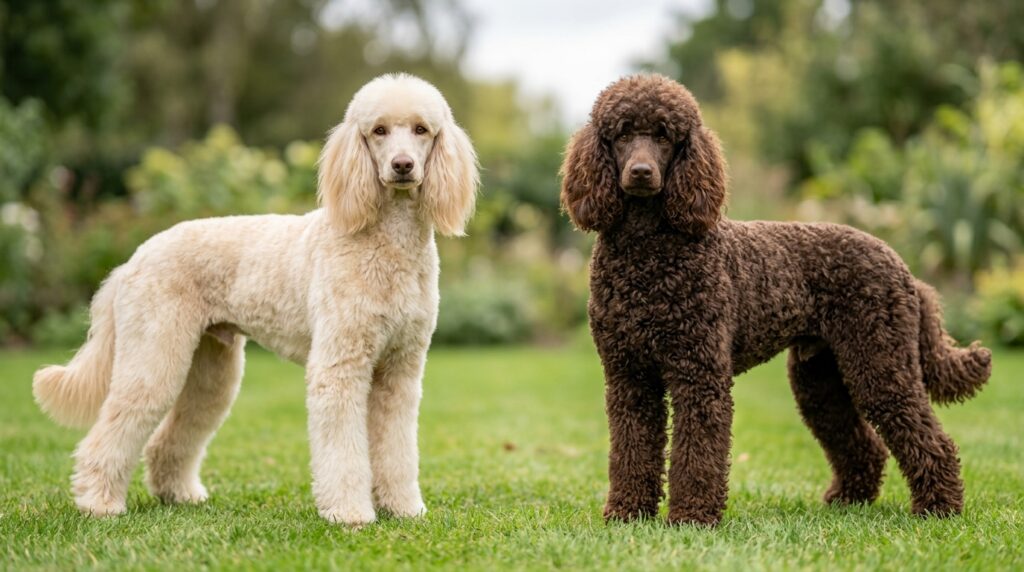
A traditional curly-haired Poodle has a dense coat with curls that create a rounded, textured appearance. A straight-haired dog may have a smoother outline, longer-looking hair, and a more relaxed appearance around the face and ears.
The difference can be especially noticeable when both dogs have similar coat lengths.
### Grooming Requirements
Straight hair is not automatically easier to maintain.
Curly Poodle coats can trap loose hair within the curls, making regular brushing and professional grooming important. Straight or wavy coats may release loose hair more visibly, but long hair can still tangle and develop mats.
The amount of grooming required depends on coat density, length, texture, and the individual dog’s lifestyle.
### Shedding
Poodles are widely known for relatively low shedding compared with many other breeds. However, a straight-haired dog with Poodle ancestry should not automatically be assumed to have the same shedding characteristics.
A purebred Poodle with an unusual coat may still shed relatively little, while a Poodle mix may shed more depending on the coat genetics inherited from the other parent.
No dog is completely guaranteed to be non-shedding, and low shedding does not mean a dog is automatically suitable for people with allergies.
### Appearance in Different Haircuts
Curly Poodles can hold sculpted grooming styles, while straight or wavy coats may look especially attractive in natural trims, rounded faces, and longer ear styles.
The best haircut depends on the dog’s coat condition, comfort, and the owner’s ability to maintain it.
## Understanding the Three Poodle Sizes
Straight-coated dogs with Poodle ancestry can appear in different sizes, but their size depends on whether they are purebred Poodles or crosses.
The three widely recognized Poodle varieties are Standard, Miniature, and Toy.
### Standard Poodle
The Standard Poodle is the largest variety. It is athletic, intelligent, and generally well suited to active households that can provide sufficient exercise and mental stimulation.
A straight-looking Standard Poodle would be a large dog with the same general size and build characteristics expected of the variety, although coat texture may differ.
### Miniature Poodle
The Miniature Poodle is smaller than the Standard but retains the breed’s characteristic intelligence and athletic ability.
Its manageable size can suit many homes, provided it receives regular exercise, training, and companionship.
### Toy Poodle
The Toy Poodle is the smallest of the three varieties. It is popular among people seeking a small companion dog that can live comfortably in an apartment or smaller home.
Despite its size, a Toy Poodle still needs exercise, training, social interaction, and regular grooming.
**Important:** A Poodle mix may fall outside these size expectations. Its adult size depends on its parent breeds, inherited traits, and individual development.
## Temperament: Are Straight-Haired Poodles Friendly?
Coat texture does not determine personality. A straight-haired Poodle may share many of the behavioral tendencies commonly associated with Poodles, but temperament also depends on genetics, socialization, training, and individual experiences.
Poodles are generally recognized as intelligent, alert, and people-oriented dogs.
### 1. Intelligence and Trainability
Poodles are known for their ability to learn commands, routines, and problem-solving tasks.
They often respond well to reward-based training, especially when lessons are consistent and engaging. A dog that enjoys learning may quickly become familiar with household routines and basic obedience.
Straight-coated Poodle mixes may also be intelligent, but their trainability depends partly on the other breed involved.
### 2. Affection and Companionship
Many Poodles form strong bonds with their families. They often enjoy spending time with their owners, participating in activities, and receiving attention.
Some may become distressed when left alone for long periods, especially if they have not gradually learned to spend time independently.
Providing appropriate enrichment, exercise, and a predictable routine can help support their well-being.
### 3. Playfulness
Poodles are often energetic and playful, and many retain an interest in games throughout adulthood.
Fetch, scent games, food puzzles, and short training sessions can provide useful outlets for their energy.
A dog’s exact activity level will depend on its age, health, and individual personality.
### 4. Alertness
Poodles may notice unfamiliar sounds, visitors, or changes in their surroundings. Some bark to alert their owners, while others are comparatively quiet.
Early training can help prevent excessive barking and teach a dog how to settle when something catches its attention.
### 5. Behavior Around Children and Other Pets
A well-socialized Poodle may live successfully with children and other animals. However, compatibility is never guaranteed by breed alone.
Children should be taught to interact gently with dogs, and interactions with young children should be supervised. Small Toy Poodles and small Poodle mixes can be particularly vulnerable to accidental injury.
Introductions to other pets should be gradual and carefully managed.
Grooming a Straight-Haired Poodle
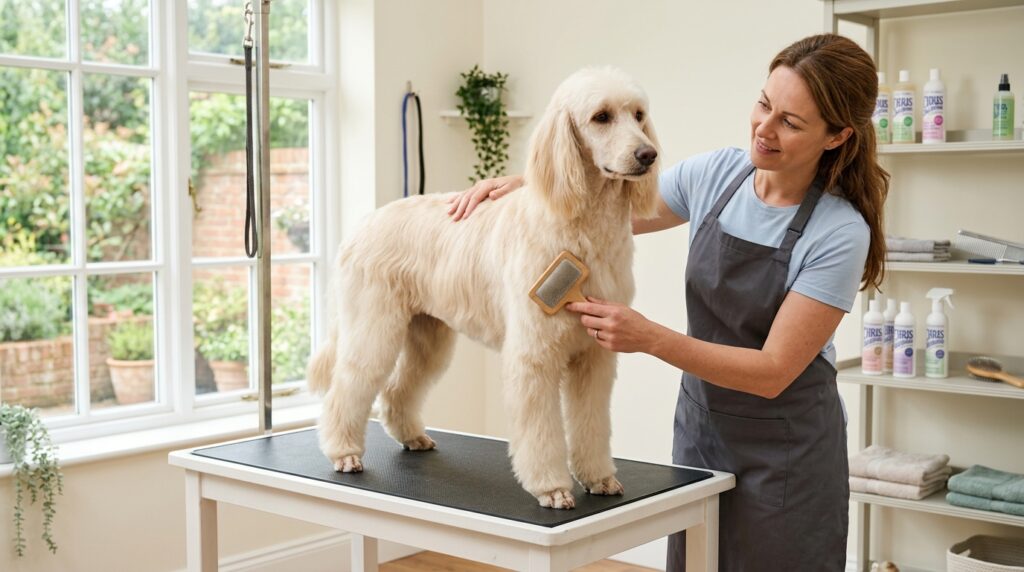
Grooming is one of the most important parts of caring for a straight-haired Poodle or Poodle mix.
Although the coat may look smoother than a traditional Poodle’s curls, longer hair can still become tangled around the ears, legs, tail, armpits, and collar area.
### 1. Brush Regularly
Brush the coat according to its length and texture. Dogs with longer or denser coats may need daily brushing, while some short-coated dogs can be maintained with less frequent sessions.
Pay particular attention to areas where friction causes tangles.
A slicker brush or suitable pin brush can help remove loose hair and separate the coat. A metal comb is useful for checking whether tangles remain close to the skin.
Brushing only the visible surface may leave mats hidden underneath, so work gently through the coat in manageable sections.
### 2. Check for Mats
Mats form when loose hair becomes tangled with surrounding hair. If left untreated, they can tighten and pull painfully on the skin.
Common problem areas include:
– Behind the ears.
– Under the front legs.
– Around the collar and harness.
– Between the hind legs.
– Around the tail and feet.
Never pull forcefully on a mat. If it is tight against the skin, a professional groomer can remove it more safely. Scissors should not be used close to the skin because it is easy to cut the dog accidentally.
### 3. Bathe When Necessary
Bathing frequency depends on coat condition, activity, skin health, and the dog’s lifestyle.
Use a dog-specific shampoo and rinse thoroughly. Shampoo residue can irritate the skin, while aggressive bathing or unsuitable products may dry the coat.
Brush out loose tangles before bathing because water can make existing tangles harder to remove.
### 4. Dry the Coat Properly
After bathing, gently towel-dry the dog and allow the coat to dry completely.
If using a hair dryer, select a pet-safe temperature and keep the airflow moving to avoid overheating the skin. Introduce the dryer gradually if the dog is unfamiliar with the sound.
Proper drying is especially important for dense coats, where damp hair can remain close to the skin.
### 5. Schedule Professional Trims
Many Poodles and Poodle mixes benefit from professional grooming approximately every four to eight weeks, although the ideal interval varies with coat length, growth, and maintenance needs.
A shorter practical haircut can reduce daily brushing requirements. Longer styles generally need more frequent attention to prevent tangles.
Ask the groomer to recommend a style that suits the dog’s coat type and your available grooming time.
### 6. Maintain Ears, Nails, and Teeth
Coat care is only one part of grooming.
Check the ears regularly for redness, odor, discharge, or discomfort. Clean them only as needed with a veterinarian-recommended product, and avoid inserting cotton swabs deep into the ear canal.
Trim the nails when they become too long, and introduce toothbrushing with dog-safe toothpaste. Regular dental care helps reduce plaque buildup and supports oral health.
## Do Straight-Haired Poodles Shed?
The answer depends on the dog’s ancestry and individual coat characteristics.
Purebred Poodles are generally considered low-shedding dogs. Their coat tends to retain loose hairs rather than releasing them as visibly as the coats of many other breeds.
However, a straight-looking coat does not guarantee low shedding.
A Poodle mix may inherit a coat that sheds more heavily from its non-Poodle parent. Some individual dogs also release loose hair more noticeably during changes in coat growth.
If low shedding is important to your household, spend time with the specific dog and ask about its parents, coat history, and observed shedding. Even then, future shedding cannot be predicted with complete certainty.
## Are Straight-Haired Poodles Hypoallergenic?
No dog is completely hypoallergenic.
Poodles are often recommended to people concerned about shedding because they tend to release relatively little loose hair. However, allergic reactions can be triggered by proteins found in a dog’s dander, saliva, and urine, not simply by the hair itself.
A straight-haired Poodle mix may inherit more shedding from its other parent, but shedding and allergen production are not identical characteristics.
If someone in your household has dog allergies, spend time around the specific dog before adopting when possible. An allergist can also help you understand your personal triggers and the best precautions to take.
Exercise Needs and Daily Activities
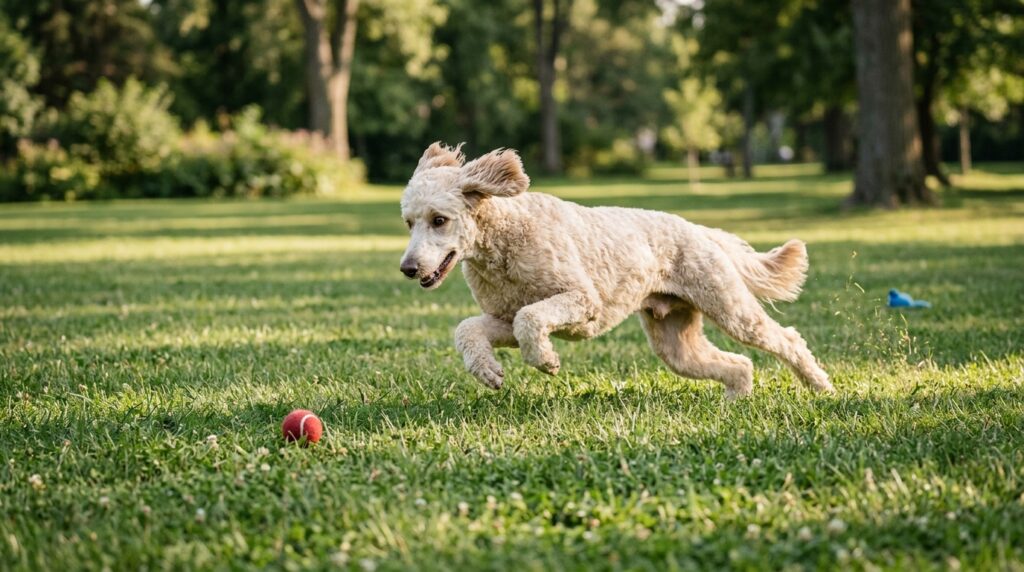
Poodles are intelligent, active dogs that generally benefit from a combination of physical exercise and mental stimulation.
The appropriate amount depends on size, age, health, and individual energy levels.
### Daily Walks
Most healthy adult Poodles benefit from regular walks. Standard Poodles often need more vigorous activity than smaller varieties, while Toy Poodles may be satisfied with shorter walks combined with indoor play.
Start with an appropriate routine and adjust it according to your dog’s condition and response.
Puppies should not be pushed into excessive repetitive exercise while their bodies are developing.
### Interactive Play
Games help provide exercise while strengthening the relationship between dog and owner.
Useful activities include:
– Fetch with appropriately sized toys.
– Hide-and-seek games.
– Short training sessions.
– Supervised exploration in safe outdoor spaces.
– Food puzzles and scent games.
### Mental Stimulation
Because Poodles are intelligent, physical exercise alone may not always meet their needs.
Teaching new commands, rotating toys, practicing recall, and offering safe problem-solving activities can help prevent boredom.
A dog that receives adequate stimulation may be less likely to develop unwanted behaviors associated with frustration or excess energy.
## What Should a Straight-Haired Poodle Eat?
A straight-haired Poodle generally needs the same nutritional principles as other dogs of comparable size, age, activity level, and health status.
Its unusual coat texture does not automatically require a special diet.
### Choose Complete and Balanced Dog Food
Select a commercially prepared food that is complete and balanced for the dog’s life stage. Puppies, adults, and senior dogs may have different nutritional requirements.
Small varieties may benefit from appropriately sized kibble, while larger dogs may need a different feeding plan based on their energy requirements.
A veterinarian can help you select an appropriate diet if your dog has allergies, digestive problems, or another medical condition.
### Control Portion Sizes
Follow the feeding guidance on the food packaging as a starting point, then adjust portions according to body condition and activity.
Overfeeding can lead to obesity, which places unnecessary strain on the joints and may contribute to other health problems.
Treats should remain a modest part of the daily diet.
### Support Skin and Coat Health
Adequate protein, essential fatty acids, vitamins, and minerals are important for healthy skin and hair.
A balanced diet generally provides the nutrients a healthy dog needs. Supplements should not be added automatically, particularly when the dog already eats a complete diet.
If the coat becomes unusually brittle, the skin becomes irritated, or hair loss develops, seek veterinary advice rather than assuming that a supplement will solve the problem.
### Keep Fresh Water Available
Provide clean drinking water throughout the day. Water requirements vary with body size, activity, weather, and diet.
A sudden increase or decrease in drinking can sometimes indicate a health problem and should be discussed with a veterinarian.
## Common Health Problems to Know About
A straight-haired Poodle does not necessarily have different health risks simply because of its coat. Its likely health concerns depend more on its breed ancestry, genetics, age, and overall care.
Purebred Poodles have some recognized inherited health risks, while mixed-breed dogs can inherit conditions associated with either parent.
### 1. Ear Infections
Poodles often have hanging ears, and some have hair that grows densely around the ear opening. These characteristics can make ear care important, although they do not mean an infection is inevitable.
Watch for head shaking, persistent scratching, redness, unpleasant odor, or discharge.
A veterinarian should examine the ears if these symptoms occur.
### 2. Dental Problems
Small Poodles, particularly Toy varieties, can be vulnerable to dental crowding and periodontal disease.
Regular toothbrushing with dog-safe toothpaste and routine veterinary dental assessments help reduce the risk of oral health problems.
Bad breath, difficulty chewing, or inflamed gums should not be dismissed as normal aging.
### 3. Eye Conditions
Some inherited eye disorders occur in Poodles and other breeds. The particular risks depend on ancestry and family history.
Regular veterinary examinations can help identify problems early. Cloudiness, persistent discharge, squinting, or sudden changes in vision warrant prompt assessment.
### 4. Joint and Orthopedic Problems
Depending on the variety and ancestry, a Poodle or Poodle mix may be susceptible to conditions affecting the knees, hips, or other joints.
Limping, reluctance to jump, stiffness, or difficulty standing should be investigated rather than attributed automatically to age.
Responsible breeding and maintaining a healthy body weight can help reduce certain risks.
### 5. Skin Problems and Allergies
Itching, redness, recurrent ear problems, and excessive licking may indicate allergies or other skin conditions.
Straight hair does not protect a dog from allergies. In some cases, grooming products or trapped moisture may also contribute to skin irritation.
A veterinarian can help determine the underlying cause and recommend appropriate treatment.
### 6. Inherited Conditions
Poodles can be affected by inherited conditions, including certain eye disorders and, depending on variety and family history, other breed-associated diseases.
If you are purchasing a puppy, ask the breeder about health screening appropriate for the parents and the specific Poodle variety. For mixed-breed dogs, screening should also consider the other parent breed.
A healthy-looking puppy is not necessarily free of inherited disease, so reliable health records are valuable.
## How Much Does a Straight-Haired Poodle Cost?
The price of a straight-haired Poodle can vary widely depending on location, ancestry, age, breeder reputation, veterinary care, and whether the dog is registered or sold as a Poodle mix.
There is no single reliable price for all straight-haired Poodles.
A puppy from a documented Poodle lineage may be priced differently from a mixed-breed dog with a similar appearance. A breeder may also charge more for particular coat colors, although color alone does not indicate health or temperament.
When evaluating the cost, consider the total expense of ownership rather than just the purchase price.
Potential costs include:
– Food and treats.
– Routine veterinary examinations.
– Vaccinations and parasite prevention.
– Grooming tools and professional grooming.
– Training and socialization.
– Bedding, toys, collars, and harnesses.
– Emergency veterinary treatment.
Adoption may be another option. Shelters and rescue organizations sometimes have Poodles and Poodle mixes that need homes.
If you are buying a puppy, avoid sellers who refuse to provide health information, will not let you see appropriate records, or make unrealistic promises about coat type, size, or shedding.
## Is a Straight-Haired Poodle Easy to Train?
Poodles are often highly trainable, but training success depends on consistency, motivation, environment, and the individual dog’s temperament.
Start with simple skills such as responding to its name, sitting, coming when called, and walking calmly on a leash.
### Use Positive Reinforcement
Reward the behaviors you want to encourage with small treats, praise, toys, or play.
Short, enjoyable sessions are generally more productive than long sessions that leave the dog frustrated or tired.
Avoid harsh punishment, which can damage trust and interfere with learning.
### Begin Socialization Early
Introduce puppies gradually to different sounds, surfaces, people, and suitable animals in a positive and controlled way.
Socialization should help the dog feel safe rather than forcing it into frightening situations.
For an adult dog with limited prior experience, proceed patiently and seek qualified professional support when needed.
### Teach Calm Independence
Some Poodles become strongly attached to their owners. Teaching a dog to relax independently can help it cope with normal periods of separation.
Start with brief, comfortable periods alone and increase them gradually. If the dog shows persistent distress, seek advice from a veterinarian or qualified behavior professional.
Is a Straight-Haired Poodle Suitable for Apartment Living?
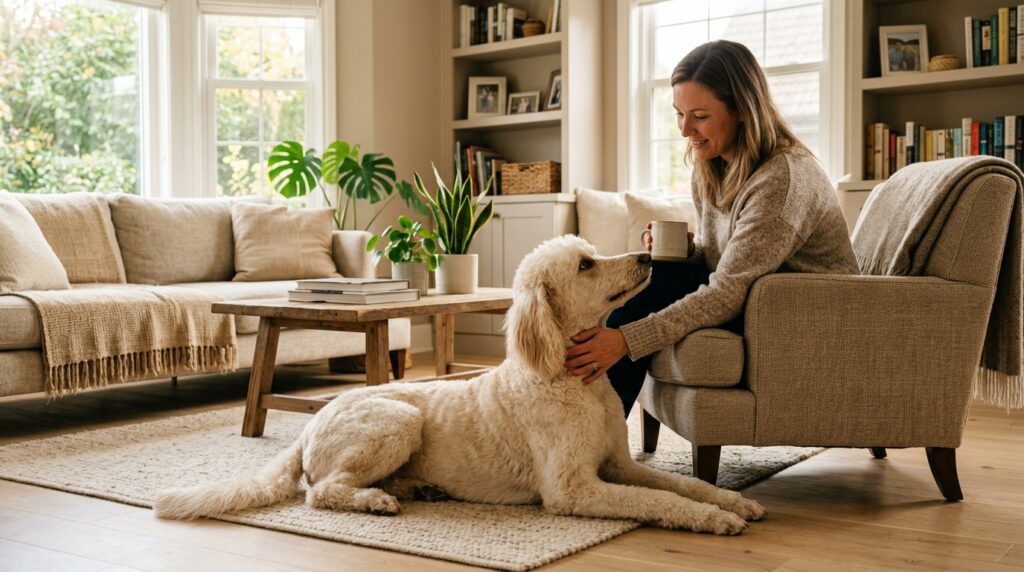
Many Poodles and Poodle mixes can adapt well to apartment living, provided their needs are met.
A Toy or Miniature Poodle may be easier to accommodate in a small home because of its size, but size is only one consideration. A Standard Poodle can also live in an apartment if the owner provides sufficient exercise, enrichment, and suitable outdoor access.
Before choosing a dog, consider:
– How much daily exercise you can provide.
– Whether the dog barks frequently.
– How long it will be left alone.
– Whether the building permits dogs.
– Whether you can manage grooming requirements.
– Access to safe outdoor areas.
A spacious home does not automatically guarantee a happy dog, just as an apartment does not automatically make a dog unhappy. Consistent care and suitable activities matter more than the size of the home alone.
## How to Care for a Straight-Haired Poodle Puppy
Puppies need a routine that supports healthy development, good behavior, and positive experiences.
### Establish a Feeding Routine
Feed a complete puppy diet appropriate for the dog’s expected size and developmental stage. Young puppies generally require more frequent meals than adult dogs.
Your veterinarian can help determine suitable portions and feeding frequency.
### Begin Gentle Grooming
Introduce brushing, paw handling, ear checks, and gentle body handling gradually.
Keep early grooming sessions short and rewarding. This helps the puppy become more comfortable with routine care as it grows.
### Arrange Veterinary Care
Puppies need appropriate vaccinations, parasite prevention, and regular health checks. Follow your veterinarian’s schedule for preventive care.
Discuss microchipping, identification, and the appropriate timing of spaying or neutering when relevant.
### Teach Basic House Rules
Establish consistent expectations for toilet training, sleeping areas, chewing, and interactions with household members.
Reward desirable behavior and supervise the puppy carefully to prevent avoidable accidents.
### Protect the Growing Puppy
Avoid excessive exercise and unsafe jumps, especially for small puppies. Provide suitable toys, a safe resting place, and supervised opportunities to explore.
Puppies also need adequate sleep and periods of quiet rest.
## Frequently Asked Questions About Straight-Haired Poodles
### Can a purebred Poodle have straight hair?
Poodles are expected to have curly or corded coats under major breed standards. A dog with a noticeably straight coat may have an unusual genetic expression, may be young, or may have mixed ancestry. Coat appearance alone cannot confirm pedigree.
### Will my straight-haired Poodle develop curls as it grows?
Possibly. Some Poodles develop a curlier coat as their adult hair comes in, while others retain a straighter or wavier appearance. The outcome depends on the dog’s individual genetics and development.
### Are straight-haired Poodles rare?
Dogs described as straight-haired Poodles are less typical than curly-coated Poodles. However, the term includes dogs with different backgrounds, including purebred dogs with atypical coats and Poodle mixes. There is no single reliable rarity estimate for this descriptive category.
### Do straight-haired Poodles need haircuts?
Often, yes. The frequency depends on coat length, density, and how easily the hair tangles. Shorter styles can make maintenance easier, while long coats usually require more frequent brushing.
### Are straight-haired Poodles good family dogs?
Many Poodles and Poodle mixes can make affectionate family companions. Their suitability depends on temperament, training, socialization, activity needs, and how well the household can meet their care requirements.
### Do straight-haired Poodles shed more than curly Poodles?
Not necessarily. Shedding depends on the dog’s genetics and coat characteristics. A Poodle mix may shed more than a purebred Poodle, but a straight-looking coat alone does not predict shedding accurately.
### Can a straight-haired Poodle be hypoallergenic?
No dog is completely hypoallergenic. Poodles are often considered lower-shedding, but allergens can come from dander, saliva, and urine. A straight-haired Poodle mix may have different shedding and allergen characteristics from a purebred Poodle.
### Are straight-haired Poodles good for first-time owners?
They can be, provided the owner is prepared for training, grooming, exercise, and routine veterinary care. A calm temperament and manageable energy level are more important than coat texture when choosing a dog for a first-time owner.
### Can I straighten my Poodle’s curly hair?
Grooming techniques can temporarily affect how the coat looks, but they do not permanently change the dog’s genetic coat texture. Avoid excessive heat or chemical straightening products, which can damage the coat or irritate the skin.
### What is the difference between a straight-haired Poodle and a doodle?
A straight-haired Poodle refers to a dog described by its coat texture, while a doodle generally refers to a Poodle cross, such as a Labradoodle or Goldendoodle. Doodles can have straight, wavy, or curly coats, depending on their inherited genetics.
## Final Thoughts: Is a Straight-Haired Poodle the Right Dog for You?
A straight-haired Poodle can be an appealing companion for anyone who appreciates the intelligence, expressive personality, and elegant appearance associated with Poodles. Its smoother or wavier coat may create a different look from the traditional curly variety, but appearance is only one small part of what makes a dog special.
Understanding the dog’s ancestry is important because a straight coat may reflect an unusual coat characteristic, a puppy’s developing hair, or mixed breeding. It is equally important not to assume that straight hair automatically means more shedding, less grooming, or a different temperament.
Before bringing one home, consider the dog’s exercise requirements, grooming needs, health history, training, and compatibility with your household. Choose a dog based on its individual needs and personality rather than coat texture alone.
Ultimately, the best companion is not necessarily the one with the most unusual appearance. It is the dog whose needs you can meet and with whom you can build a healthy, trusting relationship for years to come.
[learn_more caption=”Click here to learn more”]