
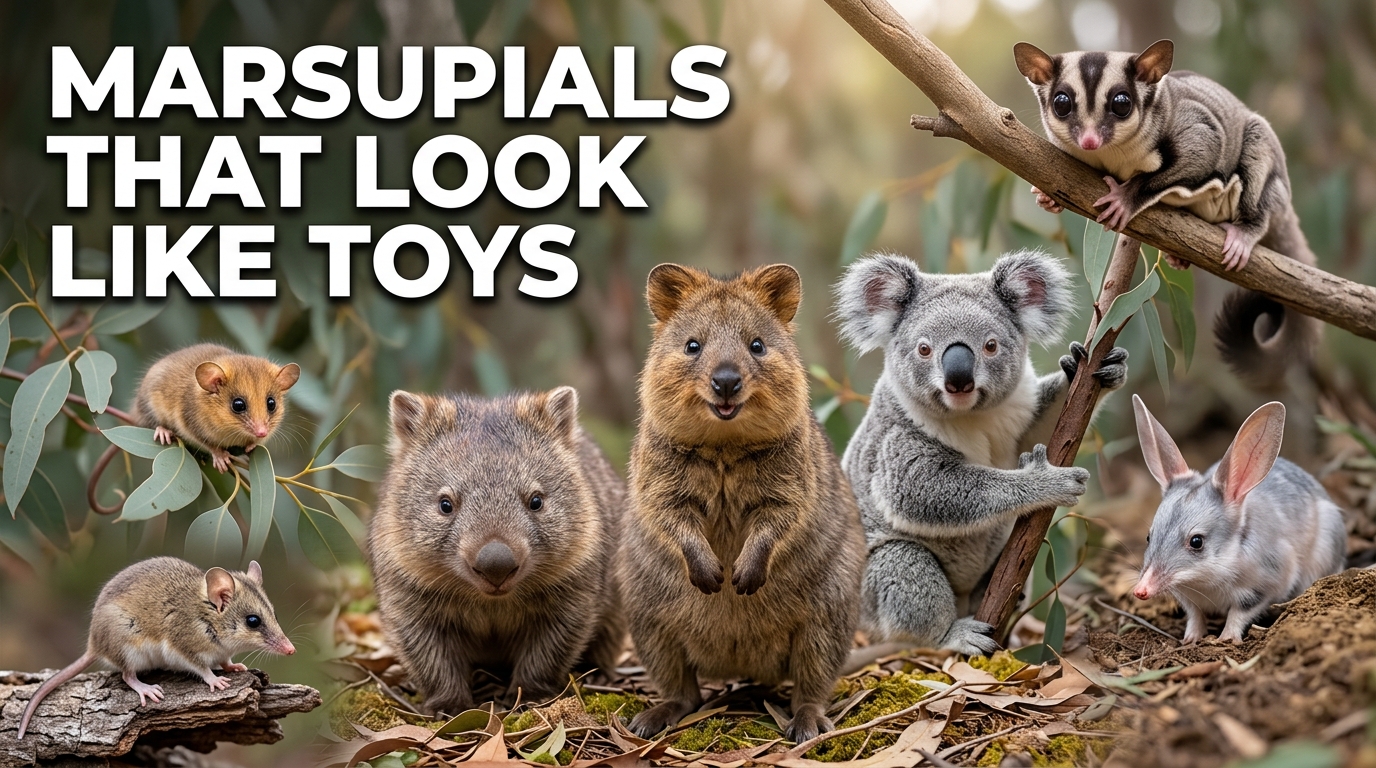
Marsupials That Look Like Toys: 7 Adorable Animals That Seem Almost Unreal
Some animals are so tiny, fluffy, and unusual that they look as though they have stepped straight out of a toy shop. Imagine a miniature kangaroo with oversized eyes, a sleepy-looking possum curled into a ball, or a fluffy animal with round ears that resembles a teddy bear. These remarkable creatures are not stuffed toys or cartoon characters. They are real animals known as marsupials.
Marsupials are fascinating mammals known for their unique reproductive systems. Many give birth to extremely underdeveloped young that continue growing in a pouch, while some species have only a limited pouch or lack a fully developed one. Although kangaroos and koalas are the best-known examples, the marsupial family includes many smaller and less familiar animals with extraordinary appearances.
Some have enormous eyes, tiny noses, and soft-looking fur. Others have unusually large ears, round bodies, or miniature paws that make them look like living plush toys. Their adorable appearance is only part of their story. These animals have evolved remarkable adaptations that help them climb trees, glide through forests, dig underground shelters, and survive in challenging environments.
In this article, we will explore seven marsupials that look remarkably like toys, discover where they live, learn what they eat, and uncover the surprising characteristics that make each one special.
What Are Marsupials?
Marsupials are mammals whose young are generally born at a much earlier stage of development than those of placental mammals. In many species, newborns crawl toward their mother’s pouch, where they attach to a teat and continue developing.
Australia is particularly famous for its marsupials, but these animals also live in New Guinea and the Americas. Their sizes, appearances, and lifestyles vary considerably. Some are powerful jumpers, some live in trees, and others spend much of their time searching for food on the ground.
Common examples include kangaroos, koalas, wombats, possums, opossums, and quokkas.
Although many marsupials look soft and cuddly, they are wild animals with specialized needs. Their appearance should never be mistaken for an invitation to touch, feed, or handle them.
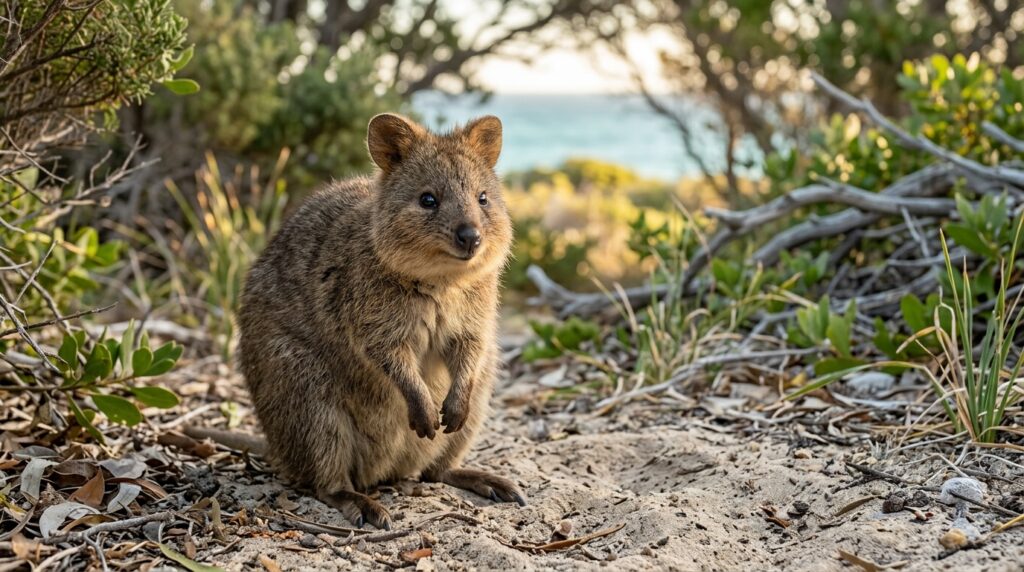
- Quokka: The Smiling Little Marsupial
Scientific name: Setonix brachyurus
The quokka is one of the most recognizable animals associated with the phrase “animals that look like toys.” Its rounded face, small ears, shiny eyes, and naturally upturned mouth give it an appearance that resembles a smiling plush animal.
Quokkas are small marsupials native to Western Australia. They are especially well known on Rottnest Island, where visitors sometimes encounter them resting in shaded areas or moving through vegetation.
Their compact bodies, short muzzles, and brown fur make them look like miniature teddy bears. When a quokka looks directly at a camera, its facial features can create the impression that it is smiling for a photograph.
What Makes the Quokka Look Like a Toy?
The quokka’s most noticeable features are its round cheeks, small nose, short ears, and seemingly cheerful expression. Its relatively compact body and soft-looking fur add to its teddy-bear-like appearance.
However, the familiar smile is simply a result of its facial structure. It does not necessarily indicate happiness or friendliness in the human sense.
Habitat and Diet
Quokkas live in areas with suitable vegetation, including dense shrubs and woodland habitats. They eat grasses, leaves, stems, and other plant material.
They are primarily nocturnal, meaning they are generally more active at night. During hot weather, they often rest in shaded vegetation to avoid excessive heat.
A Surprising Fact About Quokkas
Quokkas can survive periods when fresh water is limited by obtaining moisture from their food and using other water-conserving adaptations. However, they still depend on suitable habitat and food availability.
Their adorable appearance has made them popular in wildlife photographs, but visitors should never feed or handle them. Human food can be harmful, and close contact may cause unnecessary stress.
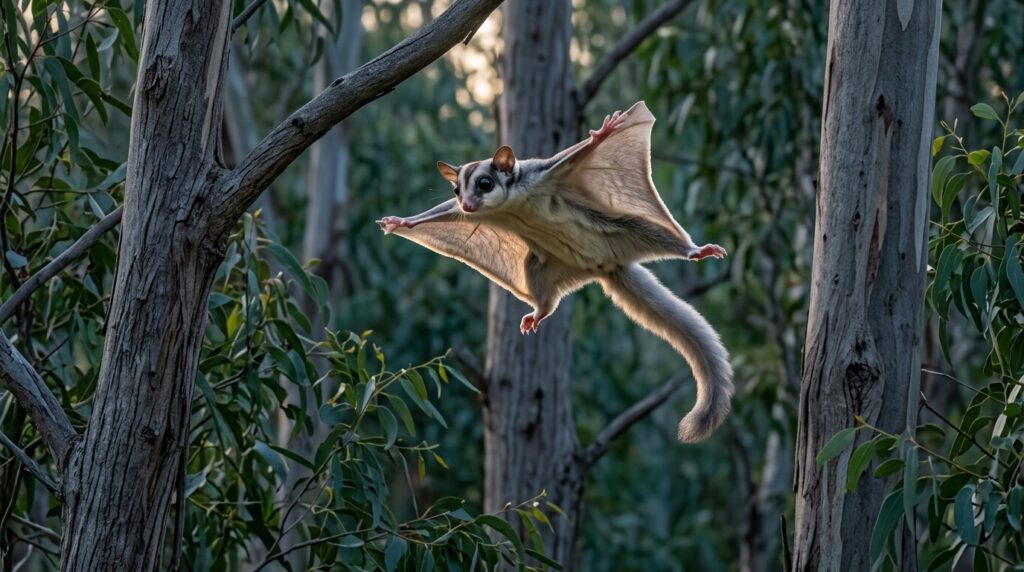
- Sugar Glider: The Tiny Flying Teddy Bear
Scientific name: Petaurus breviceps
With enormous dark eyes, grey fur, delicate ears, and a tiny pink nose, the sugar glider looks remarkably similar to a miniature stuffed animal. Its large eyes are particularly striking because they help it see in low-light conditions.
Sugar gliders are small, nocturnal marsupials associated with forests and wooded habitats in Australia and New Guinea. They spend much of their time in trees, searching for food and moving between branches.
Their name comes partly from their fondness for sweet plant products, including sap and nectar, and their extraordinary ability to glide through the air.
What Makes the Sugar Glider Look Like a Toy?
Sugar gliders have round eyes, small paws, soft-looking fur, and compact bodies. When they curl up to rest, they can resemble tiny plush toys.
Their eyes appear especially large in relation to their faces, giving them a wide-eyed expression that many people find irresistible.
But their most extraordinary feature is a membrane of skin called the patagium. This membrane stretches between their wrists and ankles, allowing them to glide between trees.
Habitat and Diet
Sugar gliders inhabit forests and wooded areas where they can find suitable food and tree hollows for shelter.
Their diet may include insects, nectar, pollen, and tree sap. Their food choices vary according to the season and the resources available in their environment.
Their sharp claws help them climb, while their long tails assist with balance and maneuvering through branches.
A Surprising Fact About Sugar Gliders
Sugar gliders cannot fly like birds. Instead, they launch themselves from elevated positions and spread their limbs to create a gliding surface.
They can steer their movements and adjust their bodies while traveling between trees. This ability helps them move through their habitat without having to descend to the ground every time they need to reach another tree.
Despite their adorable appearance, sugar gliders are active, social animals with demanding care requirements. They should not be treated like toys, and their specialized needs make them unsuitable pets for many households.
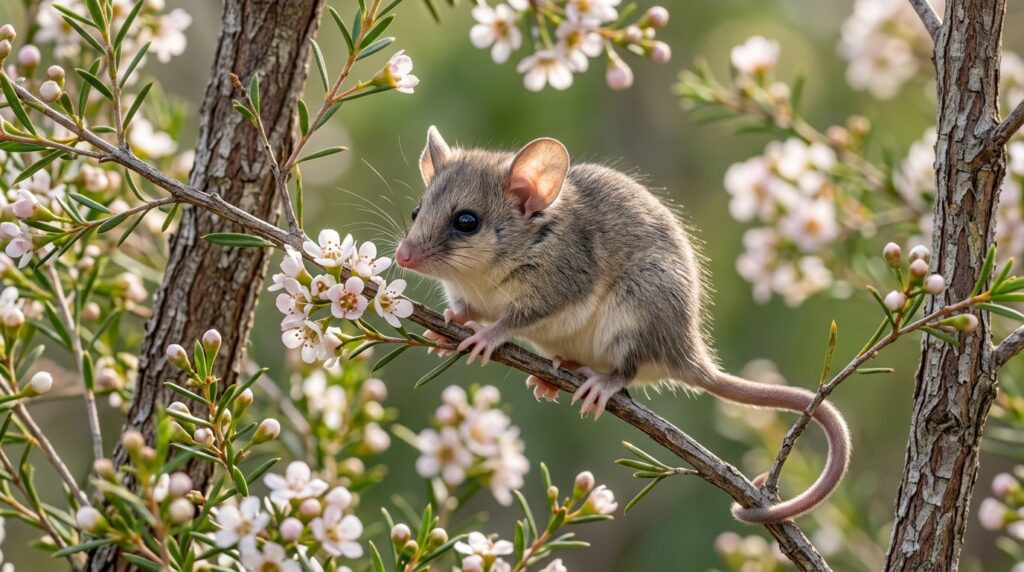
- Pygmy Possum: The Tiny Marsupial With a Teddy-Bear Face
Scientific name: Cercartetus nanus (eastern pygmy possum)
If a teddy bear could shrink to the size of a small mouse, it might look something like an eastern pygmy possum. This tiny marsupial has a rounded face, delicate whiskers, soft fur, and prominent eyes that make it look almost unreal.
Eastern pygmy possums are native to Australia. They inhabit a range of environments, including forests, heathlands, and areas with flowering plants that provide food.
Despite their small size, they are agile climbers that move through shrubs and trees in search of food.
What Makes the Pygmy Possum Look Like a Toy?
Its miniature body and relatively large eyes give it a plush-toy appearance. Its little ears, pink nose, and fine whiskers make its face particularly distinctive.
When resting in a sheltered spot, the animal may curl into a compact shape that resembles a tiny furry ball.
However, its delicate appearance hides an active lifestyle. Eastern pygmy possums are capable climbers and energetic foragers that depend on finding enough food to maintain their small bodies.
Habitat and Diet
Eastern pygmy possums feed on nectar, pollen, insects, and other small food sources. Their diet changes with the availability of flowering plants and insects throughout the year.
They use their grasping feet and claws to move through vegetation. Depending on conditions, they may shelter in tree hollows, nests, or other protected locations.
When temperatures drop or food becomes scarce, these possums can enter torpor. During torpor, their body temperature and metabolic activity decrease, helping them conserve energy.
A Surprising Fact About Pygmy Possums
Torpor is an important survival strategy for several small mammals. By temporarily reducing their energy requirements, pygmy possums can cope with periods when food is difficult to find.
Their small bodies and specialized diets also make them vulnerable to environmental changes. Habitat destruction can reduce the availability of flowering plants, insects, and suitable shelter.
Protecting native vegetation is therefore essential for supporting healthy pygmy possum populations.
- Bilby: The Fluffy-Eared Desert Explorer
Scientific name: Macrotis lagotis
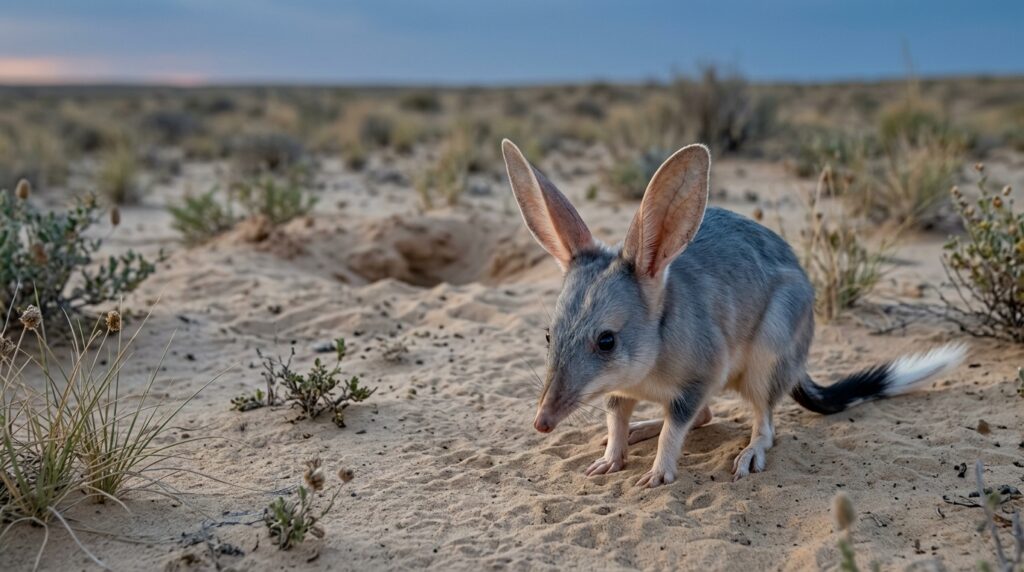
The bilby looks like a curious combination of a rabbit, a mouse, and a miniature fantasy creature. Its enormous upright ears, pointed snout, delicate nose, and long tail make it one of Australia’s most distinctive marsupials.
The greater bilby is native to Australia and is adapted to life in arid and semi-arid environments. Unlike rabbits, bilbies are marsupials, and their young develop in a pouch.
They also have powerful forelimbs and strong claws that allow them to dig burrows in dry soil.
What Makes the Bilby Look Like a Toy?
Its enormous ears are its most recognizable feature. They appear unusually large in proportion to its head, giving the animal a cartoon-like appearance.
Its soft-looking fur, narrow muzzle, and long ears make it resemble a plush rabbit with unusual proportions.
However, those ears are more than a cute feature. They help the bilby detect sounds and release body heat, which is useful in warm environments.
Habitat and Diet
Greater bilbies inhabit dry landscapes, including sandy areas and other environments where they can dig suitable burrows.
They eat a varied diet that can include insects, larvae, seeds, bulbs, fungi, and other underground food sources. Their strong sense of smell helps them locate food beneath the soil.
Bilbies are primarily nocturnal. They usually forage at night, when temperatures are cooler, and spend the daytime sheltered in burrows.
A Surprising Fact About Bilbies
Bilbies are excellent diggers. Their burrows provide protection from predators and extreme temperatures, allowing them to shelter during the hottest parts of the day.
Their digging also turns over soil and can influence how organic material is distributed in their environment.
Unfortunately, greater bilbies face serious conservation challenges, including introduced predators and habitat changes. Conservation initiatives focus on protecting suitable habitats and reducing threats to surviving populations.
- Wombat: The Living Plush Toy With Powerful Claws
Scientific name: Vombatus ursinus (bare-nosed wombat)
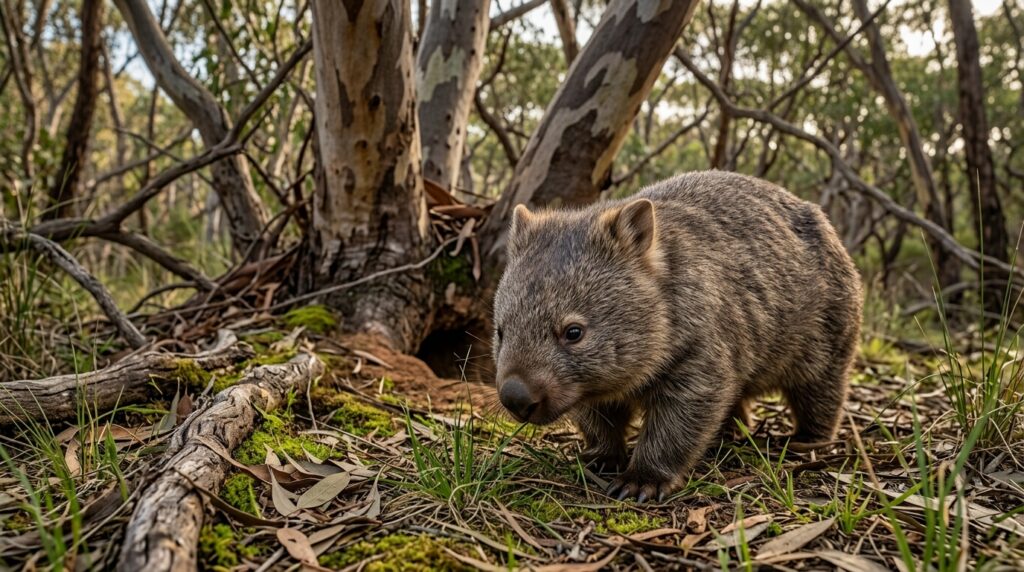
Wombats look like living stuffed animals, with short legs, rounded bodies, small ears, and broad noses. Their sturdy bodies and thick fur make them appear soft and cuddly, almost like oversized plush toys walking across the ground.
The bare-nosed wombat is native to southeastern Australia, including Tasmania. Unlike tree-dwelling marsupials, wombats spend much of their time on the ground and are exceptionally strong diggers.
Their bodies are built for strength, and their powerful forelimbs and claws allow them to excavate extensive burrow systems.
What Makes the Wombat Look Like a Toy?
Its round body, short limbs, small eyes, and thick fur create a compact, teddy-bear-like appearance.
When a wombat rests or walks slowly through vegetation, it can look like a furry cushion with a nose. Its short legs and sturdy shape make its movements appear charmingly clumsy.
But wombats are not helpless or fragile. They are powerful animals equipped for digging and defending themselves when necessary.
Habitat and Diet
Wombats inhabit forests, woodlands, grasslands, and heathland. They are herbivores, feeding mainly on grasses, roots, and other vegetation.
They commonly forage at night, when temperatures are cooler. During the day, they rest in burrows that provide shelter from the weather and potential predators.
Their burrows may contain multiple entrances, tunnels, and resting areas. These underground shelters are an important part of their survival strategy.
A Surprising Fact About Wombats
One of the strangest facts about wombats is that they produce cube-shaped droppings.
The unusual shape develops inside the intestine, where differences in the elasticity of intestinal tissues help form the distinctive cubes. These droppings can help wombats mark their territories without rolling away easily.
Despite their toy-like appearance, wombats are strong wild animals that may bite or scratch if threatened. They should always be observed from a safe distance.
- Fat-Tailed Dunnart: The Tiny Mouse-Like Marsupial
Scientific name: Sminthopsis crassicaudata
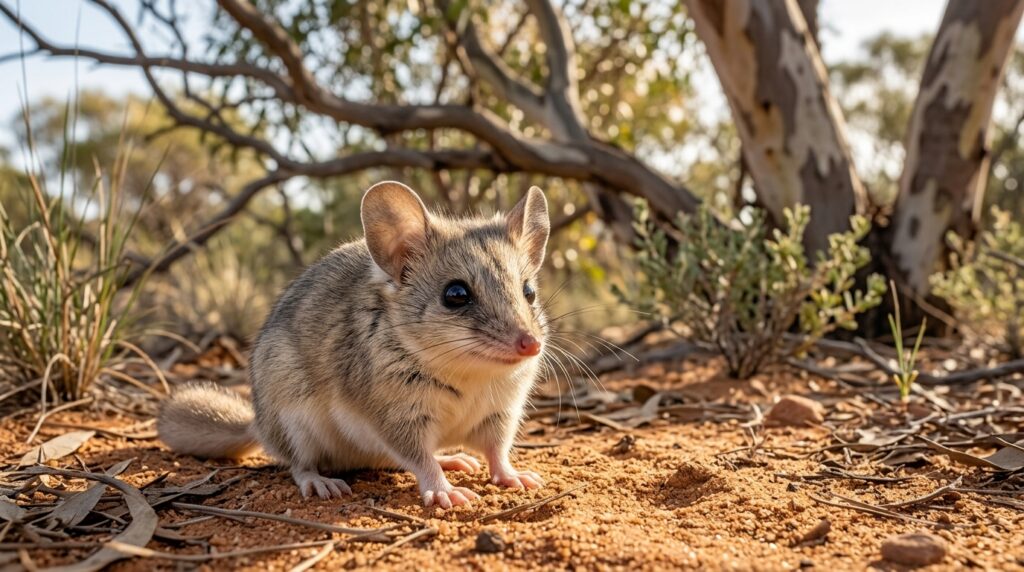
At first glance, the fat-tailed dunnart looks like a miniature mouse with oversized ears, a pointed nose, and bright, alert eyes. Its tiny body and delicate paws make it seem like a small toy animal.
However, this creature is not a rodent. It is a marsupial belonging to a group of small carnivorous mammals known as dunnarts.
Fat-tailed dunnarts are native to Australia and are adapted to living in dry and semi-arid environments.
What Makes the Fat-Tailed Dunnart Look Like a Toy?
Its large ears, fine whiskers, pointed snout, and tiny body give it a mouse-like appearance.
The most unusual feature is its thick tail, which stores fat that the animal can use as an energy reserve when food is scarce.
Its miniature proportions make it look like a plush mouse, but it is actually an active hunter with specialized survival adaptations.
Habitat and Diet
Fat-tailed dunnarts occur in dry regions of Australia, including grasslands and shrublands. They shelter in protected locations such as cracks, vegetation, or burrows.
Unlike plant-eating marsupials, they mainly feed on insects and other small invertebrates.
They use their quick movements and sharp senses to locate prey, often becoming active at night when temperatures are lower.
A Surprising Fact About Fat-Tailed Dunnarts
The fat stored in a dunnart’s tail acts as an energy reserve. When food becomes less available, the animal can draw on this stored energy to help meet its needs.
This adaptation is particularly useful in environments where food availability changes over time.
Although the dunnart is tiny, it is a capable predator of small invertebrates. Its appearance may remind people of a pet mouse, but its behavior and ecological role are quite different.
- Koala: The Famous Teddy Bear of Australia
Scientific name: Phascolarctos cinereus
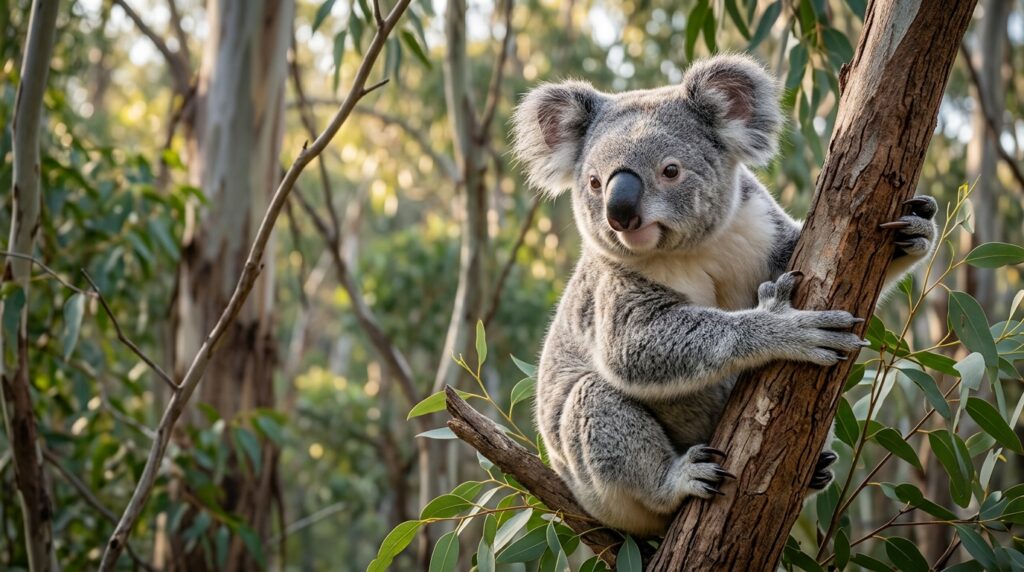
No list of marsupials that look like toys would be complete without the koala. With its fluffy ears, round face, grey fur, and large black nose, the koala resembles a teddy bear resting among tree branches.
Koalas are native to Australia and spend most of their lives in eucalyptus trees. Their strong limbs, sharp claws, and specialized feet help them grip trunks and branches while resting or searching for leaves.
Their slow movements and rounded appearance have made them one of the most recognizable animals in the world.
What Makes the Koala Look Like a Toy?
Its round, fluffy ears resemble little pom-poms, while its broad nose and small eyes give it a distinctive teddy-bear face.
Its thick fur adds to its cuddly appearance, especially when it curls up against a tree trunk.
However, the koala’s body is designed for a specialized lifestyle. Its limbs and claws are adapted for climbing, while its digestive system allows it to process a diet that many other animals would struggle to tolerate.
Habitat and Diet
Koalas inhabit eucalyptus forests and woodlands in eastern and southeastern Australia.
They feed mainly on eucalyptus leaves, although they do not consume every eucalyptus species equally. Their choices depend on factors such as leaf chemistry, nutritional value, and availability.
Eucalyptus leaves provide relatively little energy and contain compounds that can be toxic to many animals. Koalas have a specialized digestive system, including a large fermentation chamber in the hindgut, that helps them process this challenging food.
Because their diet supplies limited energy, koalas conserve energy by resting for much of the day. They may rest or sleep for many hours, although activity varies according to environmental conditions.
A Surprising Fact About Koalas
Koalas have specialized front paws with two opposable digits that help them grip branches. Their hands and feet are remarkably well adapted for climbing.
Although they often appear sleepy, koalas must still move between trees to find suitable food and shelter.
They face threats including habitat loss, vehicle collisions, disease, and increasingly severe environmental conditions in some areas. Protecting connected eucalyptus habitats is important for their long-term survival.
Why Do Some Marsupials Look So Much Like Toys?
The resemblance between these animals and stuffed toys comes from several physical characteristics. Their features may appear cute to humans, but each has developed through evolution and serves a purpose in the animal’s environment.
- Large Eyes and Small Faces
Sugar gliders and pygmy possums have large eyes relative to their body size. For nocturnal animals, large eyes help collect light in dim conditions.
To humans, these proportions can also create an appearance associated with baby animals and cartoon characters.
- Rounded Bodies and Fluffy Fur
Quokkas, wombats, and koalas have rounded bodies and thick-looking fur. These features can make them resemble plush toys, particularly when they are resting or curled up.
Their fur provides insulation and protection, while their body shapes reflect adaptations to their individual lifestyles.
- Tiny Noses and Unusual Ears
Some pygmy possums have delicate noses and small facial features, while bilbies and sugar gliders have conspicuously large ears.
These differences create distinctive silhouettes and facial expressions. Large ears may help with hearing or heat regulation, while sensitive noses can help animals locate food.
- Miniature Body Sizes
Small marsupials such as dunnarts and pygmy possums can look especially toy-like because their bodies are so tiny.
Their small size allows them to use narrow spaces, move through vegetation, and occupy ecological niches that larger animals cannot easily access.
- Extraordinary Survival Adaptations
The most fascinating features of these animals are not simply their appearances. Sugar gliders glide between trees, bilbies dig underground shelters, wombats excavate burrows, and dunnarts store fat in their tails.
These adaptations help them survive in different environments and demonstrate the remarkable diversity of marsupials.
Are Toy-Like Marsupials Good Pets?
Their adorable appearances can make these animals seem like ideal companions, but most marsupials have specialized needs that are difficult to meet in ordinary homes.
Many are nocturnal, require carefully managed diets, need complex environments, or become stressed when handled. Some species are protected by wildlife laws, and keeping them may require permits or be prohibited altogether.
Even species that can legally be kept in certain places require suitable housing, enrichment, species-specific nutrition, and access to veterinary professionals who understand their needs.
A cute appearance does not mean an animal enjoys human contact or is easy to care for.
The best way to appreciate these marsupials is to observe them responsibly through reputable wildlife sanctuaries, conservation organizations, and ethical wildlife photography.
How Can We Help Protect These Adorable Animals?
Marsupials face different challenges depending on their species and habitat. Habitat destruction, introduced predators, climate change, road traffic, and human disturbance can all affect their survival.
Here are a few practical ways to help:
- Support wildlife conservation: Contribute to credible organizations working to protect native habitats and threatened species.
- Respect wild animals: Observe them from a distance instead of trying to touch, chase, or handle them.
- Never feed wildlife casually: Human food may be harmful and can encourage animals to approach roads or people.
- Protect natural habitats: Support responsible land management and the preservation of forests, woodlands, and other native environments.
- Choose ethical wildlife experiences: Visit reputable sanctuaries that prioritize animal welfare and conservation.
- Learn about threatened species: Understanding the challenges individual marsupials face can help people make more informed conservation choices.
Even small actions can contribute to protecting the ecosystems these extraordinary animals depend on.
Final Thoughts
From the smiling quokka and wide-eyed sugar glider to the tiny pygmy possum, powerful wombat, and fluffy koala, marsupials demonstrate just how diverse and extraordinary the animal kingdom can be.
Their toy-like appearances may be what first attracts our attention, but their fascinating adaptations are what make them truly remarkable. Some glide between trees, others dig underground shelters, and some survive on specialized diets that few other mammals can tolerate.
The next time you see a photograph of a tiny marsupial that looks like a teddy bear or miniature plush toy, remember that you are looking at a real wild animal with its own behaviors, habitat requirements, and role in the ecosystem.
Which of these seven adorable marsupials surprised you the most? Was it the sugar glider’s ability to glide between trees, the bilby’s enormous ears, or the wombat’s cube-shaped droppings? Every one of these animals offers another reason to appreciate and protect the extraordinary wildlife of our planet.