Most Silent Creatures on Earth
The natural world is full of sounds. Birds sing in the morning, insects chirp at night, lions roar across the grasslands, and whales communicate through the vast oceans. Yet, alongside these noisy animals, there are creatures that live, hunt, and move through their environments with remarkably little noticeable sound.
Some animals have evolved special body structures that help them move quietly. Others rarely produce audible calls, while certain creatures communicate using sounds that human ears cannot detect. From the barn owl gliding through the darkness to the stick insect hiding among branches, these animals reveal a fascinating side of nature that often goes unnoticed.
But which creature is actually the quietest on Earth? Is it an animal that never makes a sound, one that moves without being heard, or one whose sounds are beyond human hearing?
To answer these questions, we first need to understand how scientists measure animal sounds, what silence means in the animal kingdom, and why certain creatures have developed such quiet lifestyles. We can then explore some of the most remarkable examples and discover how their silence helps them survive.
How Do Scientists Measure Which Animal Is the Most Silent?

Scientists cannot determine the quietest animal simply by observing which creature appears silent. An animal may seem quiet to a human observer while producing faint sounds, ultrasonic calls, or vibrations that require specialized equipment to detect.
The scientific study of sound produced by living organisms is known as bioacoustics. Researchers use this field to investigate animal communication, hunting behavior, mating calls, predator detection, and the sounds animals produce as they move.
Measuring sound in decibels
One of the most important measurements is the sound pressure level, expressed in decibels (dB). Decibels describe sound pressure relative to a standard reference level.
Scientists can use calibrated microphones and sound-level meters to measure the sounds produced by animals. However, a decibel reading alone does not automatically tell researchers which animal is the quietest.
The result depends on several factors, including the distance between the animal and the microphone, the surrounding environment, the microphone’s sensitivity, and the frequency of the sound.
For example, a bird recorded from a distance of one meter cannot be fairly compared with another bird recorded from ten meters away without accounting for the difference.
Using specialized recording equipment
Many animal sounds are too faint, too high-pitched, or too low-pitched for humans to hear easily. Scientists therefore use equipment suited to the animal and its habitat.
- Sensitive microphones: Record faint sounds produced by animals on land.
- Ultrasonic detectors: Detect high-frequency sounds, including many bat calls that humans cannot hear unaided.
- Hydrophones: Record sounds underwater, such as calls and noises produced by marine animals and fish.
- Vibration sensors: Detect certain vibrations transmitted through surfaces such as soil, leaves, and wood.
These tools allow scientists to study sounds that would otherwise remain unnoticed.
Measuring how frequently animals make sounds
Scientists also consider how often an animal produces sounds, how long those sounds last, and what the animal is doing when it makes them.
An animal might produce a loud call only during mating season but remain quiet for most of the year. Another might produce many extremely faint sounds throughout the day.
Which animal is quieter depends partly on whether researchers are comparing the loudness of individual sounds, the frequency of vocalizations, or the total sound produced during a particular period.
Can scientists identify the quietest animal on Earth?
There is no universally accepted scientific ranking that identifies one species as the quietest animal on Earth across all environments and behaviors.
To make a fair comparison, researchers would need to define silence precisely, use appropriate recording equipment, account for background noise, and compare animals under consistent conditions.
The key distinction is that the quietest animal is not necessarily the animal that produces the fewest vocalizations. An animal may rarely call but create noise through movement, while another may vocalize frequently at frequencies humans cannot hear
What Does “Silent Creature” Actually Mean?
A silent creature is an animal that produces very little noticeable sound, moves quietly, or communicates in ways that humans cannot easily hear. However, silence is a descriptive term rather than a formal scientific classification.
There are three important types of silence in the animal kingdom.
Physical silence
Physical silence refers to an animal’s ability to move while producing very little audible noise. This is particularly useful for predators that need to approach their prey without being detected.
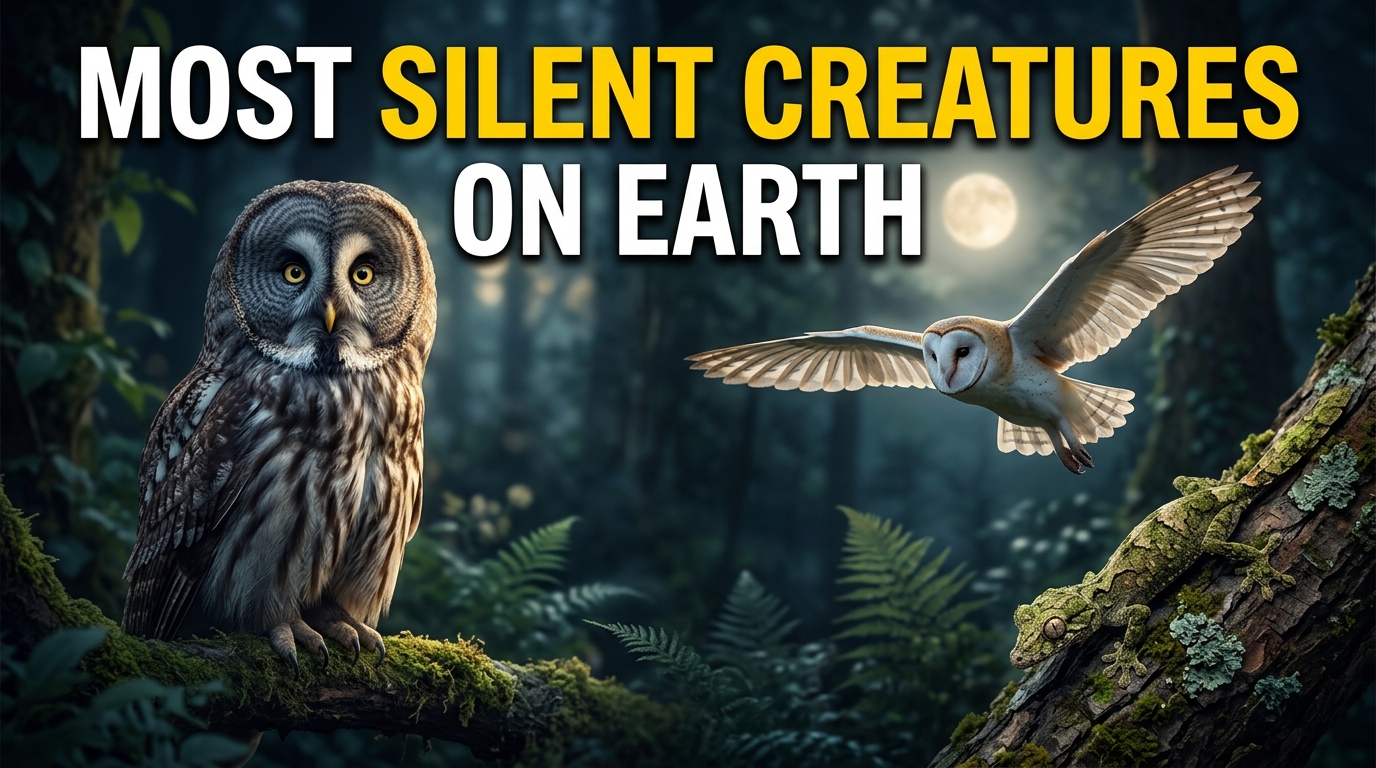
The barn owl is a famous example. Its specialized feathers help reduce the sound of its wings during flight. This adaptation allows it to approach prey more quietly than many other birds.
Oxford Academic
Silence to human ears
Some animals produce sounds outside the normal human hearing range. Humans generally hear frequencies from approximately 20 hertz to 20,000 hertz, although individual hearing ranges vary.
Bats, for example, use ultrasonic calls for echolocation. Their calls help them navigate in darkness and detect insects, but many of these sounds are inaudible to people without specialized equipment.
These animals are not actually silent. Their sounds are simply difficult for humans to hear.
Behavioral silence
Behavioral silence occurs when an animal remains still, moves slowly, or avoids making noticeable sounds during particular activities.
A stick insect may remain motionless among branches to avoid predators. A sloth may move slowly through the forest canopy, while a snake may approach prey without producing obvious footsteps.
These animals can still produce sounds, but their normal behavior often makes them difficult to notice.
Why does the distinction matter? An animal that moves silently is not necessarily an animal that never makes sounds. To understand the quietest creatures on Earth, we must consider both their sound production and their behavior.
- List of the Most Silent Creatures on Earth
The following ten creatures represent different forms of quietness, from specialized silent flight to slow movement and limited audible vocalization. They are not ranked by measured decibel levels because a standardized comparison across all these species is not available.
- Barn Owl — A specialized flying hunter whose feathers reduce wing noise.
- Sloth — A slow-moving mammal that often remains inconspicuous in trees.
- Giraffe — A large mammal that is often quiet during everyday activities.
- Sea Turtle — A marine reptile that glides through water without conspicuous movement noise.
- Octopus — A stealthy marine animal that relies on camouflage and flexible movement.
- Stick Insect — An insect that uses camouflage and stillness to avoid detection.
- Jellyfish — A marine animal without the familiar vocal systems of birds and mammals.
- Garden Snail — A slow-moving mollusk that usually makes little noticeable noise.
- Moth — An insect that often moves inconspicuously, although some species produce ultrasound.
- Snake — A reptile that can move quietly and approach prey without obvious footsteps.
Let’s explore each creature in detail, including its habitat, behavior, adaptations, and the reasons it is associated with silence.
- Barn Owl: The Master of Silent Flight
The barn owl (Tyto alba) is one of the strongest examples of quiet movement in the animal kingdom. Found across many parts of the world, this nocturnal bird commonly inhabits open countryside, grasslands, agricultural areas, and places where small mammals are abundant.
Its heart-shaped facial disc, pale feathers, and dark eyes give it a distinctive appearance. But its most remarkable feature for this topic is its ability to fly with unusually little audible noise.
How does the barn owl fly so quietly?
Three features of owl feathers contribute to noise reduction:
- Comb-like leading edges: Fine structures along the front of the wings influence the airflow around the feathers.
- Soft feather surfaces: The velvety texture helps reduce certain sources of friction-related sound.
- Fringed trailing edges: Fine feather edges influence turbulent airflow and help reduce some aerodynamic noise.
These features work together to reduce several sources of sound during flight. They do not eliminate every sound, and researchers continue to investigate the precise mechanisms involved.
Oxford Academic
How does silence help the barn owl hunt?
Barn owls frequently hunt at night, when visibility is limited. They rely heavily on their excellent hearing to detect small animals moving through grass or other vegetation.
Their facial structure helps direct sound toward their ears, allowing them to locate prey with impressive precision. Quiet flight complements this ability because a mouse may have less warning of an approaching predator.
The combination of hearing, flight adaptations, and nocturnal hunting makes the barn owl an exceptionally effective hunter.
Is the barn owl completely silent?
No. Barn owls can screech, hiss, and make other vocalizations. Their remarkable characteristic is their ability to reduce the noise of flight, not an inability to produce sound.
What makes it special: The barn owl is arguably the most compelling example on this list of an animal that has evolved a physical adaptation specifically associated with quieter movement.
- Sloth: The Slow and Quiet Rainforest Mammal
Sloths are unusual mammals native to Central and South America. They spend much of their lives in trees, where they feed on leaves, rest, and move slowly between branches.
Their relaxed behavior and limited movement often make them difficult to notice in dense rainforest vegetation.
Why do sloths move so slowly?
Sloths have relatively low metabolic rates and are adapted to a lifestyle that conserves energy. Their leaf-based diets, specialized digestive systems, and slow movement are all associated with this energy-saving strategy.
Their long, curved claws help them grip branches, and their bodies are well adapted for hanging upside down. Rather than constantly moving around in search of food, sloths often remain in one place for extended periods.
How does quiet behavior help sloths survive?
Movement can attract attention from predators. By moving slowly and remaining still for long periods, sloths may be less conspicuous than animals that frequently leap, run, or make loud calls.
Some sloths also have algae growing in their fur, which can give their coats a greenish tint and contribute to camouflage.
However, their quietness should not be confused with complete silence. Sloths can vocalize, particularly in certain social situations and when young animals communicate with their mothers.
Are sloths the quietest mammals?
There is no reliable scientific ranking establishing sloths as the quietest mammals. Their slow movement and inconspicuous lifestyle make them suitable examples of behavioral quietness, but their sound production would need to be compared with that of other mammals using consistent measurements.
What makes them special: Sloths demonstrate that survival can depend on conserving energy and avoiding attention rather than relying on speed or loud defensive behavior.
- Giraffe: The Quiet Giant of the African Savanna
The giraffe is the tallest living land animal, recognized by its exceptionally long neck, long legs, and distinctive coat pattern. Giraffes live in African savannas, open woodlands, and other habitats where trees provide leaves for feeding.
Despite their enormous size, giraffes are not generally associated with frequent, conspicuous vocalizations.
Why are giraffes often considered quiet?
Giraffes spend much of their day browsing on leaves, walking between feeding areas, resting, and observing their surroundings. These activities do not normally require loud vocal displays.
Their height allows them to see across open landscapes, while their coat patterns help break up their outline among vegetation and shadows.
Their measured movements can also seem surprisingly quiet for such large animals, although their footsteps are not completely soundless.
Do giraffes make sounds?
Yes. Giraffes can produce vocalizations, including humming sounds that have been documented during nighttime observations. They may also use other sounds and behavioral signals during social interactions.
Their communication is not completely silent, and scientists are still investigating the roles of different giraffe vocalizations.
How does quietness benefit giraffes?
Giraffes rely on vigilance, vision, group behavior, and mobility to help detect and respond to danger. They do not depend on loud calls in every situation.
Their relatively quiet everyday behavior is one aspect of their lifestyle, rather than evidence that they have evolved a specialized mechanism for silence.
What makes them special: Giraffes demonstrate that an animal can be quiet during ordinary activities even when it is large, powerful, and capable of producing sound.
- Sea Turtle: The Quiet Swimmer of the Ocean
Sea turtles are ancient marine reptiles that inhabit tropical and temperate oceans. Depending on the species, they may travel through coastal waters, coral reef environments, seagrass beds, and open seas.
Their streamlined bodies and broad flippers allow them to swim efficiently, often with little of the splashing associated with animals moving at the water’s surface.
How do sea turtles move through water?
Sea turtles use their front flippers to generate propulsion, while their rear flippers help with steering and stability. Their streamlined shape reduces resistance as they swim.
Underwater, sound behaves differently than it does in air. It can travel long distances, and even faint sounds may be detected by specialized underwater recording equipment.
As a result, an animal that appears quiet to a swimmer may still be producing detectable sounds or vibrations.
Do sea turtles communicate through sound?
Research has documented sound production in sea turtles, including vocalizations by hatchlings and sounds associated with certain social or developmental behaviors. The exact functions of many turtle sounds remain under investigation.
Sea turtles are therefore not completely silent, even though they lack the familiar vocal systems of many mammals and birds.
How does their quiet swimming help them survive?
Sea turtles rely on efficient movement, environmental awareness, and behaviors suited to their marine habitats. They also use vision, touch, and other sensory information while navigating and searching for food.
Quiet swimming may make their movements less conspicuous in some circumstances, but it should not be assumed to be their primary survival adaptation.
What makes them special: Sea turtles illustrate how marine animals can move efficiently through water without producing the obvious movement sounds commonly associated with land animals.
- Octopus: The Stealthy Hunter of the Seabed
The octopus is an intelligent marine invertebrate known for its eight arms, flexible body, camouflage abilities, and problem-solving skills. Many species live around coral reefs, rocky seabeds, and crevices where they search for crabs, mollusks, and other prey.
Unlike birds and many mammals, octopuses are not known for prominent vocal calls. Their movements can be relatively inconspicuous, particularly when they crawl slowly across the seabed.
How does an octopus move quietly?
An octopus coordinates its flexible arms and uses its suckers to grip surfaces. It can crawl across rocks, squeeze through narrow openings, and adjust its posture to navigate complicated environments.
Many species can also change their skin color and texture, helping them blend into rocks, sand, and coral.
When threatened, some octopuses can expel water through a siphon to move rapidly away from danger. This provides an escape mechanism, although it is not necessarily silent.
How do octopuses communicate?
Octopuses use visual displays, changes in skin coloration, posture, and tactile interactions. These signals can convey information during encounters with other animals.
Their communication does not depend on vocal calls in the way that communication does for many birds and mammals.
Is the octopus truly silent?
Not in an absolute sense. An octopus can create sounds through movement and interaction with its environment, and a lack of familiar vocal calls does not prove that it produces no sound whatsoever.
What makes it special: The octopus is a remarkable example of stealth through flexible movement, camouflage, and non-vocal communication.
- Stick Insect: The Master of Camouflage
Stick insects, also known as walking sticks, belong to the insect order Phasmatodea. Their bodies often resemble twigs, stems, or branches, making them among the most recognizable camouflage specialists in nature.
They inhabit vegetation-rich environments, where they feed primarily on plant material and often rely on remaining unnoticed to avoid predators.
Why are stick insects so quiet?
Many stick insects move slowly and remain motionless for long periods. Some sway gently to resemble a twig moving in the breeze, while others align their bodies with nearby branches.
Their camouflage makes it difficult for predators to distinguish them from the plants around them. Remaining still is particularly useful because sudden movement can reveal an animal’s location.
Because they are small and generally do not rely on prominent audible calls, their movements may be difficult for humans to notice.
Can stick insects make sounds?
Some species can produce defensive sounds, including noises generated by rubbing body parts together or through other specialized mechanisms. Certain species also use wing displays or chemical defenses when threatened.
Consequently, not every stick insect is silent. Their sound production and defensive behavior vary by species.
How does silence help them survive?
A stick insect does not need to outrun every predator if it can avoid being detected in the first place. Its twig-like appearance, slow movement, and ability to remain still can all reduce the likelihood of being noticed.
What makes it special: Stick insects demonstrate how camouflage and behavioral stillness can be effective survival strategies, even without sophisticated physical adaptations for silent movement.
- Jellyfish: The Quiet Drifter of the Sea
Jellyfish are gelatinous aquatic animals found in oceans around the world. Many have bell-shaped bodies that contract rhythmically, allowing them to move through the water.
They do not have the familiar vocal systems of birds and mammals, and their everyday movements are not associated with prominent vocal calls.
How do jellyfish move?
Many jellyfish propel themselves by contracting and relaxing their bells, pushing water backward and moving forward. Ocean currents also influence their movement, and some species spend considerable time drifting rather than swimming actively.
Their translucent bodies and flowing tentacles can make them appear almost ghostlike as they move through the water.
Are jellyfish completely silent?
It would be inaccurate to conclude that every jellyfish movement is entirely soundless. Water movement, contact with surfaces, and other physical processes can produce vibrations or sounds.
However, jellyfish are not known for the prominent vocal communication seen in many other animal groups.
How do jellyfish survive without familiar vocal communication?
Jellyfish rely on a different set of biological systems from those of birds and mammals. They lack a centralized brain and do not use vocal communication in the same familiar way.
Their movement, responses to environmental conditions, and interactions with prey and predators depend on their specialized anatomy and nervous system.
What makes them special: Jellyfish remind us that successful animal life does not require the kinds of vocal communication that humans find most familiar.
- Garden Snail: The Almost Unnoticeable Mover
Garden snails are small land mollusks commonly found in damp gardens, forests, and other moist environments. They move using a muscular foot that glides over a layer of mucus, helping them travel across surfaces.
Their slow movements and lack of conspicuous vocal calls make them familiar examples of animals that produce little noticeable sound in everyday settings.
Why do snails make so little noise?
A snail moves gradually rather than running or striking the ground forcefully. Its muscular foot and mucus layer help it glide over surfaces, so its movement generally produces no obvious sound to a human observer.
Snails also lack the vocal structures associated with the calls of birds and mammals.
Nevertheless, sensitive recording equipment may detect faint sounds associated with movement or feeding under suitable conditions. These sounds can depend on the species, surface, and recording environment.
How do snails protect themselves?
When threatened, many snails withdraw into their shells. Some can also seal the shell opening temporarily to help reduce water loss during unfavorable conditions.
Moisture, shelter, camouflage, and protective behavior are important to their survival.
Why are snails considered quiet creatures?
Their slow movement and limited audible signaling make them inconspicuous in many environments. However, there is no standardized scientific evidence establishing garden snails as the quietest animals on Earth.
What makes them special: The garden snail demonstrates how an animal can move through its environment with very little noticeable sound while relying on a simple but effective combination of movement and protection.
- Moth: The Quiet Insect With Hidden Acoustic Abilities
Moths are insects related to butterflies and occupy a wide range of habitats. Many species are active at night, resting on tree trunks, hiding among leaves, or flying in search of food and mates.
To humans, moths often seem almost completely silent. Their small size and delicate flight generally produce little noticeable noise.
Yet some moths possess fascinating acoustic abilities that reveal how misleading apparent silence can be.
Why are moths often quiet?
Many moths do not produce prominent audible calls during their ordinary activities. Their lightweight wings and relatively small bodies often make their movements less noticeable than those of larger animals.
However, moths are not universally silent. Certain species produce ultrasonic clicks or other sounds, particularly in interactions with bats.
How do moths use sound to survive?
Many bats use echolocation, producing high-frequency calls and detecting the echoes that return from nearby objects and prey.
Some moths have ears that can detect these ultrasonic calls. When they detect a nearby bat, they may change their flight behavior, drop suddenly, or produce sounds that interfere with the bat’s detection or communicate that the moth is unpalatable.
The exact defensive mechanism depends on the moth species.
Are moths truly silent?
No. Some moths produce sounds that are beyond normal human hearing, and specialized detectors can reveal this activity.
Their example demonstrates that an animal may appear silent to humans while participating in an acoustic environment that is essential to its survival.
What makes them special: Moths show that silence is sometimes a limitation of human hearing rather than a true absence of sound.
- Snake: The Stealthy Reptile
Snakes inhabit a wide range of environments, including forests, grasslands, deserts, wetlands, and oceans. Their elongated bodies, specialized muscles, and overlapping scales allow them to move without limbs.
Many species rely on stealth to approach prey or avoid predators, making them useful examples of quiet movement.
Why do snakes move quietly?
Snakes move by coordinating their muscles and scales to push against the ground, vegetation, or other surfaces. Depending on the species and terrain, this movement can be difficult to hear.
They can also remain motionless for extended periods, blend into their surroundings, and move carefully when approaching prey.
Do snakes make sounds?
Yes. Many snakes hiss by forcing air through the glottis. Some species produce specialized sounds, such as the rattling of rattlesnakes, while others may make noises when threatened.
Their sound production varies considerably by species and situation.
How does stealth help snakes survive?
Quiet movement can help snakes approach prey without being detected. It can also reduce the chance of attracting attention from predators.
Many snakes rely on additional sensory abilities, including chemical sensing through the tongue. Certain species possess specialized heat-sensitive organs that help them detect warm-bodied prey.
These adaptations allow snakes to interpret their surroundings without depending entirely on sound.
What makes them special: Snakes demonstrate how quiet movement, camouflage, and specialized senses can work together to help an animal survive.
- Other Animals Known for Their Quiet Behavior
Beyond the ten creatures discussed above, several other animals are worth mentioning because they demonstrate different forms of quietness.
Red Panda
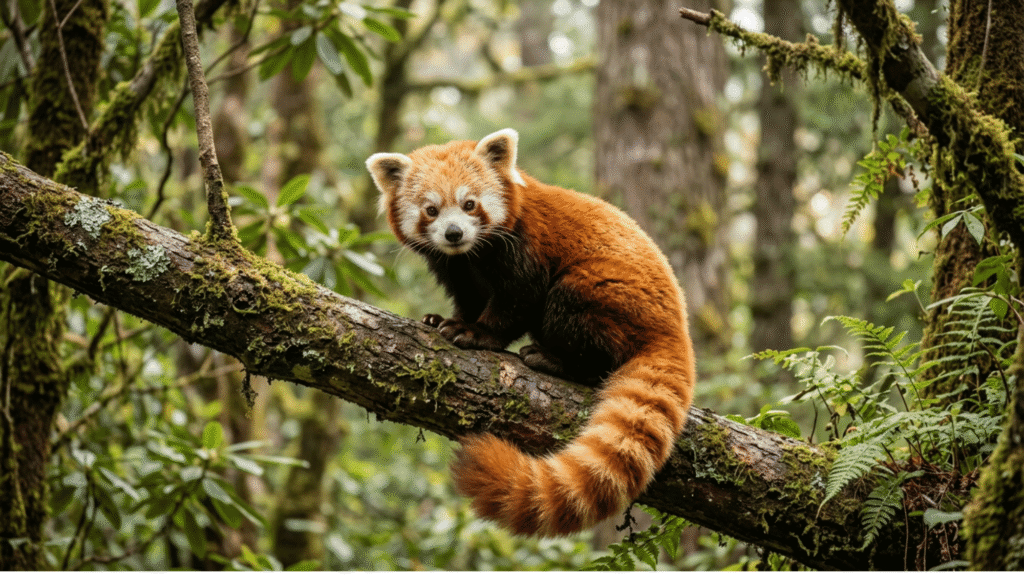
Red pandas spend much of their time climbing, resting, and feeding in trees. Their movements are often quiet, and their reddish-brown fur can help them blend into branches and vegetation. However, they can make squeaks, whistles, and other vocalizations.
Leopard
Leopards are stealthy predators that often rely on careful movement to approach prey. Their padded paws and controlled steps can help reduce footstep noise. They are not silent in every situation, however, and can growl, rasp, and produce other vocalizations.
Bat
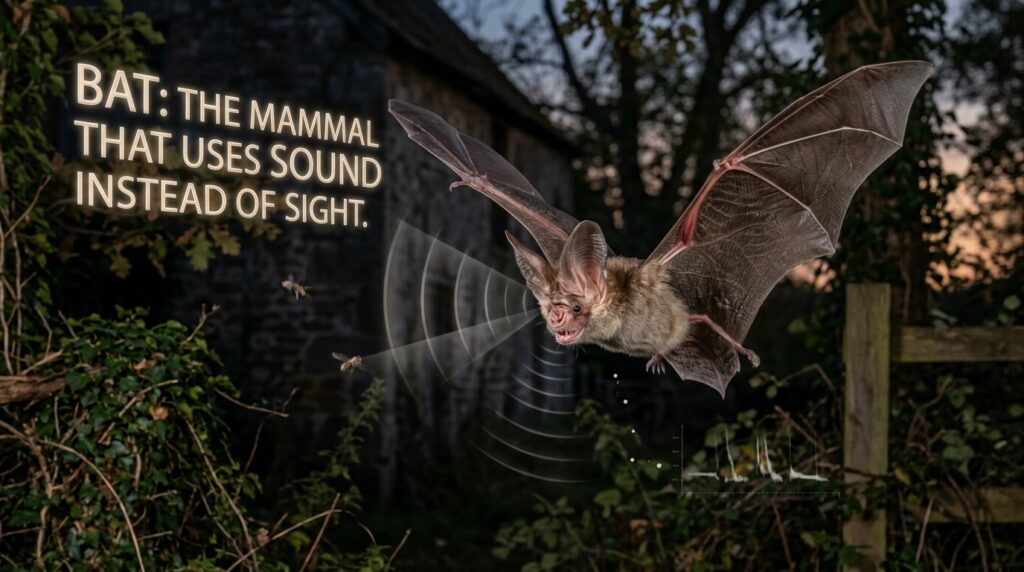
Bats are particularly interesting because many species use echolocation to navigate and locate prey. Their ultrasonic calls are usually beyond the range of human hearing, but specialized detectors can reveal them. Bats therefore represent silence to human ears rather than true acoustic silence.
These examples demonstrate that quietness is not limited to animals that rarely vocalize. It can also arise from specialized adaptations, inconspicuous behavior, or differences between human hearing and the sensory abilities of other species.
- Why Have Some Animals Evolved to Be Quiet?
Quietness can provide several advantages in the natural world, although it is not always the primary reason an animal develops a particular adaptation.
Hunting prey without being detected
Predators benefit from approaching prey without warning it. The barn owl’s specialized feathers reduce flight noise, helping it approach animals that may otherwise detect an approaching predator through sound.
Oxford Academic
Avoiding predators
Prey animals may benefit from remaining motionless or moving slowly. Stick insects, for example, use camouflage and stillness to resemble branches and stems.
Conserving energy
Animals such as sloths have lifestyles associated with low energy expenditure. Moving slowly and resting for extended periods can help conserve energy, although their quietness is not necessarily the direct reason these adaptations evolved.
Using other forms of communication
Animals do not all depend on audible calls to exchange information. Some use visual displays, chemical signals, touch, or vibrations. Others communicate using ultrasonic sounds that humans cannot hear without specialized equipment.
Adapting to different environments
A forest, desert, grassland, and ocean present very different challenges. The adaptations that benefit an animal depend on its habitat, predators, prey, and lifestyle. Quietness can be useful, but it is only one of many strategies that help animals survive.
- Which Is the Most Silent Creature on Earth?
There is no scientifically established winner for the title of the world’s quietest animal. The answer depends on the type of silence being considered.
| Type of quietness | Notable example | Reason |
| Reduced flight noise | Barn owl | Specialized feathers help reduce aerodynamic noise. |
| Slow, inconspicuous movement | Sloth | Its movements are generally measured and unobtrusive. |
| Camouflage and stillness | Stick insect | Its appearance and behavior help it avoid detection. |
| Limited familiar vocalization | Jellyfish | It lacks the familiar vocal systems of birds and mammals. |
| Sounds beyond human hearing | Bat | Many species use ultrasonic echolocation calls. |
| Stealthy movement | Snake | Many species can approach prey without obvious footsteps. |
These examples represent different characteristics rather than a measured ranking of animal sound levels.
If the question concerns an animal that can fly with exceptionally little audible noise, the barn owl is a particularly strong example because its flight adaptations have been studied scientifically.
Oxford Academic
However, identifying the animal that produces the least total sound throughout its life would require a much broader comparison. Scientists would need to measure vocalizations, movement sounds, frequency ranges, and sound levels under comparable conditions.
The most accurate answer is therefore that Earth has many remarkably quiet creatures, but no single species has been conclusively established as the quietest of all animals.
Frequently Asked Questions
- Can an animal be completely silent?
It is difficult to prove that an animal produces absolutely no sound under every possible circumstance. Even an animal that does not vocalize may generate sounds through movement, feeding, or contact with its environment. Scientists generally describe particular sounds and behaviors rather than classify an entire species as completely soundless.
- Can humans hear every sound animals produce?
No. Human hearing is generally limited to frequencies of approximately 20 Hz to 20,000 Hz, although the range varies among individuals. Some animals produce ultrasonic sounds above this range, while others produce infrasonic sounds below it. Specialized recording equipment can detect many sounds that humans cannot hear unaided.
- Why is the barn owl famous for silent flight?
The barn owl has specialized feathers that help reduce aerodynamic noise. Combined with excellent hearing, this adaptation helps it locate and approach prey in darkness. The owl is not completely silent, however, and can produce several types of vocalizations.
- Are fish silent creatures?
No. Many fish produce sounds using specialized organs or by moving parts of their bodies. Scientists use hydrophones to investigate these underwater sounds, which may be difficult to detect without suitable recording equipment.
- Are insects completely silent?
No. Some insects produce prominent buzzing, chirping, or clicking sounds, while others are less conspicuous. Certain moths use ultrasonic signals, and some stick insects produce defensive sounds. Their acoustic abilities vary considerably among species.
- How do scientists discover sounds humans cannot hear?
Scientists use ultrasonic detectors, specialized microphones, hydrophones, and digital recording equipment. They can analyze recordings using spectrograms, which display changes in sound frequency and intensity over time. These methods help researchers investigate animal communication and behavior.
Springer Nature Link
- Does being silent always help an animal survive?
No. Quietness can help predators approach prey and help prey avoid detection, but sound is also essential for many animals. Calls can attract mates, warn others of danger, defend territory, and maintain social relationships. The benefits depend on the species and its environment.
Conclusion
The most silent creatures on Earth reveal a fascinating side of nature. The barn owl reduces flight noise through specialized feathers, the sloth moves slowly through the rainforest, the stick insect relies on camouflage, and the octopus navigates the seabed with flexible movements and remarkable concealment abilities. Meanwhile, bats and certain moths demonstrate that an animal may appear silent simply because humans cannot hear the sounds it produces.
These creatures show that silence is not a single characteristic shared by one special animal. It can mean reduced movement noise, infrequent vocalization, communication beyond human hearing, or behavior that makes an animal difficult to detect.
Scientists study these differences through bioacoustics, using calibrated recording equipment and detailed observations to understand how animals produce and respond to sound. Their research also helps explain how animals communicate, hunt, avoid predators, and adapt to their surroundings.
Ultimately, the most fascinating thing about the world’s quiet creatures is that their silence does not necessarily mean an absence of activity. Sometimes, it is an extraordinary adaptation that allows an animal to survive while remaining almost unnoticed.