The Ultimate Beginner’s Guide to DIY Pet Massage
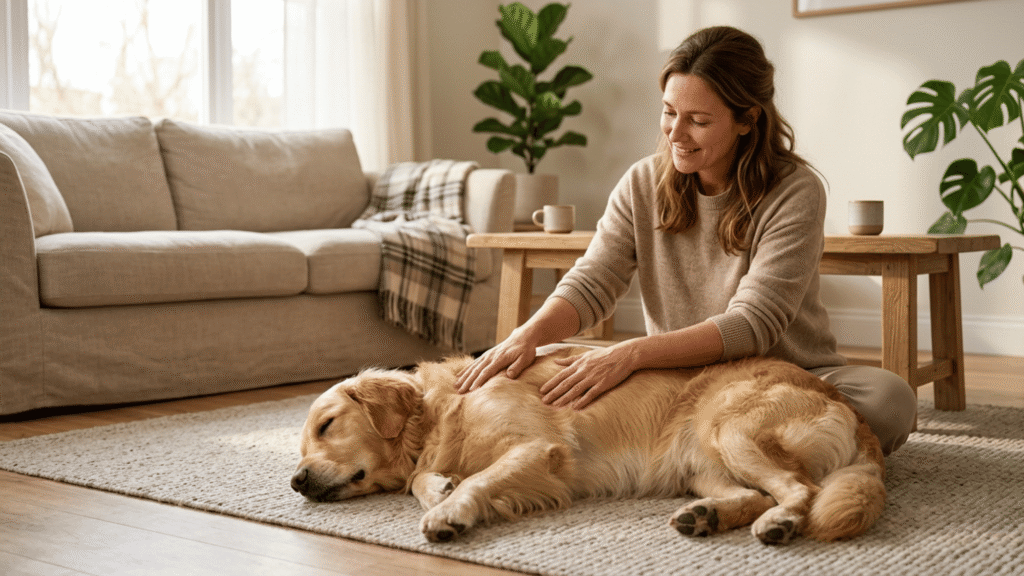
Focus: Foundational techniques, preparation, safety, and basic strokes.
Introduction
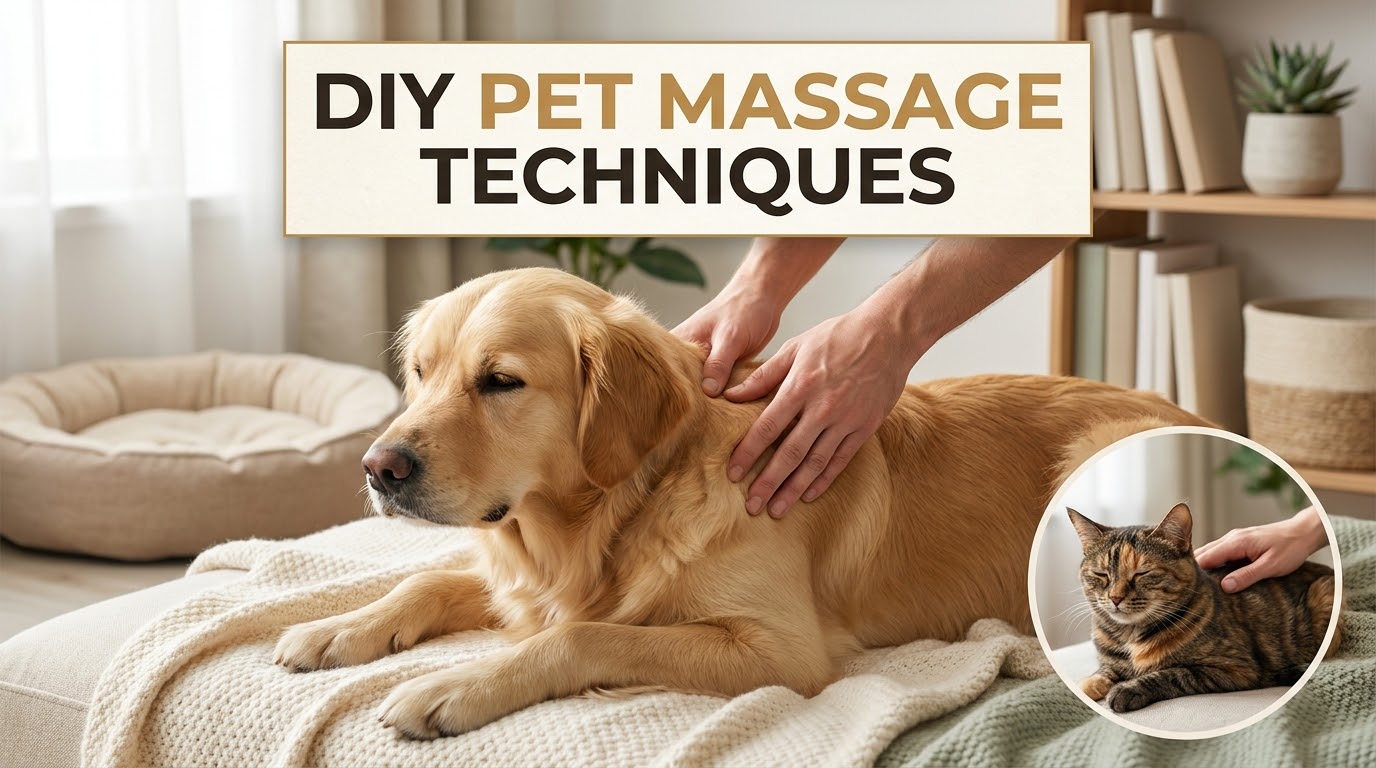
Massaging your pet isn’t just about pampering—it’s a therapeutic practice that boosts circulation, reduces stress, and strengthens the bond between you and your furry companion. Learning basic DIY pet massage techniques allows you to support your pet’s physical health from the comfort of home.
Essential Pre-Massage Steps
- Choose a Quiet Space: Pick a room free from high foot traffic, loud noises, or television sounds.
- Set the Atmosphere: Dim lights slightly and play soft ambient music to signal relaxation.
- Calm Yourself First: Pets pick up on human stress levels. Take a deep breath and ground yourself before placing hands on your animal.
- Choose the Right Time: Avoid massaging immediately after heavy meals or intense exercise sessions.
The 4 Essential DIY Massage Techniques
- Effleurage (Gentle Gliding): Using flat palms, gently stroke from the top of the head down toward the tail along the back line. This warms up the muscles and signals to your pet that touch is safe.
- Petrissage (Gentle Kneading): Using finger pads, gently lift and roll skin/muscles in soft circular motions on large muscle groups like shoulders and thighs. Never pinch or grab tightly.
- Circular Pressure: Place fingertips on either side of the spine (never directly on the backbone) and make small, soft circles to release minor tension points.
- Compression: Press your open palm softly into broad muscle areas (like hips) and hold for 3 seconds before releasing gently.
Key Red Flags & Safety Warning
⚠️ Important: Never massage over open wounds, acute swollen joints, tumors, or areas of unexplained sharp pain. Stop immediately if your pet growls, hiss, pulls away, or shows stiffened posture.
How to Comfort Senior Dogs with DIY Joint Massage
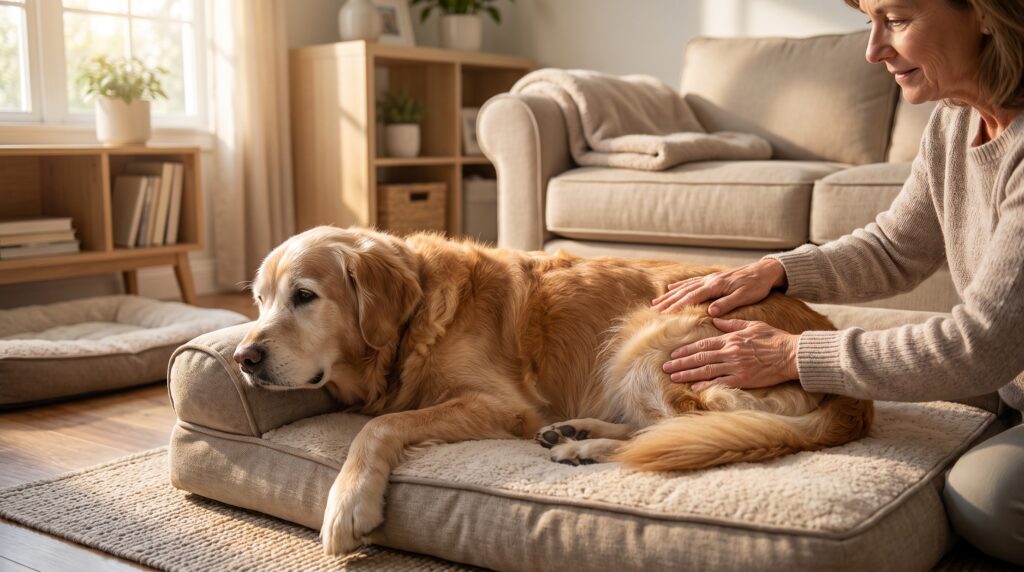
Focus: Relieving arthritis, stiffness, mobility support, and aging pet care.
Introduction
As pets age, joint stiffness and arthritis become common struggles. While massage doesn’t cure joint disease, targeted DIY techniques help increase fluid movement around joints, relax overcompensated muscles, and improve overall flexibility.
3-Step Relief Technique for Older Dogs
Step 1: Warm-Up (Shoulders & Back)
- Use broad, warm hands to perform 2 to 3 minutes of slow effleurage down the back and over the shoulders.
- The goal is to bring blood flow to cold, stiff tissues.
Step 2: Hip & Thigh Softening
- Older pets carry heavy tension in their hindquarters to compensate for weak joints.
- Place finger pads around the hip joint and make small, ultra-light circular motions.
- Slowly work down the thigh muscle using light petrissage (kneading).
Step 3: Gentle Paw & Lower Leg Mobilization
- Lightly compress the calf and forearm muscles.
- Gently rub pads and toes if your pet allows, encouraging circulation back to the torso.
Best Time for Senior Pet Massages
- Morning Routine: A 5-minute morning stroke session helps unlock stiff joints before daily movement.
- Post-Walk Recovery: Gentle touch after short walks aids in clearing muscle metabolic waste.
DIY Anxiety-Relieving Massage Techniques for Dogs & Cats
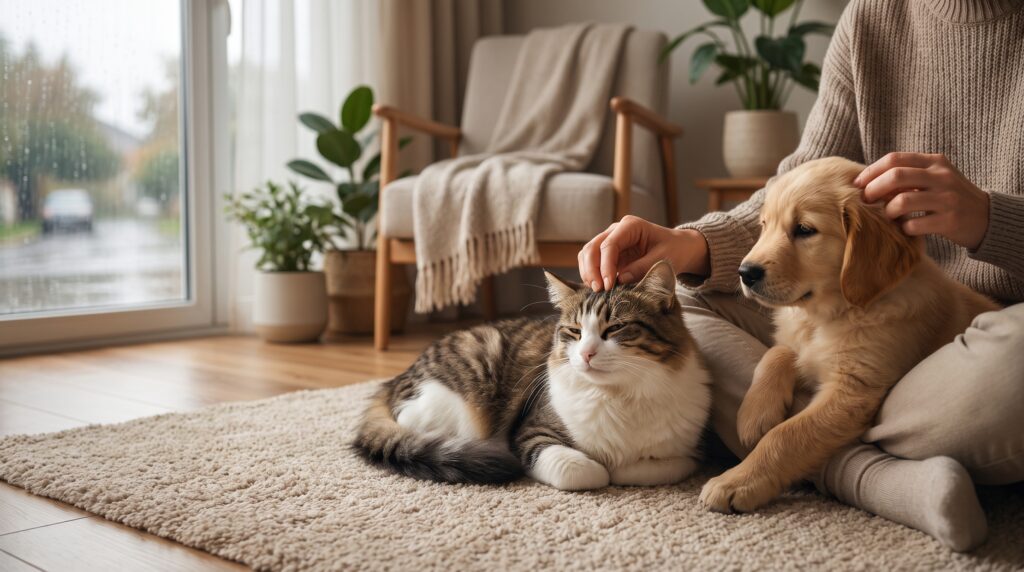
Focus: Fear, nervous behavior, thunderstorms, separation anxiety, and calming touch points.
Introduction
High-stress triggers—like thunderstorms, fireworks, moving to a new home, or separation anxiety—take a physical toll on pets. Stress causes muscle guarding and releases cortisol. Targeted calming massages stimulate the parasympathetic nervous system, promoting real emotional relief.
Acupressure & Pressure Points for Immediate Calm
- The Ear Rub Routine:
- Place your thumbs on the outer base of the ears and fingers under the chin.
- Make slow, tiny circles at the ear base where major nerves congregate.
- Slowly slide your thumb toward the tip of the ear in one fluid, rhythmic stroke.
- The Forehead & Brow Stroke:
- Starting between the eyes, sweep your flat thumb gently up toward the top of the crown.
- Repeat this rhythm slowly (around 1 stroke per 3 seconds) while taking slow, deep breaths yourself.
- Chest & Sternum Massage:
- Rest your palm flat over the center of the chest.
- Perform very slow, clockwise circles without pressing hard into the ribs.
Pro-Tip: Pair your anxiety massage routine with calming scents like pet-safe diffuse chamomile or lavender (kept away from direct skin contact or feline inhalation zones).
The Feline Touch: Gentle DIY Massage Techniques specifically for Cats
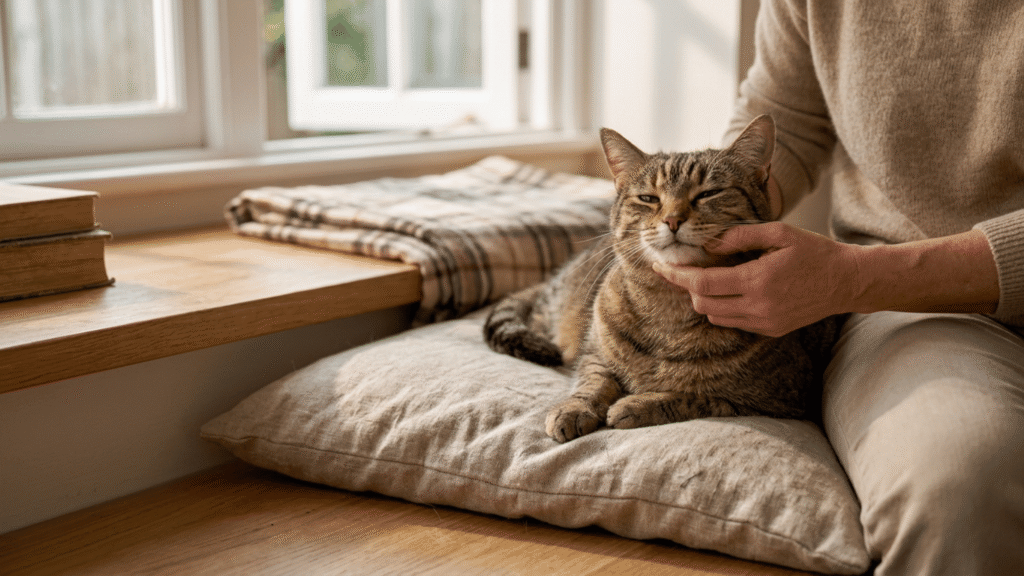
Focus: Cat anatomy, understanding feline body language, consent, and soft-touch methods.
Introduction
Massaging a cat requires a drastically different approach than massaging a dog. Cats are sensitive to tactile stimulation and over-arousal; therefore, cat massage is all about consent, light pressure, and reading body cues.
Reading Cat Consent Signals
- Green Light (Continue): Soft blinks, purring, leaning into your hand, slow tail movements.
- Red Light (Stop immediately): Tail flicking, rippling back skin, dilated pupils, pinned ears, or low growls.
Cat-Approved Massage Routines
- The Cheek & Jaw Glide: Cats possess scent glands on their cheeks and chin. Use two fingertips to trace slow circles along the jawline toward the neck.
- The Neck & Crest Rub: Work light fingertips along the top of the neck, moving toward the shoulder blades. Avoid going down the spine unless your cat visibly seeks it.
- Base-of-Tail Compression: Many cats love light pressure right at the base where the back meets the tail. Tap lightly or press your palm gently—never pull or squeeze the tail.
DIY Athletic Dog Recovery: Post-Run & Active Dog Massage
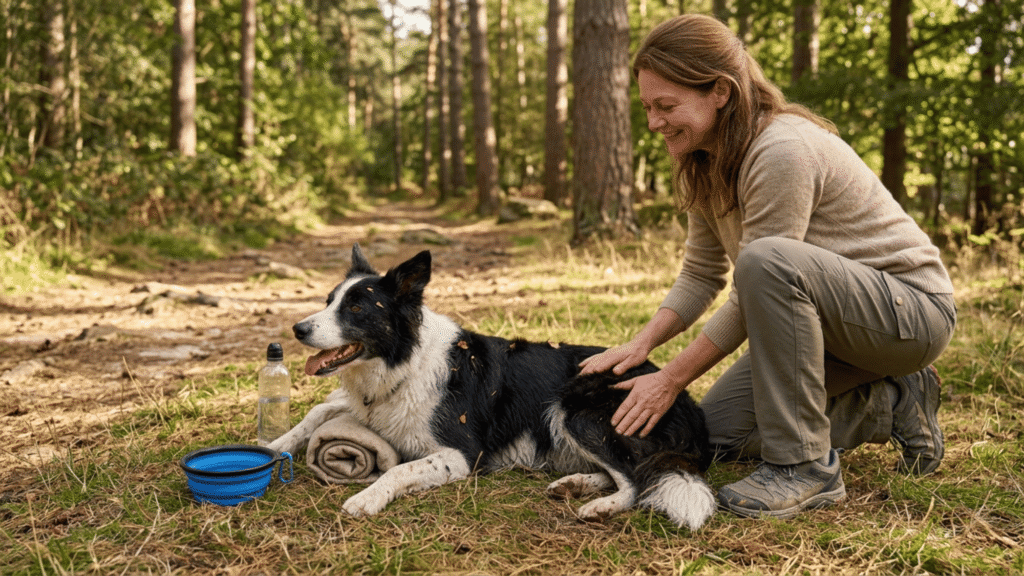
Focus: Working dogs, agility training, hiking partners, and muscle soreness prevention.
Introduction
If your dog hikes, runs, or participates in agility activities, their muscles experience micro-tears and buildup of fatigue just like human athletes. An effective post-activity massage prevents soreness, keeps tissues flexible, and speeds recovery time.
Post-Workout Massage Steps
- Cool Down First: Allow your dog to rest, drink water, and catch their breath for 15–20 minutes before massaging.
- Effleurage to Flush: Apply long, downward strokes along the back and large leg muscles to encourage lymphatic drainage.
- Thigh & Hamstring Cross-Friction:
- Place fingertips across muscle fibers on the hamstrings.
- Move fingers perpendicular to the muscle gently to loosen tightness and prevent knot formation.
- Passive Range of Motion (PROM):
- While your dog lies down, gently support one leg at a time and move it in slow, controlled circular motions (mimicking a natural stride). Stop immediately if there is any resistance.
DIY Pet Massage for Digestion and Belly Health
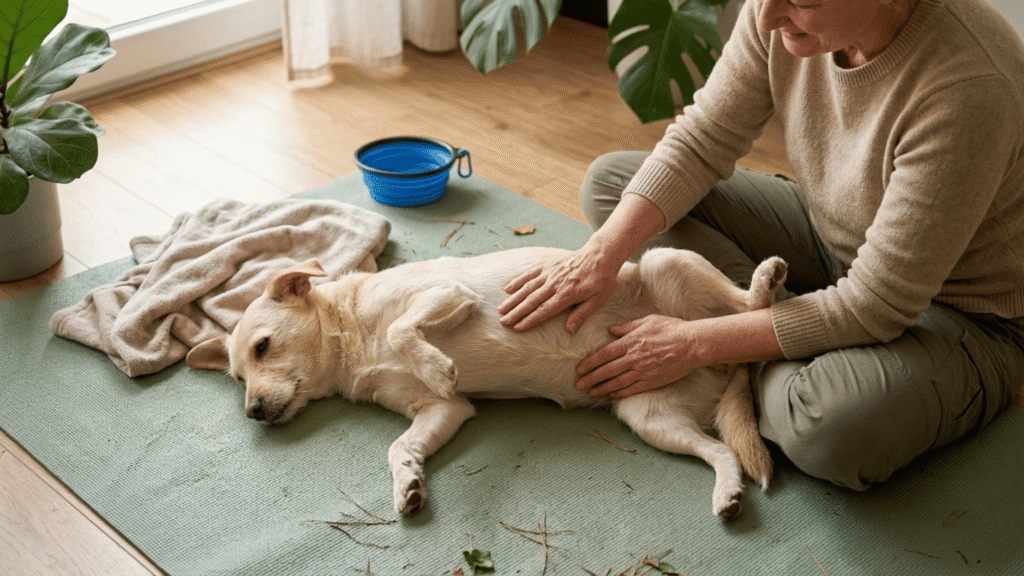
Focus: Bloating, constipation relief, gas, and digestive regulation.
Introduction
Digestive sluggishness, minor gas, and constipation can cause noticeable discomfort in pets. A gentle abdominal massage can stimulate gastrointestinal motility, promote bowel movements, and relieve uncomfortable gas pressure.
Safe Abdominal Massage Instructions
🚨 Crucial Warning: Never apply firm pressure to a pet’s abdomen, and never massage if the abdomen feels hard, distended, or painfully sensitive (which can indicate bloat or an emergency medical condition).
- Positioning: Have your pet lie on their side (lateral recumbency) on a soft mat.
- Clockwise Direction: Always move your hands in a clockwise direction (following the natural path of digestion).
- Feather-Light Touch: Place your flat palm against the soft belly area. Move in slow, clockwise circles using only the weight of your hand.
- Flank Stroking: Finish by sweeping your hands gently from the ribs down along the flank toward the hind legs to encourage gas release.
Creating a Daily 5-Minute Pet Massage Ritual
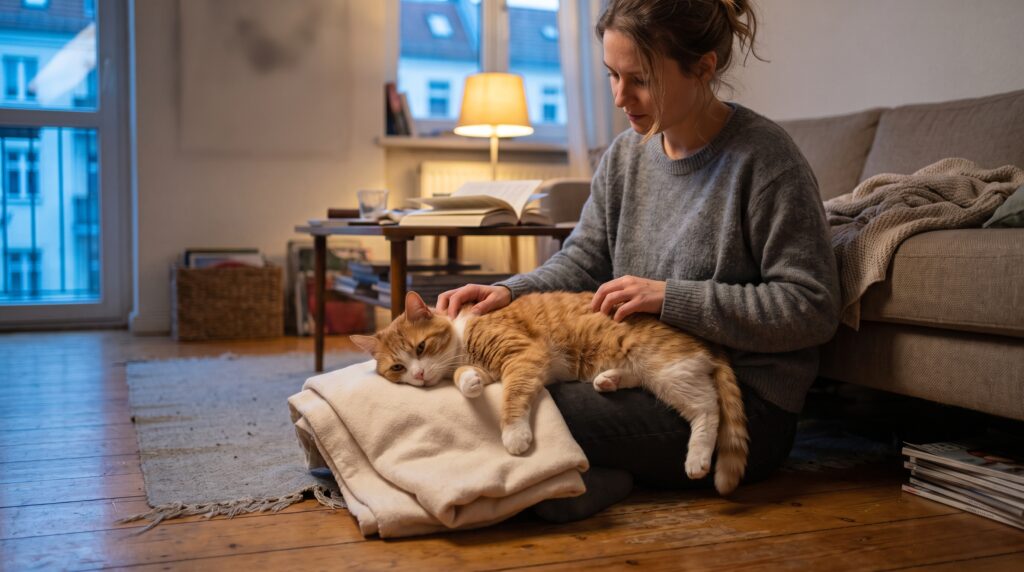
Focus: Habit building, bonding, early health detection, and holistic routine.
Introduction
You don’t need hours to make a difference in your pet’s health. Incorporating a simple 5-minute daily massage routine into your morning or evening wind-down yields cumulative physical and emotional benefits while allowing you to spot health changes early.
The 5-Minute Daily Flow
- Minute 1: Grounding & Greeting (Effleurage): 60 seconds of long, relaxing strokes from head to tail.
- Minute 2: Shoulder & Neck Focus: 60 seconds of gentle circular kneading on the upper neck and shoulder blades.
- Minute 3: Back & Spine Line: 60 seconds sweeping along both sides of the spine (1-2 inches off the bone).
- Minute 4: Hips & Legs: 60 seconds of gentle compression on the outer thighs.
- Minute 5: Closing & Body Check: 60 seconds ending with gentle ear rubs while checking skin for new bumps, ticks, or tender spots.
Early Detection Benefits
While massaging your pet daily, your hands become attuned to what is normal. You will immediately notice new lumps, skin inflammation, muscle stiffness, or unusual warm spots that warrant a veterinary checkup.