
How Much Exercise Does a Corgi Need Daily? (The Ultimate Guide by Age)
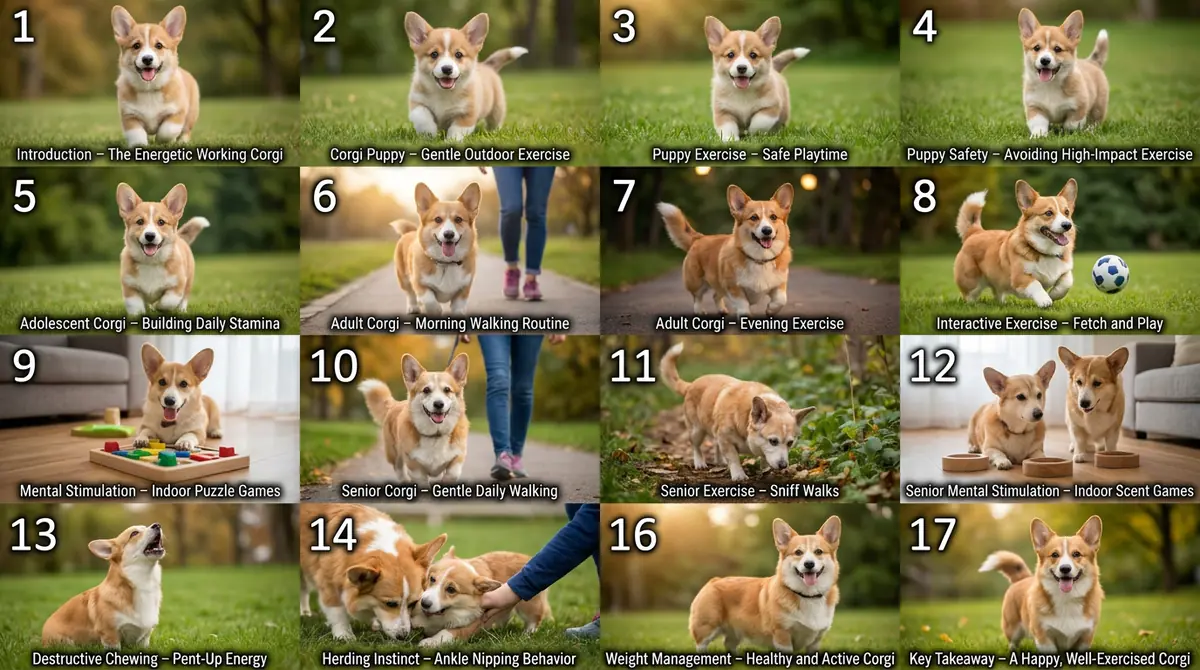
Despite their iconic short legs, Pembroke and Cardigan Welsh Corgis are full-fledged working herding dogs. Underestimating their stamina often leads to unwanted indoor behaviors. This guide breaks down the exact daily exercise targets across every life stage to keep your Corgi physically fit and mentally balanced.
CatDogCentral+ 2
Daily Exercise Breakdown by Life Stage
+——————+—————————–+————————————+
| Life Stage | Daily Physical Exercise | Recommended Daily Structure |
+——————+—————————–+————————————+
| Puppy (2–6 mos) | 15–30 mins total | Short 5-min sessions per month age |
| Adolescent (6-12)| 45–60 mins total | 2 brisk walks + light backyard play|
| Adult (1–7 yrs) | 60–90 mins total | Morning/evening walks + play games |
| Senior (8+ yrs) | 30–45 mins total | Low-impact walks + scent games |
+——————+—————————–+————————————+

1. Corgi Puppies (2 to 6 Months)
- Target: 5 minutes of structured exercise per month of age, twice daily (e.g., a 4-month-old needs 20 minutes twice a day).
Vom Ragnar Corgi
- Safety Rule: Open growth plates mean high-impact running or stairs must be avoided to prevent early joint issues.
Breed Compass
2. Adolescent & Adult Corgis (6 Months to 7 Years)
- Target: 60 to 90 minutes of daily activity.
Vom Ragnar Corgi
- Structure: Split this into two 30-minute structured walks and 15–30 minutes of interactive play (fetch, tug, or agility).
Breed Compass
3. Senior Corgis (8+ Years)
- Target: 30 to 45 minutes of low-impact walking.
Breed Compass
- Structure: Short 15-minute sniff walks paired with indoor mental games to protect aging joints and spine health.
CatDogCentral
4 Common Signs Your Corgi Isn’t Getting Enough Exercise
- Excessive Barking: Barking at windows or minor noises to release pent-up energy.
Breed Compass
- Destructive Chewing: Targeting furniture, shoes, or rugs.
- Ankle Nipping: Reverting to herding instincts on family members or other pets.
- Rapid Weight Gain: Corgis put on weight quickly when food intake exceeds daily caloric burn.
Key Takeaway
A well-exercised Corgi is a calm family member. Aim for consistency rather than weekend-warrior workouts to protect their long spines.
Physical vs. Mental Exercise: Why Your Corgi Needs Both
Did you walk your Corgi for an hour, only to have them drop a ball at your feet 5 minutes after arriving home? Physical activity builds physical endurance, but high-drive herding dogs require brain work to feel truly tired and satisfied.
CatDogCentral
Physical Exercise: Building Strength & Stamina
Physical workouts maintain cardiac health, prevent obesity, and support leg strength.
Vom Ragnar Corgi
- Brisk Leash Walks: 30–45 minutes of uninterrupted walking at a steady pace.
Breed Compass
- Low-Impact Fetch: Rolling balls along low grass instead of high throws to protect their back.
- Flirt Pole Sessions: High-engagement chasing games that test turning radius and recall in controlled bursts.
Mental Exercise: Tiring Out the Herding Mind
15 minutes of brain work burns as much energy as a 30-minute walk.
+———————–+———————————-+—————————–+
| Activity Type | Recommended Toys / Setup | Focus Benefit |
+———————–+———————————-+—————————–+
| Nosework & Sniffing | Snuffle Mats, Hidden Treat Trails| Lowering heart rate |
| Puzzle Feeders | Level 2/3 Interactive Boards | Problem-solving confidence |
| Obedience Drills | Rapid-fire Trick Training | Focus under distraction |
+———————–+———————————-+————————–+

- Scent Trail Games: Hide small treats around your living room while your Corgi stays in another room, then command them to “Find It!”
- Interactive Puzzle Toys: Ditch standard food bowls for interactive puzzles during meal times.
- Structured Trick Training: Practice “Pivot,” “Spin,” or item retrieval for 10 minutes daily.
The Balanced Daily Formula
- Morning: 30-minute brisk walk + 10-minute puzzle bowl breakfast.
- Evening: 20-minute physical game + 10-minute trick training session.
Spine-Safe Exercise Tips for Corgis (Protecting Against IVDD)
Corgis are chondrodysplastic (dwarf) breeds with long spines and short legs. This unique anatomy leaves them susceptible to spinal issues like IVDD. Exercising safely requires specific adjustments to protect their backs.
CatDogCentral
Exercises to Avoid
- High-Impact Jumping: Catching frisbees high in the air or jumping out of SUVs/off couches.
- Steep Stair Climbing: Repeatedly running up and down steep staircases.
- Slippery Floor Workouts: Hardwood or tile running that causes legs to splay outwards.
Safe Alternatives for Long-Term Spine Health
+————————–+———————————+———————————–+
| High-Risk Movement | Safe Alternative | Spine-Protection Benefit |
+————————–+———————————+———————————–+
| Jumping off furniture | Dog ramps or steps | Prevents axial compression impact |
| High-flying Frisbee | Ground-rolling discs/toys | Prevents sudden spinal twisting |
| Hardwood indoor sprints | Carpeted or grass play sessions | Ensures solid traction |
+————————–+———————————+———————–+

1. Low-Impact Swimming
Swimming provides a strong cardiovascular workout with zero joint or spinal compression. Always use a well-fitted dog life jacket to support their heavy rear ends.
2. Flat-Surface Sniffari Walks
Allowing your Corgi to walk on flat grass while sniffing builds core strength naturally without sudden impact shocks.
3. Core Strengthening Exercises
Position your Corgi on a balance pad or cushion and practice controlled “Sit-to-Stand” movements to build abdominal muscles that directly support the spine.
Rainy Day & Indoor Exercise Routines for Corgis
Bad weather doesn’t mean your Corgi’s energy vanishes. When rain, heat, or snow keeps you indoors, these routines turn your living room into an active, low-impact exercise hub.
5 High-Energy Indoor Games
+————————-+———————————+———————————-+
| Game Name | Space Required | Key Equipment Needed |
+————————-+———————————+———————————-+
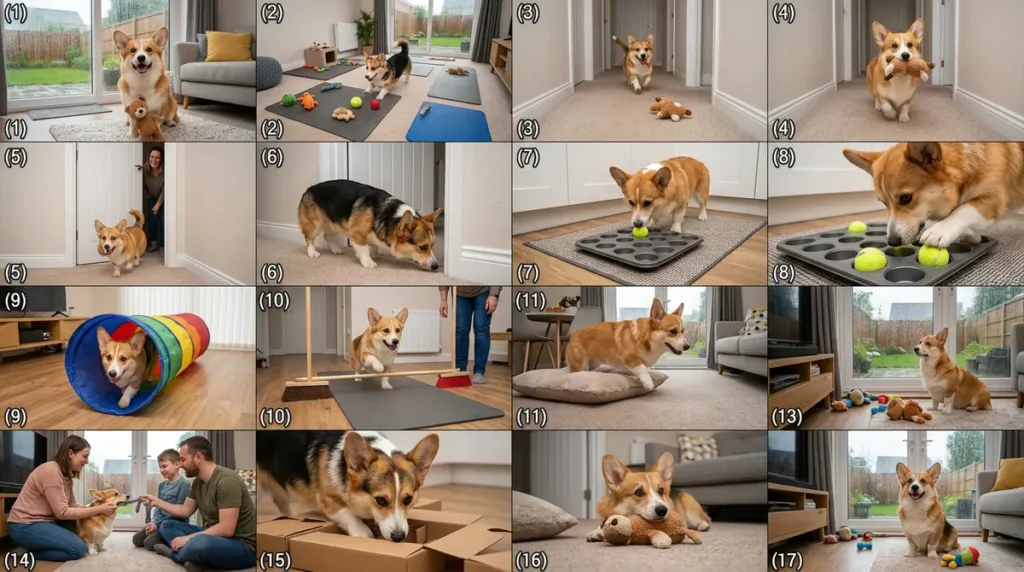
| The Hallway Fetch | Carpeted Hallway / Long Room | Soft Plush Toy |
| Hide & Seek | Multi-Room House/Apartment | High-Value Treats |
| Muffin Tin Puzzle | Small Kitchen / Living Room | Muffin Tin, Tennis Balls, Treats |
| Indoor Agility Tunnel | Living Room Floor | Pop-up Tunnel / Chairs & Blanket |
+————————-+———————————+————————-+
1. Carpeted Hallway Fetch
Use a soft plush toy and toss it along a carpeted hallway to maintain traction and prevent slipping.
2. Human Hide-and-Seek
Have one family member hold your Corgi while you hide in another room. Call your dog once and reward them when they track down your scent.
3. The Muffin Tin Brain Game
Place treats in a 12-cup muffin tin and cover every hole with a tennis ball. Your Corgi must figure out how to lift each ball to get the reward.
4. Living Room Obstacle Course
Set up pop-up tunnels, low broomsticks balanced across books (just 2 inches high), and cushions to step over.
Can Corgis Go Hiking? Distance Limits & Trail Tips
Vom Ragnar Corgi
Can a dog with 4-inch legs handle hiking trails? Yes! Corgis are sturdy, endurance-built dogs that excel on trails when given proper conditioning and care.
Vom Ragnar Corgi
Distance Limits by Fitness Level
+——————–+—————————–+———————————-+
| Experience Level | Maximum Safe Distance | Rest Frequency Requirement |
+——————–+—————————–+———————————-+
| Beginner Hiker | 1.5 – 3 Miles | Rest every 20–30 minutes |
| Intermediate Hiker | 3 – 5 Miles | Rest every 45 minutes |
| Seasoned Hiker | 6 – 8 Miles (Flat Terrain) | Rest hourly + continuous hydration|
+——————–+—————————–+———————————-+

Essential Trail Gear Checklist
- Dog First Aid Kit: Cohesive bandages, paw balm, tick removal tool.
- Ergonomic Harness with Back Handle: Critical for lifting your Corgi over high rocks or fallen logs safely.
- Collapsible Water Bowl: Hydrate every 30–45 minutes regardless of temperature.
- Dog Carrier Backpack: A specialized pack rated for 25–35 lbs in case your Corgi fatigues or encounters rough terrain.
Trail Red Flags: When to Turn Back
- Paw Dragging: Scuffing sound of nails on rocks.
- Excessive Lagging: Walking behind you rather than beside or ahead.
- Heavy Panting & Drooling: Early signs of heat stress or fatigue.
Daily Exercise Schedules for Busy Working Corgi Owners
Owning a high-energy working breed while balancing a full-time job can feel challenging. A structured, predictable routine helps keep your Corgi exercised and calm throughout the workday.
CatDogCentral+ 1
9-to-5 Workday Master Schedule
+——————-+——————————————————————-+
| Time Block | Actionable Activity Routine |
+——————-+——————————————————————-+
| 07:00 AM – 07:45 | 30-Min Brisk Walk + 15-Min Sniffari & Paw Clean-up |
| 07:45 AM – 08:00 | Meal served in a Frozen Slow Feeder / Kong |
| 12:30 PM – 01:00 | Midday Break: 15-Min Potty Walk + Fetch / Dog Walker Visit |
| 05:30 PM – 06:15 | Evening Walk (30 Mins) + 15-Min Indoor Trick Training |
| 08:30 PM – 08:45 | Final Wind-down: Snuffle Mat / Gentle Massage Session |
+——————-+—————————————————————+

3 Time-Saving Workday Hacks
- Freeze Breakfast Bowls: Freeze canned food or wet toppers inside puzzle toys to extend eating time to 30 minutes while you get ready.
- Hire a Midday Dog Walker: A 20-minute walk breaks up long isolation windows and burns off midday restlessness.
- Combine Walks with Training: Integrate “sit-stays” at every street corner to work their mind and body concurrently.
Over-Exercising vs. Under-Exercising Your Corgi: Knowing the Limits
Finding the right exercise balance for a Corgi requires careful observation. Too little activity leads to destructive behaviors, while over-exertion can strain joints and cause heat injury.

Comparing the Symptoms
+————————————+————————————+
| Signs of UNDER-EXERCISE | Signs of OVER-EXERCISE |
+————————————+————————————+
| Hyperactive greetings (jumping) | Reluctance to stand up or walk |
| Continuous barking/whining | Lagging behind on walks |
| Chewing furniture / digging floors | Glazed eyes / heavy panting |
| Weight gain and poor muscle tone | Stiffness/limping hours after play |
+————————————+————————————+
Temperature Safety Thresholds
+———————-+—————————————————————-+
| Temperature Range | Safety Guidance & Protocol |
+———————-+—————————————————————-+
| Below 75°F (24°C) | Safe for normal outdoor activities and hikes |
| 75°F – 85°F (29°C) | Caution: Limit intense runs; keep walks under 30 mins |
| Above 85°F (29°C)+ | Dangerous: Early morning/late night short potty walks only |