Chow Chow Temperament With Family: The Ultimate Guide to Loyalty, Dynamics, and Real-Home Living
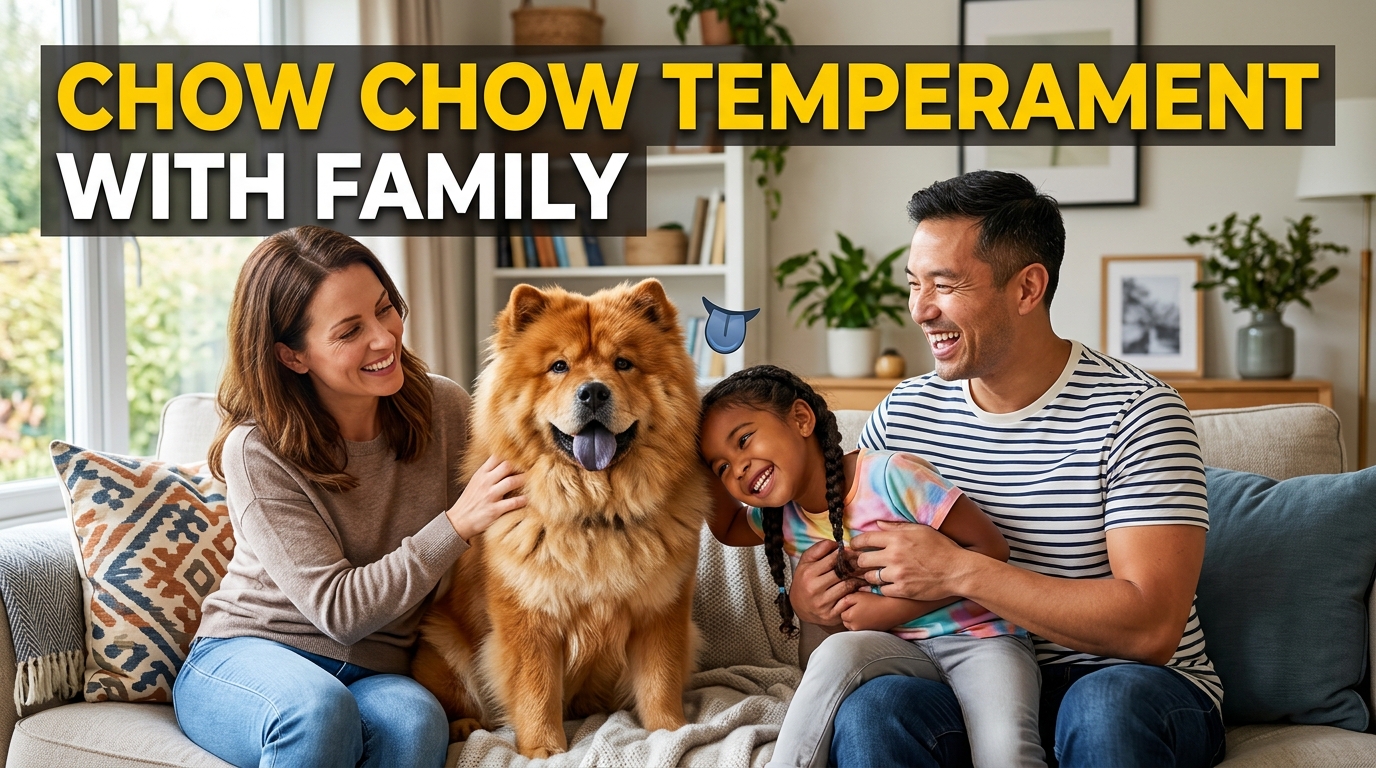
The Chow Chow is one of the most distinctive, noble, and deeply misunderstood breeds in the canine world. Renowned for their bear-like lion’s mane, deep-set eyes, and unique blue-black tongue, these ancient Chinese dogs possess a personality that sets them apart from typical companion breeds.
If you are considering adding a Chow Chow to your household—or seeking to better understand the one already sharing your sofa—navigating their unique psychological landscape is essential. This guide breaks down every aspect of the Chow Chow’s temperament within a family environment, addressing household compatibility, child dynamics, multi-pet living, and practical training strategies.
Core Temperament: The “Cat-Like” Canine
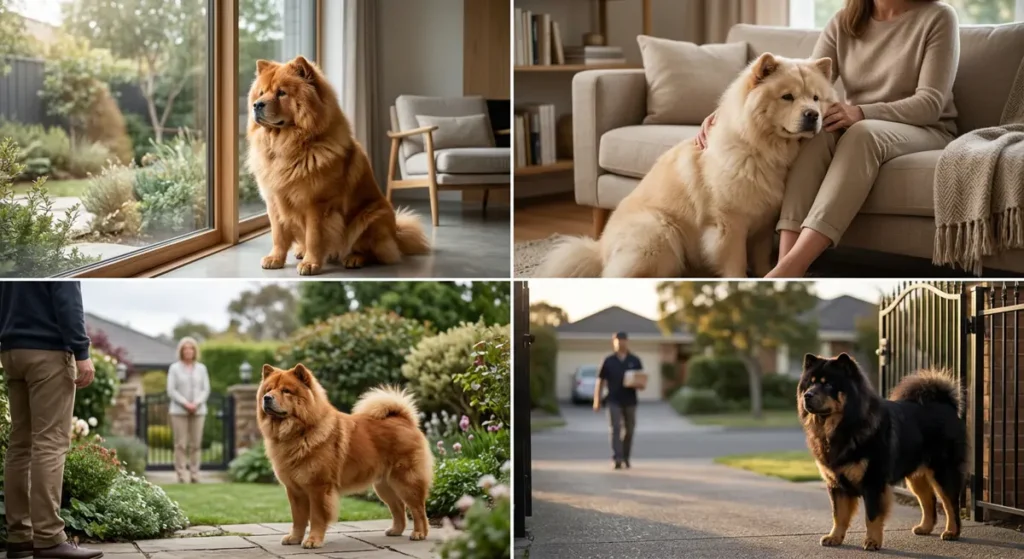
To understand how a Chow Chow interacts with family, you must first understand their baseline personality. Unlike Golden Retrievers or Labradors that crave constant validation and eager-to-please affection, Chow Chows operate with a quiet, dignified independence often compared to cats.
- Dignified Independence: Chow Chows do not constantly beg for attention. They are content occupying the same room as you without needing to be on your lap.
- Quiet Devotion: Their love is subtle but intense. A Chow Chow shows affection through constant proximity, subtle tail wags, and leaning quietly against your legs.
- Aloofness Toward Strangers: While fiercely devoted to their internal “pack,” Chow Chows are naturally cautious around outsiders, requiring proper introductions.
- Low Barking Profile: They rarely bark without reason. When a Chow Chow barks, it is almost always a alert that someone has entered their perceived territory.
Loyalty & The “One-Person” Tendency
A central characteristic of the Chow Chow is their tendency to form an exceptionally deep bond with a single primary handler.
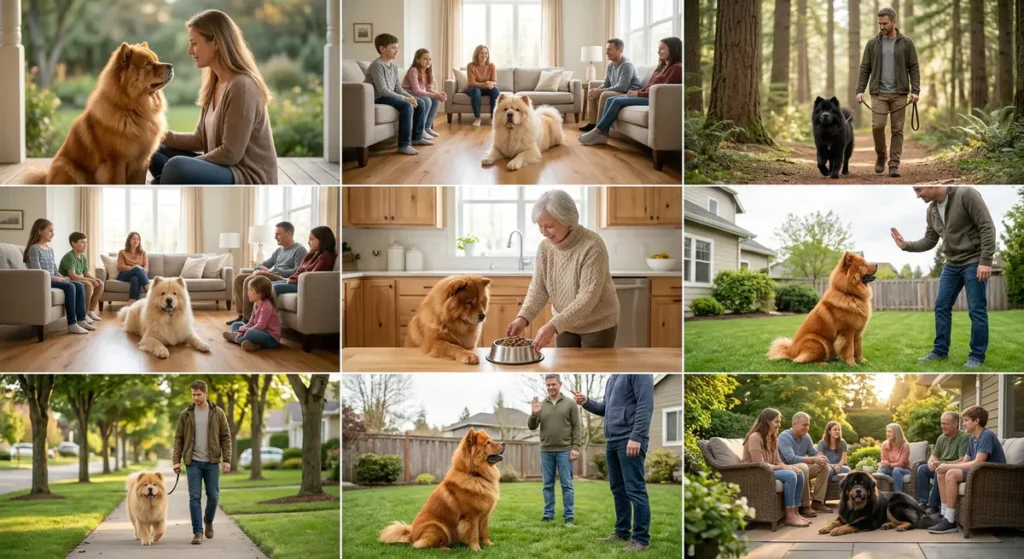
While a Chow Chow will love, protect, and respect every member of the household, they frequently select one individual as their primary anchor. This bond is built on consistent handling, clear leadership, and calm energy.
Household Pack Dynamic
Primary Handler Family Members
(Deepest Connection) (Protected & Respected)
Outside World
(Reserved / Aloof)
Managing the Family Hierarchy
To prevent your Chow Chow from becoming overly attached to only one person and ignoring everyone else, implement these family integration practices:
- Rotate Feeding Duties: Have different family members handle meal delivery on alternating days.
- Shared Walking Routines: Ensure every capable family member participates in daily leash walks.
- Equal Command Enforcement: Establish a standard set of vocal cues (Sit, Stay, Leave It) so the dog responds to everyone equally.
Chow Chows & Children: Expectations vs. Reality
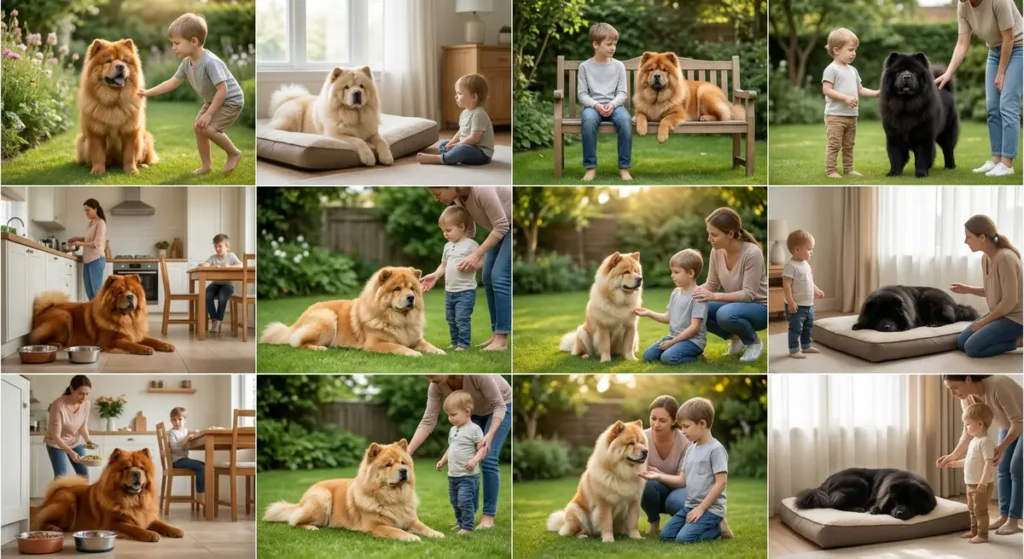
Chow Chows can thrive in families with children, but success depends heavily on early socialisation, clear boundary setting, and mutual respect.
- CHILD-CHOW INTERACTION GUIDE
- What Chow Chows Appreciate
- What Triggers Discomfort
- Calm, gentle petting
- Rough handling
- ear/tail pulling
- Predictable routines
- Sudden loud screams or frantic running
- Respecting their personal bed
- Disturbance while sleeping or eating
Chow Chows have lower tolerance for unpredictable play compared to high-energy sporting breeds. They do best with older children who understand how to approach animals calmly.
Safety Standard: Always supervise interactions between young children and Chow Chows. Teach children to read canine body language, such as stiffening, ear flattening, or looking away, which indicate the dog needs space.
Multi-Pet Households: Dogs, Cats, and Small Animals
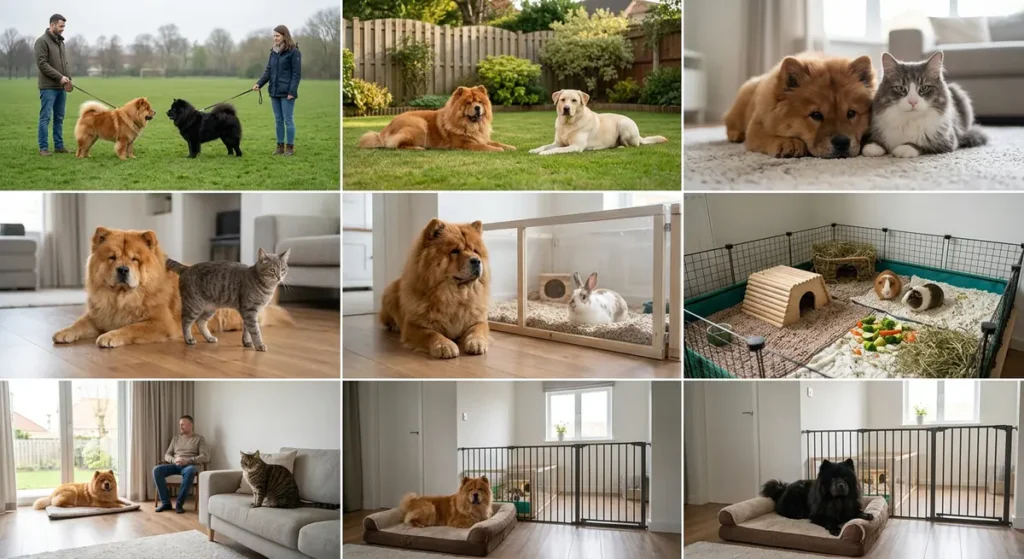
Integrating a Chow Chow with other household animals requires intentional setup due to their historical background as hunting and guard dogs.
- Same-Sex Dog Aggression: Chow Chows can exhibit dominant tendencies toward dogs of the same sex. Bringing a dog of the opposite sex into the household generally yields smoother results.
- Cat Compatibility: When raised alongside cats from puppyhood, Chow Chows generally co-exist peacefully, treating them as members of the established pack.
- Prey Drive Warning: Smaller pets (rabbits, guinea pigs, hamsters) can trigger their instinctual prey drive. Always secure small animals in separate, safe spaces.
Protective Instincts and Home Security
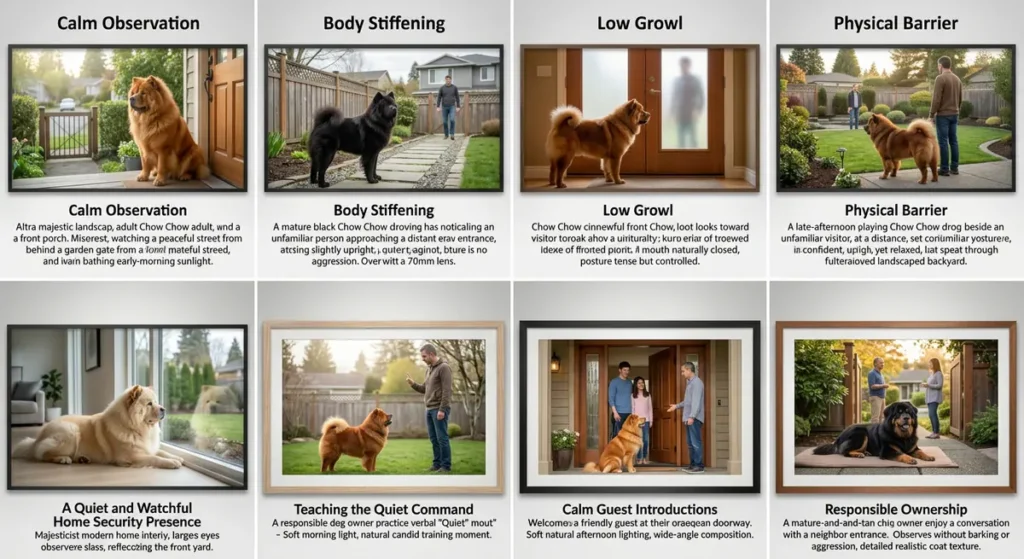
Historically bred to guard Chinese palaces and livestock, the protective instinct remains wired into the breed’s DNA.
Chow Chow Guarding Continuum
Low Alert ─────────────────────────────────────► High Defense
Calm Observation ──► Body Stiffening ──► Low Growl ──► Physical Barrier
(Family Present) (Unrecognized) (Doorstep) (Uninvited Threat)
A Chow Chow does not actively search for conflict, but they will unhesitatingly stand between their family and perceived danger. They serve as exceptional home alarm systems, offering a calm, watchful presence without erratic hyper-reactivity.
To keep these protective traits healthy and manageable:
- Establish a reliable “Quiet” command early in training.
- Welcome guests calmly at the front door to signal to your dog that the visitor is safe.
- Avoid encouraging unnecessary territorial aggression or defensive barking.
Daily Life: Exercise, Grooming, and Home Needs
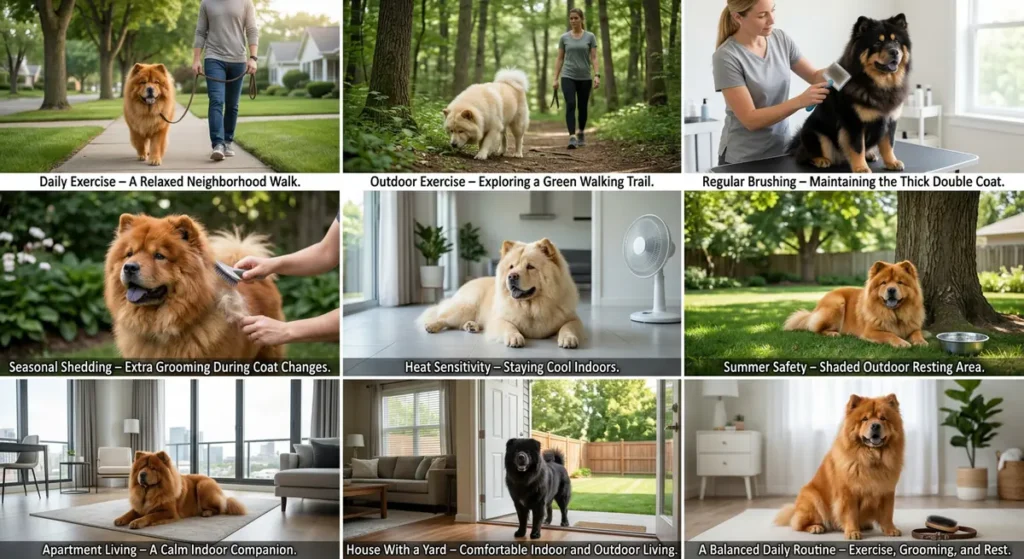
Understanding a Chow Chow’s daily operational needs ensures a harmonious living environment for the whole household.
| Dimension | Requirement | Impact on Temperament |
| Exercise Needs | 30–45 minutes daily walk | Prevents boredom-based stubbornness or chewing. |
| Grooming Routine | Brushing 2–3x weekly (daily during sheds) | Keeps double coat mat-free and reduces stress during handling. |
| Heat Tolerance | Low (prone to overheating) | Requires air conditioning and shade; hot weather increases irritability. |
| Living Space | Apartments or houses with yards | Calm indoor energy makes them surprisingly well-suited for living in smaller spaces. |
Is a Chow Chow Right for Your Family?
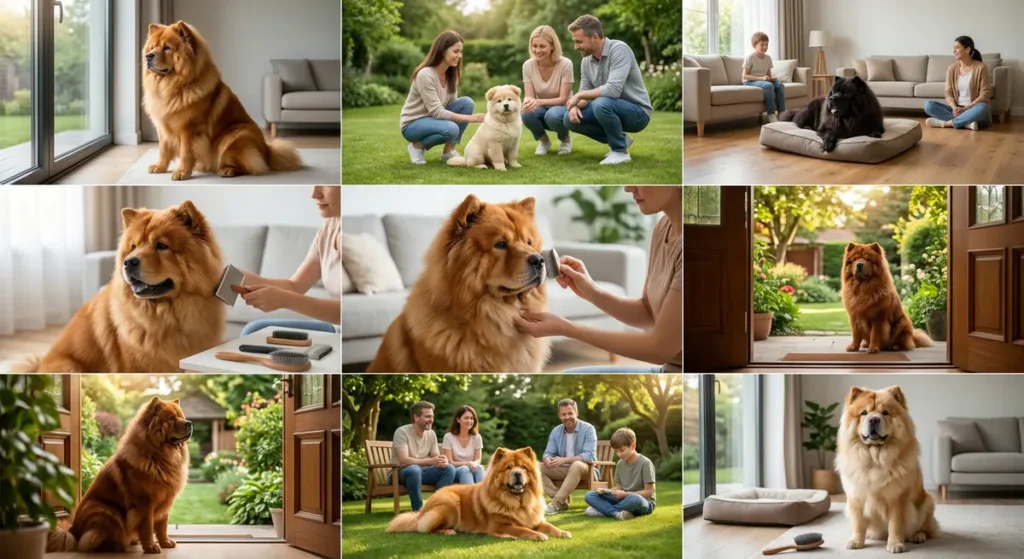
A Chow Chow is an extraordinary, deeply loyal companion for the right household. Use this quick checklist to determine if your home environment matches their temperament:
- You appreciate a quiet, noble dog that isn’t overly demanding of constant affection.
- Your household can provide early, consistent socialisation and calm leadership.
- Family members and visitors respect an animal’s personal space and boundaries.
- You are prepared for regular grooming and coat maintenance.
- You prefer a reliable, watchful guardian who naturally keeps the peace at home.