
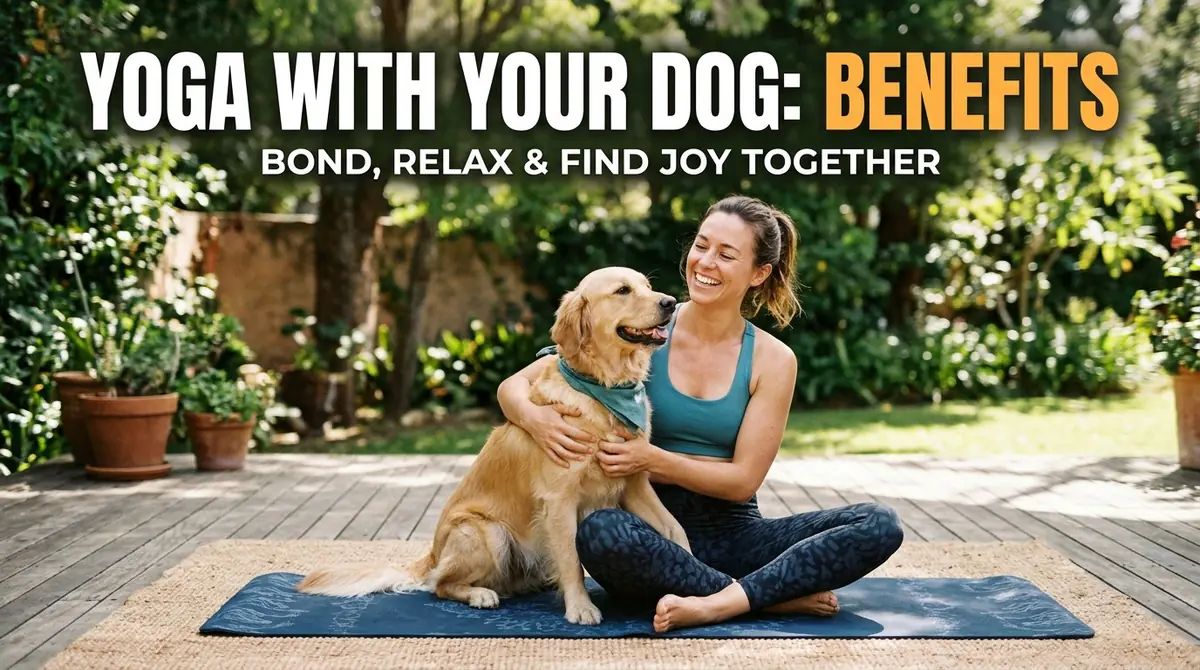
The Ultimate Guide to “Yoga”: Why Doing Yoga With Your Dog Is the Ultimate Bonding Experience
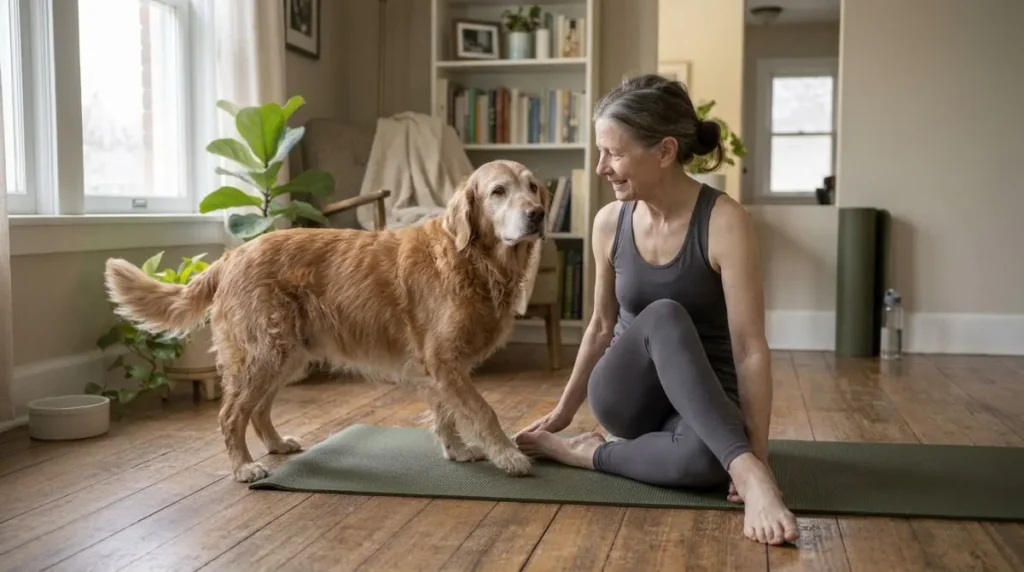
If you roll out your yoga mat only to find your dog instantly flopping down across it, you aren’t alone. Dogs love being close to their humans, especially when we are on their floor level. Enter Yoga—the practice of incorporating your furry best friend into your daily yoga session. Beyond being an adorable photo opportunity for social media, practicing yoga with your dog offers profound physical and emotional benefits for both of you.
1. Strengthening the Emotional Connection
Dogs communicate primarily through body language and energy. When you step onto your mat, slow down your breathing, and tune out distractions, your dog senses your lowered stress levels. Gentle assisted stretches and resting your hands on your dog’s chest (a practice known as the Heart-to-Hound Mudra) signal safety and trust.
2. Boosting Oxytocin and Lowering Stress
Physical touch during Yoga triggers the release of oxytocin—the “love hormone”—in both humans and canines. At the same time, it lowers cortisol (the stress hormone), helping to reduce anxiety for you while soothing a naturally anxious or high-energy pup.
3. Improving Flexibility and Gentle Mobility
Just like humans, dogs need to stretch to keep their joints supple. Yoga incorporates gentle leg extensions and back massages that help lengthen your dog’s muscles and improve their range of motion, which is particularly beneficial for senior dogs or breeds prone to hip dysplasia.
Key Takeaways
- Yoga creates a shared space for calm, distraction-free bonding.
- Shared mindfulness lowers anxiety and triggers mood-boosting hormones for both species.
- Gentle physical contact supports joint health and mobility.
5 Surprising Physical and Mental Health Benefits of Dog Yoga for Pups
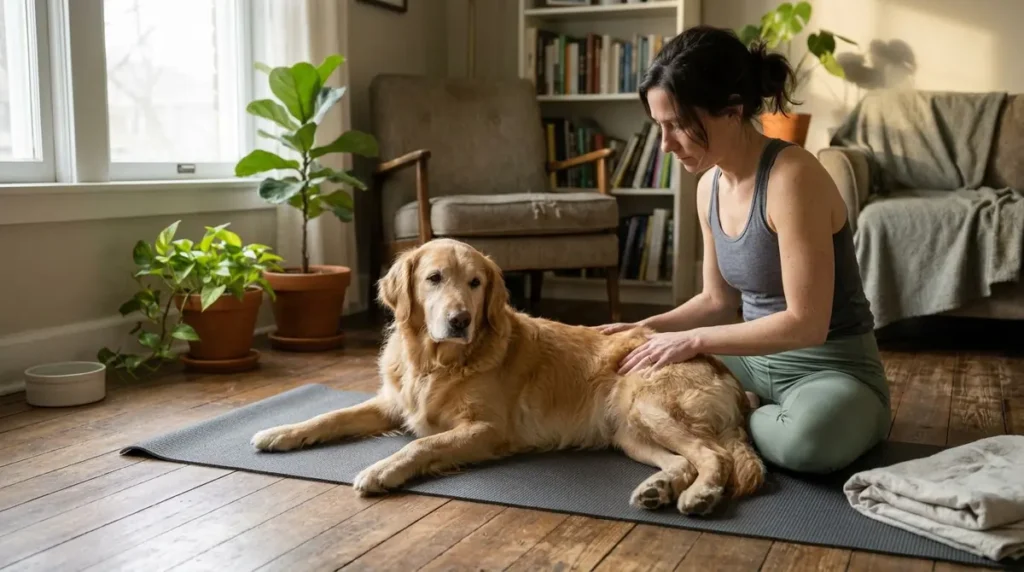
We often think of yoga as something meant exclusively for human wellness, but our canine companions benefit just as much. From hyperactive puppies to aging rescue dogs, participating in structured Yoga sessions can transform your dog’s overall physical and mental health.
1. Relief for Joint Pain and Arthritis
As dogs age, stiffness can make daily walks challenging. Gentle Yoga stretches, paired with warm palm presses along their back and hips, stimulate blood circulation to sore joints. This low-impact movement helps keep senior dogs limber without strain.
2. Natural Stress & Anxiety Reduction
Separation anxiety, loud noises, and routine changes can leave dogs feeling overwhelmed. Yoga teaches dogs how to relax on command by pairing quiet environments, soft music, and steady breathing with soothing touch.
3. Enhanced Socialization and Desensitization
When done in group settings or around new stimuli at home, Yoga teaches your dog to remain calm around gentle handling. Getting used to having their paws, ears, and belly touched during yoga makes future trips to the vet or groomer much smoother.
4. Better Impulse Control and Focus
Holding quiet poses alongside you builds your dog’s patience. Over time, practicing calm stillness on the mat translates to better focus during obedience training.
Key Takeaways
- Gentle stretching supports aging joints and increases circulation.
- The meditative environment calms nervous and hyperactive dogs.
- Touch-focused poses make vet visits and grooming easier.
How to Practice Yoga With Your Dog at Home: A Beginner’s Step-by-Step Guide
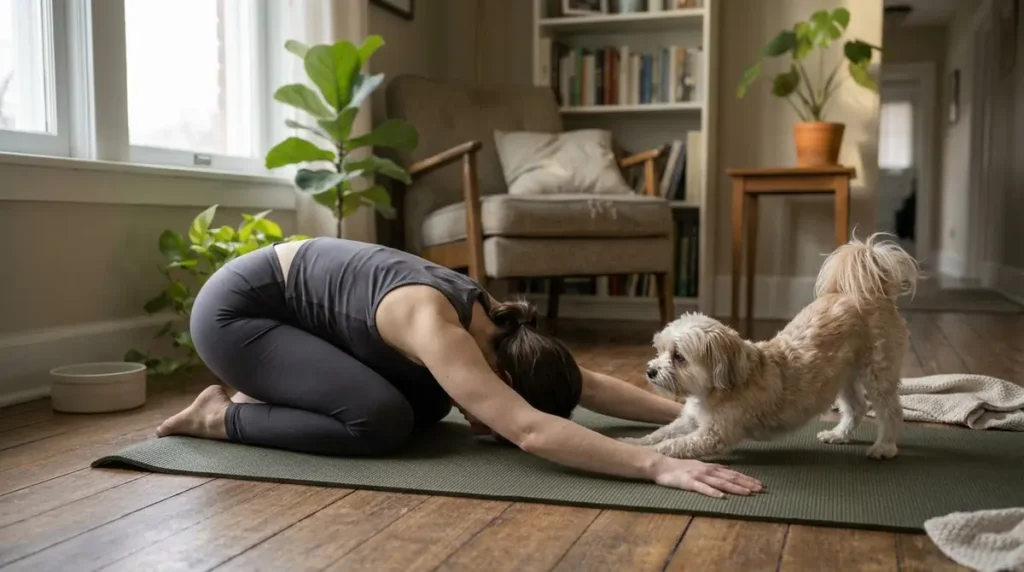
Ready to start practicing Yoga but not sure how to keep your dog from chewing on your yoga mat? You don’t need a professional studio to enjoy dog yoga. With a simple routine and a calm mindset, you can establish an enjoyable home practice today.
Step 1: Set Up a Quiet, Distraction-Free Space
Choose a quiet room away from loud TVs, family foot traffic, or street noise. Roll out your mat and place a comfortable dog bed or soft blanket right next to you so your pup has their own designated spot.
Step 2: Establish the Atmosphere
Lower the lights and play soft instrumental music or soothing nature sounds. Spend 3 to 5 minutes doing deep belly breathing. Your dog will read your calm energy and settle down alongside you.
Step 3: Begin with Beginner-Friendly Poses
- Downward Dog (Adho Mukha Svanasana): Mirror your dog’s natural stretch. Let them sniff your face or sit under you while you hold the pose.
- Seated Heart-to-Hound Mudra: Sit cross-legged, gently pull your dog into your lap or beside you, and place one hand over your heart and the other on your dog’s chest.
- Forward Fold (Uttanasana): As you fold forward, give your dog a gentle chin scratch or back stroke.
Step 4: Never Force Movement
The most important rule of Yoga is consent. If your dog wants to walk away, stretch on their own, or simply sleep on your mat, let them. Forced poses build tension, while voluntary participation builds trust.
Key Takeaways
- Create a low-stimulation environment with music and low lighting.
- Use natural poses that allow effortless interaction.
- Always let your dog control their level of participation.
Yoga for High-Energy & Anxious Dogs: How Mindful Movement Calms Your Pet
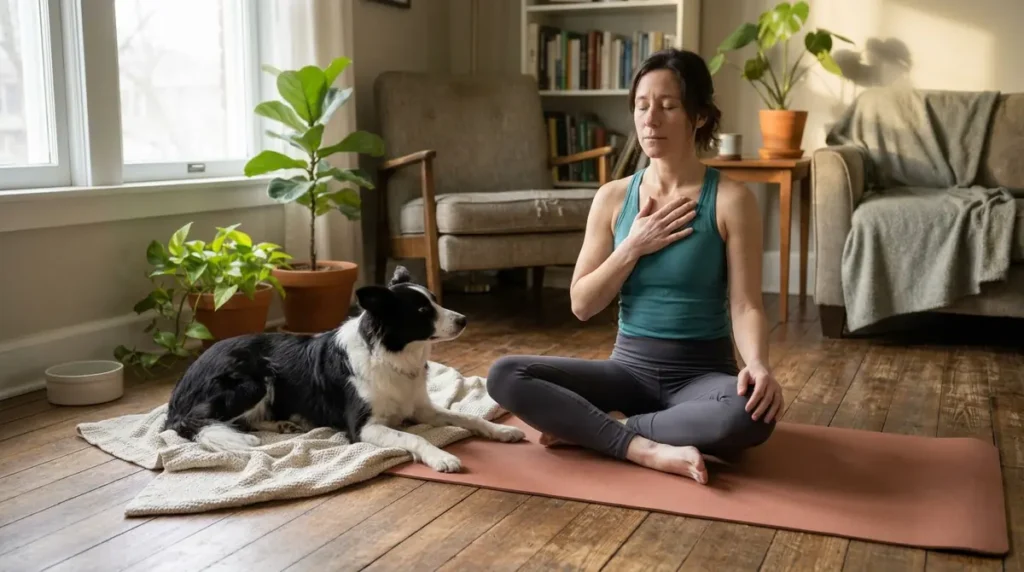
Does your dog bounce off the walls, bark at every shadow, or pace around the house when stressed? High-energy and anxious dogs often struggle to turn off their nervous systems. Yoga serves as a powerful, non-medicated tool to help calm hyperactive canines.
The Science of “Co-Regulation”
Dogs rely heavily on co-regulation—matching their emotional state to their owner’s. When you enter a calm state through yoga and slow, rhythmic breathing, your dog’s nervous system naturally mimics yours.
Burning Mental Energy Over Physical Energy
Physical exercise alone isn’t always enough for high-energy breeds; in fact, over-exercising can sometimes over-stimulate them. Yoga challenges your dog mentally by asking them to be still, focus, and absorb soothing touch. Ten minutes of calm focus can tire out an anxious brain more effectively than a frantic game of fetch.
Incorporating Canine Massage Techniques
During your floor poses, incorporate slow, intentional strokes along your dog’s spine, starting from the crown of their head down to the base of their tail. Use gentle circular motions around their shoulders to release stored physical tension.
Key Takeaways
- Dogs co-regulate with their owner’s calm energy and slow breathing.
- Practicing stillness burns mental energy and lowers hyperactivity.
- Combining stretches with light pet massage relieves built-up tension.
5 Best Yoga Poses to Try With Your Dog (And How to Do Them Safely)
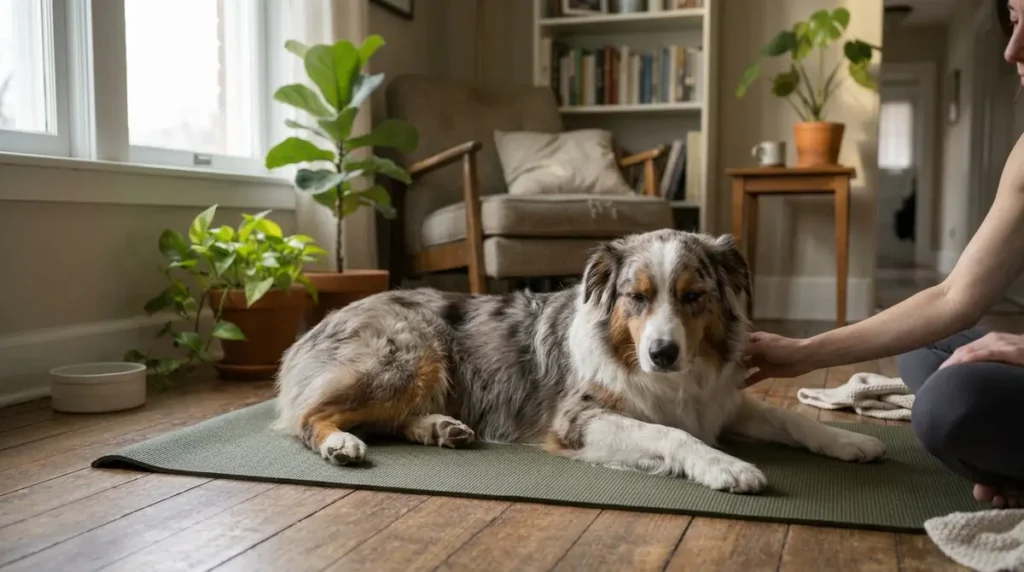
Incorporating your pet into your yoga flow doesn’t require complex acrobatic feats. The best Yoga poses are simple, grounding, and focused on physical connection. Here are 5 safe, beginner-friendly poses you can try today.
| Pose Name | Human Benefit | Dog Benefit | How to Execute |
| Downward-Facing Dog | Stretches hamstrings, calves, and shoulders. | Encourages natural spinal stretching. | Form a V-shape; allow your dog to mirror you or rest underneath. |
| Easy Pose (Sukhasana) | Opens hips and improves posture. | Lowers heart rate and promotes calm. | Sit cross-legged; pull your dog close and rest your hand on their chest. |
| Savasana (Corpse Pose) | Full body relaxation and stress release. | Promotes deep sleep and relaxation. | Lie flat on your back; let your dog rest against your torso or side. |
| Child’s Pose (Balasana) | Gently stretches lower back and hips. | Offers reassurance through close proximity. | Kneel and fold forward; place your hands out and gently pet your dog’s back. |
| Bridge Pose (Setu Bandhasana) | Opens chest and strengthens glutes/core. | Provides a safe elevated perch for small dogs. | Lie on your back, lift hips, and let your small dog sit comfortably on your pelvis. |
Safety First Checklist
- Weight Awareness: Never put full weight on your dog or ask small dogs to lift heavy limbs.
- Mat Traction: Ensure your mat is non-slip so your dog doesn’t slide during movement.
- Listen to Cues: If your dog whines, pulls away, or pants excessively, end the session immediately.
Key Takeaways
- Focus on poses that allow easy physical contact without awkward strain.
- Prioritize safety by adapting poses to your dog’s size and comfort level.
- Use Savasana as a joint relaxation exercise at the end of every practice.
Yoga for Senior Dogs: Supporting Aging Joints and Mobility Through Pet Yoga
Watching our beloved dogs grow old can be tough. Arthritis, stiffness, and reduced energy often make traditional fetch games or long runs impossible. Yoga offers a gentle, therapeutic alternative that keeps aging dogs active, comfortable, and happy.
Supporting Joint Health Without Impact
High-impact activities can worsen joint inflammation in older dogs. Yoga emphasizes low-impact, passive stretching where you gently guide your dog’s limbs through their natural range of motion. This helps lubricate stiff joints and maintain flexibility without causing fatigue.
Enhancing Circulation and Muscle Maintenance
Lack of movement leads to muscle wasting (atrophy) in senior pets. Light massages combined with supported standing poses stimulate blood flow, deliver oxygen to tired tissues, and help maintain muscle tone.
Mental Stimulation for Older Pets
Senior dogs often get bored when their physical limits prevent them from exploring the world like they used to. Engaging in a slow Yoga routine gives them meaningful interaction, mental engagement, and quality time with you.
Key Takeaways
- Low-impact passive stretching keeps joints lubricated without pain.
- Gentle massage improves circulation and helps prevent muscle loss.
- Provides essential mental enrichment for less mobile pets.
Yoga vs. Traditional Yoga: Why Adding Your Dog Changes the Whole Practice
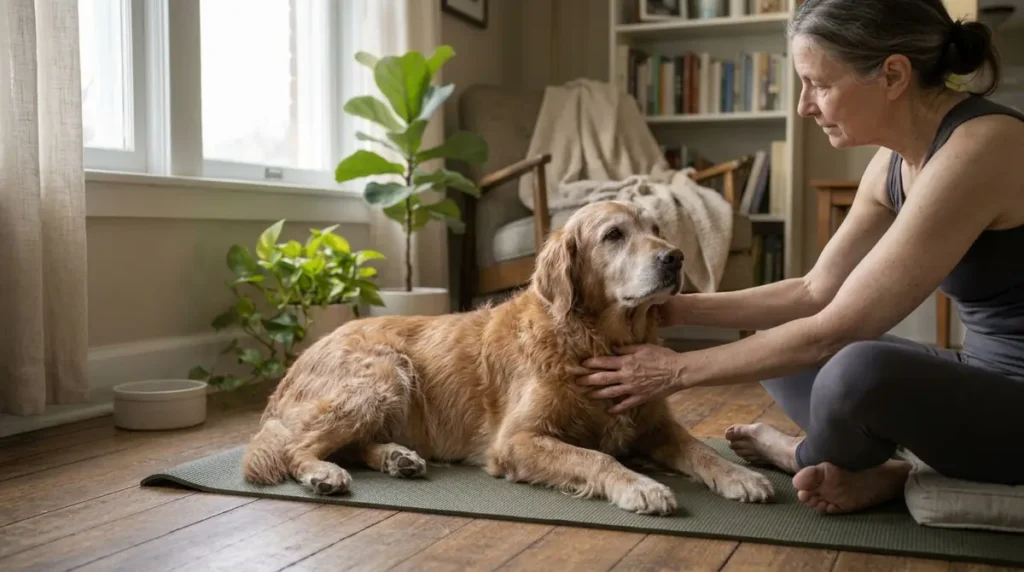
Purists might ask: Isn’t yoga supposed to be quiet, serious, and distraction-free? Why bring a dog onto the mat? While traditional yoga focuses on strict alignment and internal meditation, Yoga transforms your practice into an exercise in playfulness, presence, and unconditional love.
1. Embracing Imperfection and Playfulness
Traditional yoga can sometimes feel overly rigid or quiet. When your dog licks your face mid-plank or rolls over for a belly rub during Sun Salutations, it reminds you to laugh and let go of perfection.
2. Live in the Present Moment
Dogs are natural masters of mindfulness—they don’t worry about yesterday’s work emails or tomorrow’s to-do list. Watching your dog stretch and breathe anchors you directly in the present moment better than almost any traditional meditation exercise.
3. Turning Exercise Into Quality Time
Instead of choosing between taking care of your health or giving your dog attention after a busy day, Yoga lets you do both simultaneously. It turns your daily self-care routine into a shared activity that benefits both you and your pet.
Key Takeaways
- Yoga shifts your mindset from perfection to playfulness and presence.
- Pets serve as natural anchors for mindfulness and staying present.
- Combines personal self-care with quality time for your pet.