

Masters of the Thin Air: The 7 Animals That Rule Earth’s Most Extreme Altitudes
Imagine standing on the summit of Mount Everest. The air is freezing, violent winds tear across the exposed rock, and every breath yields less than half the oxygen available at sea level. For humans, this is the “Death Zone”—a region where the human body slowly consumes itself to survive.
Yet, where human biology fails, nature thrives.
From birds cruising at commercial jetliner cruising altitudes to tiny spiders hunting in frozen mountain cracks, Earth’s high-altitude survivors have evolved remarkable evolutionary adaptations. These 7 creatures do not merely endure extreme elevations; they rule them.
The Invisible Enemies: What Happens Up High?
To understand how extraordinary these animals are, consider the physical wall life hits above 10,000 feet:
- Hypoxia (Oxygen Deprivation): Atmospheric pressure drops as altitude increases. Blood struggles to absorb and distribute oxygen to tissues.
- Sub-Zero Temperatures: High altitudes feature rapid heat loss, frozen liquid water, and brutal wind chill.
- Blistering UV Radiation: The thinner atmosphere offers less protection from solar radiation.
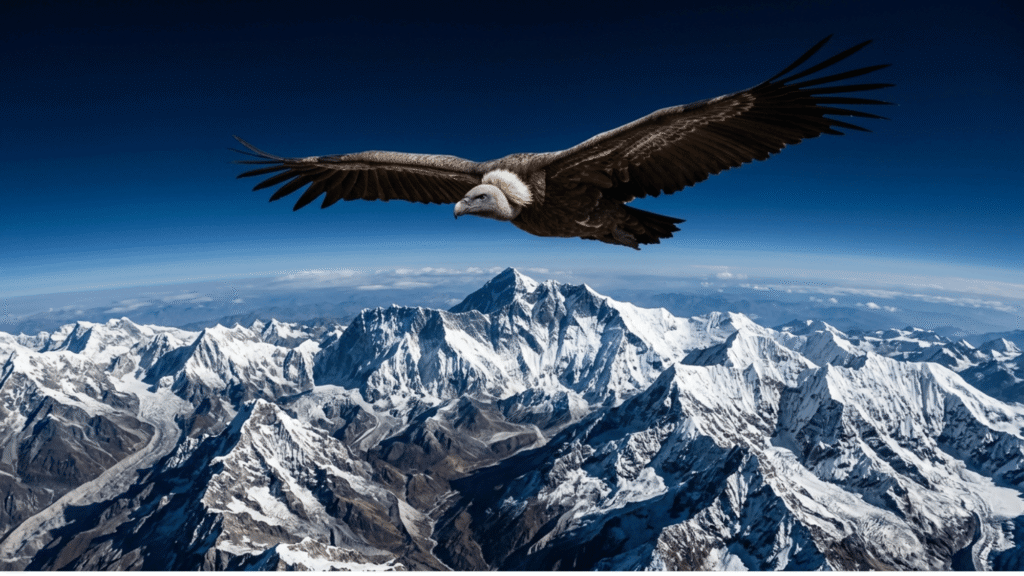
- Rüppell’s Vulture: The Stratospheric Soarer
- Peak Elevation: 37,000 feet (11,300 meters)
- Location: Central and Eastern Africa
In 1973, a commercial airliner flying over West Africa suffered an engine collision at 37,000 feet—the altitude reserved for long-haul passenger jets. The culprit was a Rüppell’s vulture. At this elevation, temperatures plummet far below freezing and oxygen levels are fatally sparse. The vulture possesses a specialized genetic variant of hemoglobin that binds oxygen far more tightly than that of other animals, allowing its blood to extract every available oxygen molecule from thin air.
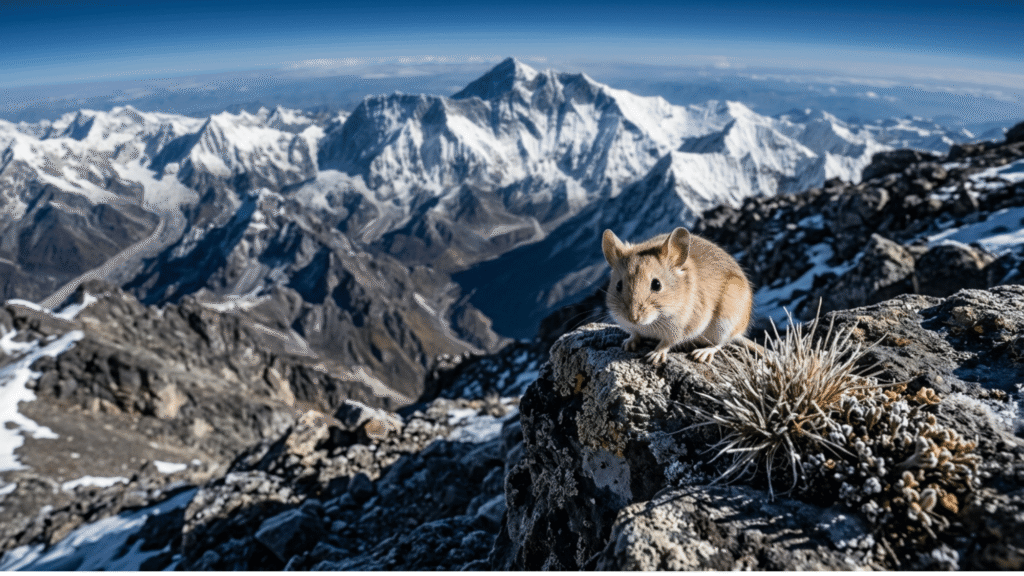
- Yellow-Rumped Leaf-Eared Mouse: The Highest Mammal on Earth
- Peak Elevation: 22,110 feet (6,739 meters)
- Location: Volcano summit of Llullaillaco, Andes
Scientists long believed that warm-blooded mammals could not permanently survive above 20,000 feet. That rule was rewritten when researchers discovered a living yellow-rumped leaf-eared mouse (Phyllotis xanthopygus rupestris) at the windswept, volcanic summit of Llullaillaco in the Andes. Surviving in a landscape resembling the surface of Mars, this tiny rodent rewired its metabolic processes to maximize fuel efficiency in ultra-low oxygen environments.
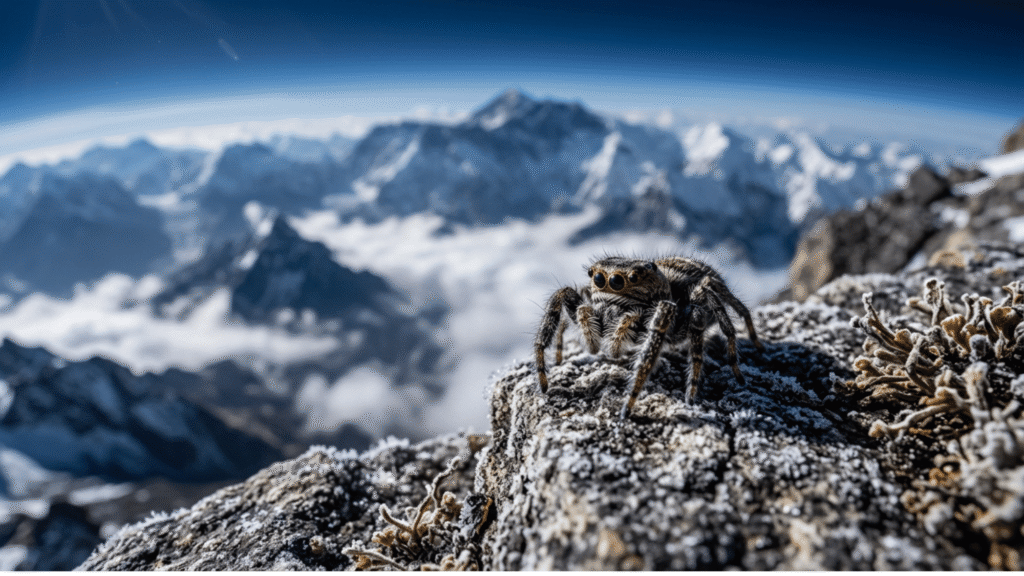
- Himalayan Jumping Spider: The Resident Above the Clouds
- Peak Elevation: 22,000 feet (6,700 meters)
- Location: Mount Everest
While majestic birds and heavy mammals grab most headlines, the permanent resident living highest on Mount Everest is the Himalayan jumping spider (Euophrys omnisuperstes). Nestled in tiny rocky crevasses above the snowline, these arachnids subsist on a unique wind-blown diet—eating stray insects and flies carried up the mountain by thermal updrafts.
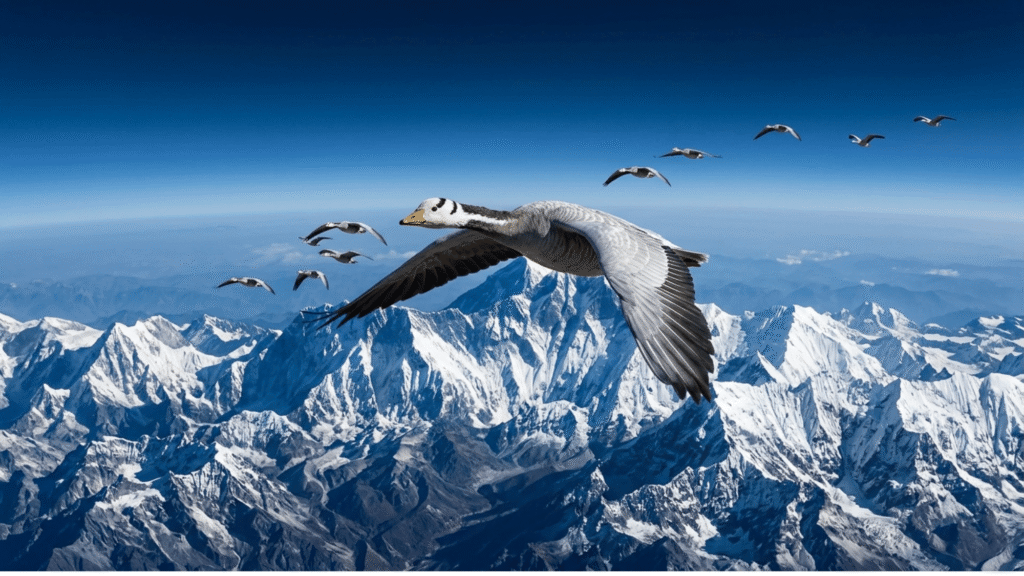
- Bar-Headed Goose: The Himalayan Marathoner
- Peak Elevation: 21,000+ feet (6,400+ meters)
- Location: Central Asia / Himalayas
Every year, thousands of bar-headed geese migrate over the towering peaks of the Himalayas. While human mountaineers require months of acclimatization, these birds cross in a single day through power-flapping flight. They hyperventilate rapidly without altering their blood chemistry or passing out—a feat that would cause severe dizziness or fainting in humans.
- Large-Eared Pika: The High-Altitude Harvester
- Peak Elevation: 20,100 feet (6,130 meters)
- Location: Mountainous Central Asia and the Himalayas
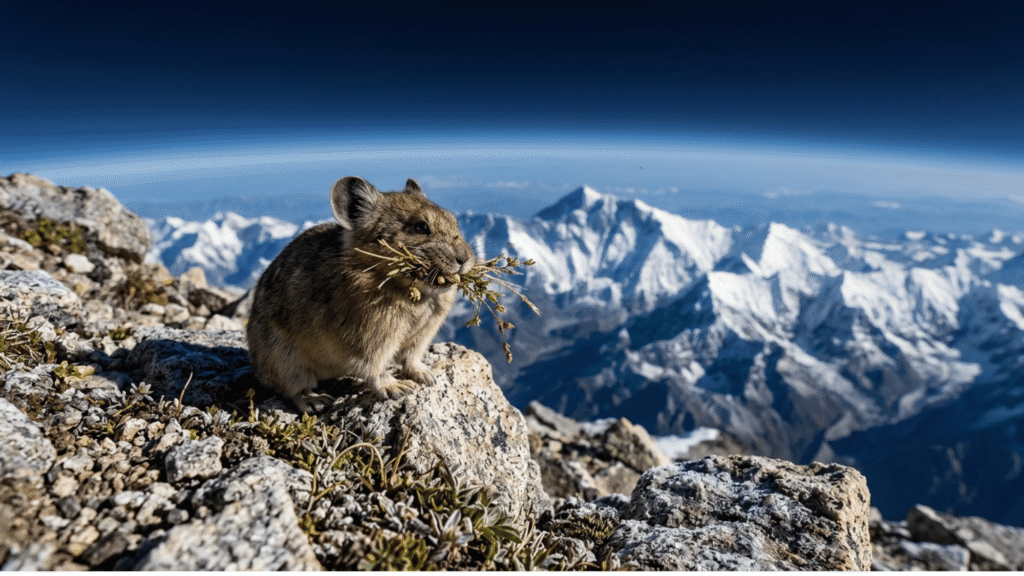
A close relative of rabbits and hares, the large-eared pika (Ochotona macrotis) thrives in the desolate rocky scree fields of the high Himalayas. Facing freezing conditions and severe hypoxia, the pika relies on genetic variations that optimize metabolic energy production inside its cells. It spends short alpine summers harvesting plant material and caching dry grass piles inside rock crevices to fuel its winter survival.
- Wild Yak: Built Like a Mountain Tank
- Peak Elevation: 20,000 feet (6,000 meters)
- Location: Tibetan Plateau
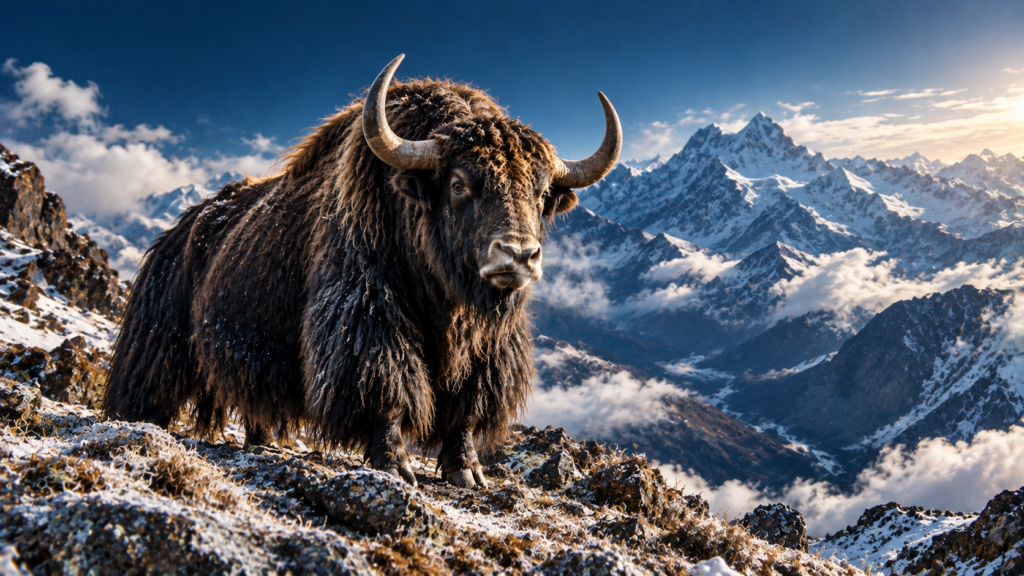
The wild yak is the heavyweight monarch of high-altitude mammals. It overcomes cold and low oxygen through brute-force anatomical engineering:
- Massive Heart and Lungs: Disproportionately large organs circulate oxygenated blood efficiently.
- High Red Blood Cell Count: Their blood contains smaller, more abundant red blood cells for rapid gas exchange.
- Thermal Armor: A dense under-fur beneath long, shaggy outer hair prevents heat loss down to -40°C.
- Liolaemus aff. tacnae: The World’s Highest Reptile
- Peak Elevation: 17,720 feet (5,400 meters)
- Location: Andes Mountains
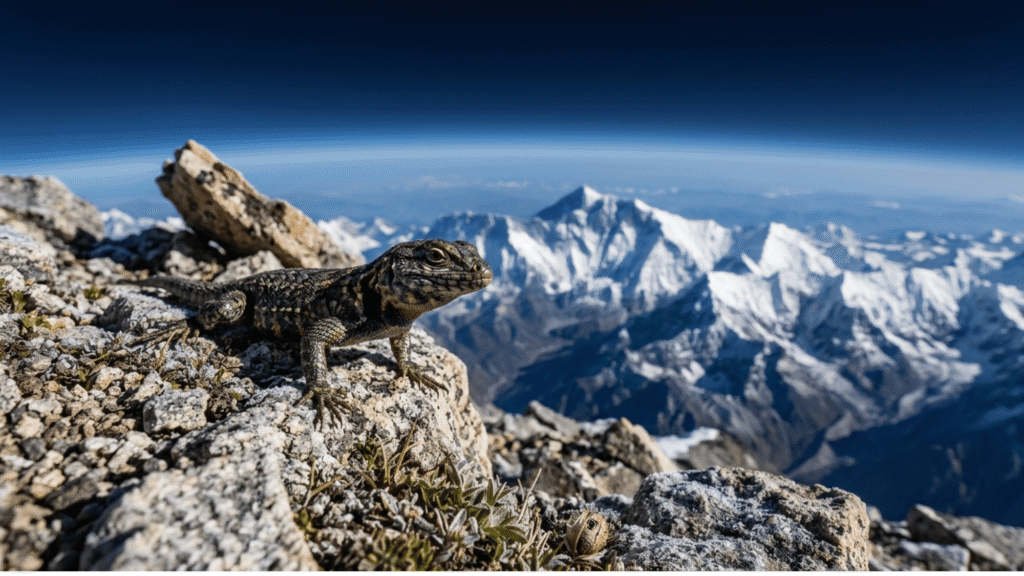
Reptiles are cold-blooded (ectothermic) and typically depend on environmental warmth to function, making extreme heights almost impossible for them. However, the Liolaemus aff. tacnae lizard holds the ultimate altitude record for reptiles. To survive freezing temperatures and intense UV rays, this lizard basks on sun-warmed rocks to boost its core temperature and employs specialized skin pigmentation to shield against UV radiation.
Comparison Table: Survival at the Edge
| Animal | Elevation Record | Primary Adaptation |
| Rüppell’s Vulture | 37,000 ft | High-affinity hemoglobin variant |
| Yellow-Rumped Mouse | 22,110 ft | Specialized low-oxygen cellular metabolism |
| Himalayan Jumping Spider | 22,000 ft | Wind-blown insect diet reliance |
| Bar-Headed Goose | 21,000 ft | High capillary density & hyperventilation control |
| Large-Eared Pika | 20,100 ft | High-altitude metabolic gene modifications |
| Wild Yak | 20,000 ft | Enlarged heart/lungs & dense dual-coat fur |
| Liolaemus Lizard | 17,720 ft | Basking thermoregulation & UV skin protection |
Conclusion
These 7 extreme altitude survivors demonstrate the astounding boundaries of evolutionary biology. When faced with environmental conditions that would kill a human within hours, nature rewires lungs, reshapes blood proteins, and redefines the limits of life itself.






5