

Best Dog Beds 2026: A Comfortable Bed for Every Dog
Dogs spend a significant part of their day sleeping and resting, so a comfortable dog bed is much more than a place for your pet to lie down. The right bed can give your dog a dedicated space to relax, provide cushioning and support, and make their sleeping area more comfortable.
However, choosing a dog bed can be surprisingly difficult. There are orthopedic beds, memory foam beds, bolster beds, donut beds, cooling beds, elevated beds, washable beds, crate beds, and many other designs. What works perfectly for one dog may not be suitable for another.
The best dog bed for your pet depends on several factors, including their size, age, sleeping position, activity level, coat type, chewing habits, and personal preferences.
A senior Labrador may benefit from a supportive orthopedic bed, while a small dog that loves curling up may prefer a soft donut bed. A dog that gets hot easily may be happier on a breathable elevated or cooling bed.
This guide covers the most popular types of dog beds in 2026 and explains what to look for before buying one.
How to Choose the Best Dog Bed for Your Dog
Before looking at individual bed types, consider your dog’s everyday habits.
Ask yourself:
- How large is your dog?
- Does your dog sleep curled up or stretched out?
- Does your dog prefer soft or firm surfaces?
- Is your dog young, adult, or senior?
- Does your dog chew or scratch their bedding?
- Does your dog get hot while sleeping?
- Is your dog prone to accidents or muddy paws?
- Will the bed be used indoors, outdoors, or in a crate?
- How easy does the cover need to be to wash?
Answering these questions can narrow down your options considerably.
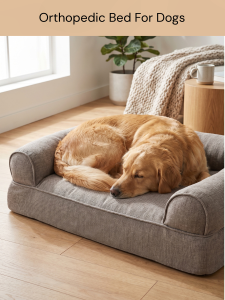
- Orthopedic Dog Beds
Orthopedic dog beds are designed to provide additional support and cushioning. They are particularly popular with senior dogs, larger breeds, and dogs that prefer a supportive sleeping surface.
Many orthopedic beds use high-density foam or multiple layers of foam. Instead of allowing the dog to sink completely into the bed, supportive foam can distribute body weight across a larger area.
Why Choose an Orthopedic Dog Bed?
An orthopedic-style bed may be worth considering for:
- Senior dogs
- Large and heavy breeds
- Dogs that prefer firmer support
- Dogs that spend many hours resting
- Dogs with reduced mobility
- Dogs that need a spacious sleeping surface
A good orthopedic bed should provide a balance between cushioning and support. Extremely soft isn’t always better, particularly for larger dogs.
What to Look For
When shopping for an orthopedic bed, pay attention to:
- Foam thickness
- Foam density and quality
- Overall bed construction
- Weight capacity
- Non-slip bottom
- Removable cover
- Washable cover
- Water-resistant or waterproof inner liner
A waterproof inner liner can be especially useful because it helps protect the foam if an accident or spill occurs.
Important: A dog bed should not be considered a substitute for veterinary treatment. If your dog has persistent pain, difficulty standing, or mobility problems, speak with a veterinarian.
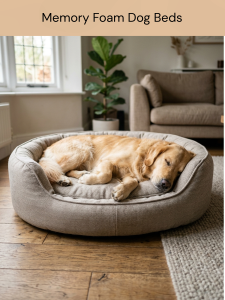
- Memory Foam Dog Beds
Memory foam dog beds are another popular choice for dogs that enjoy a cushioned sleeping surface.
Memory foam is designed to respond to pressure from the dog’s body. Depending on the quality and construction of the mattress, it can provide a supportive surface while allowing the dog to settle comfortably.
Memory foam beds can be especially appealing for larger dogs because they need a bed that can handle more body weight without quickly becoming flat.
What Makes a Good Memory Foam Bed?
Don’t judge a memory foam bed by appearance alone. Look at:
- Foam thickness
- Foam density
- Number of foam layers
- Weight capacity
- Cover quality
- Edge construction
- Base stability
A thin layer of memory foam placed over inexpensive filling may not provide the same support as a well-constructed multi-layer mattress.
For larger dogs, choose a bed specifically designed to support their weight.
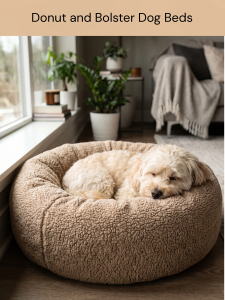
- Donut and Bolster Dog Beds
Some dogs naturally prefer to curl into a ball when they sleep. For these dogs, a donut or bolster bed can provide a cozy sleeping environment.
These beds typically have raised edges around the sleeping area. Dogs can lean against the sides, rest their heads on the raised edge, or curl up inside the center.
Best For
Donut and bolster beds can work particularly well for:
- Small dogs
- Medium-sized dogs
- Dogs that sleep curled up
- Dogs that like soft surfaces
- Dogs that enjoy resting against something
Choosing the Correct Size
Size matters more than you might expect.
Your dog should be able to curl up comfortably while still having enough room to change position. If your dog frequently stretches out while sleeping, consider choosing a larger bed even if they usually curl up.
Measure your dog from the nose to the base of the tail and use the manufacturer’s size chart rather than relying only on breed recommendations.
- Elevated Dog Beds
Elevated dog beds have a sleeping surface raised above the floor using a frame or legs.
Because air can circulate underneath the sleeping surface, these beds can be useful in warm environments. They are also easy to clean around and can be useful for outdoor areas.
Advantages of Elevated Beds
- Good airflow underneath
- Keeps the dog off the floor
- Easy to clean around
- Useful for patios and outdoor areas
- Often lightweight
- Can be suitable for warm weather
Elevated beds can also be practical for dogs that tend to carry dirt, grass, or moisture onto traditional fabric beds.
When buying one, make sure the frame is stable and strong enough for your dog’s weight. The fabric should also be durable enough to withstand regular use.
- Cooling Dog Beds
Some dogs become uncomfortable in warm weather, particularly dogs with thick coats or dogs living in hot climates.
Cooling dog beds are designed to provide a cooler surface than traditional plush beds. Depending on the design, they may use cooling gel, pressure-activated materials, breathable fabric, or other cooling construction.
Best For
Cooling beds may be useful for:
- Dogs that overheat easily
- Thick-coated dogs
- Dogs living in warm climates
- Summer use
- Dogs that prefer cooler sleeping surfaces
Not every dog will like a cooling bed. Some dogs prefer soft, warm bedding, so your pet’s individual preference still matters.
If using a cooling mat or gel-based product, regularly inspect it for punctures or damage, especially if your dog likes to chew.
- Washable Dog Beds
For many owners, one of the most important features of a dog bed is not how soft it is—it’s how easy it is to clean.
Dogs can bring dirt, hair, moisture, and outdoor debris onto their beds. Over time, bedding can also develop odors.
A removable, machine-washable cover can make regular cleaning much easier.
Look For
- Removable cover
- Machine-washable fabric
- Durable zipper
- Water-resistant inner liner
- Easy-to-clean surfaces
- Replacement covers
If your dog is particularly messy, a bed with a washable cover and protected foam insert can save a lot of time.
Always follow the manufacturer’s washing instructions to prevent shrinking or damaging the fabric.
- Crate Dog Beds
If your dog sleeps or rests inside a crate, a crate-specific bed can make the space more comfortable.
Crate beds are generally designed to fit inside standard crate dimensions. Many are relatively thin so they don’t take up too much of the available space.
A good crate bed should leave enough room for your dog to stand, turn around, and lie down comfortably.
What to Consider
Choose a crate bed that:
- Fits the crate properly
- Has a non-slip bottom
- Is easy to wash
- Doesn’t take up excessive space
- Matches your dog’s sleeping preferences
For puppies that are still being house-trained, a washable and water-resistant design can be particularly practical.
- Waterproof Dog Beds
Waterproof or water-resistant dog beds can be useful for dogs that frequently get wet, have accidents, or spend time outdoors.
A common design is a washable outer cover combined with a water-resistant liner around the inner cushion.
This helps protect the filling or foam from moisture.
Best For
Water-resistant beds can be especially useful for:
- Puppies
- Senior dogs
- Dogs prone to accidents
- Dogs that enjoy swimming
- Outdoor use
- Rainy or muddy environments
Be sure to distinguish between water-resistant and waterproof. These terms are not always interchangeable, so check the manufacturer’s specifications.
- Travel Dog Beds
If you frequently travel with your dog, having a dedicated travel bed can make unfamiliar environments more comfortable.
Travel beds are generally designed to be lightweight, portable, and easy to fold or roll.
Some can be placed in cars, hotels, tents, or vacation rentals.
Useful Features
Look for:
- Lightweight construction
- Foldable design
- Carrying handle or bag
- Washable cover
- Durable fabric
- Compact storage size
A familiar bed can also give your dog a consistent place to settle when you’re away from home.
- Puppy Dog Beds
Puppies have different requirements from adult dogs. They may chew, scratch, have accidents, or simply outgrow their bed quickly.
For a young puppy, a practical bed may be more important than an expensive one.
Choose a bed that is:
- Easy to wash
- Durable
- Appropriately sized
- Comfortable
- Free from easily detachable parts
Avoid beds with loose pieces that could become a choking hazard if your puppy is an enthusiastic chewer.
Because puppies grow quickly, don’t necessarily buy an extremely expensive bed based on their current size. Check the manufacturer’s recommended dimensions and consider how quickly your puppy is expected to grow.
- Beds for Large Dogs
Large and giant breeds need beds that can handle more weight and provide enough room to stretch out.
A bed that looks large in a product photograph may still be too small for a Great Dane, Mastiff, Saint Bernard, or other giant breed.
When shopping for a large dog, pay attention to:
- Maximum weight capacity
- Mattress thickness
- Sleeping surface dimensions
- Foam quality
- Frame strength
- Edge durability
A large dog should be able to lie down naturally without their head or legs hanging off the mattress.
- Beds for Small Dogs
Small dogs often enjoy beds with soft materials and raised edges because they can provide a cozy sleeping area.
However, avoid choosing a bed based solely on the dog’s breed. Individual dogs have different preferences.
A small dog that sleeps stretched out may prefer a flat mattress, while another may spend most of the night curled inside a donut-style bed.
The best choice depends on how your dog actually sleeps.
How to Choose the Right Dog Bed Size
Choosing the correct size is one of the most important parts of buying a dog bed.
A useful approach is to measure your dog while they are lying in their natural sleeping position.
Measure:
- From the nose to the base of the tail.
- Add some extra space for movement.
- Compare the measurement with the manufacturer’s sleeping-surface dimensions.
If your dog regularly stretches out, measure them while they’re fully stretched rather than curled up.
When in doubt between two sizes, the larger option is often worth considering—provided the bed still fits comfortably in the space where you intend to use it.
What Material Is Best for a Dog Bed?
Dog beds are made from many different materials, and each has advantages.
Foam
Foam can provide good cushioning and support. High-quality foam is often used in orthopedic and memory foam beds.
Polyester Filling
Polyester-filled beds can be soft and lightweight. They are common in plush and bolster-style beds.
Cotton and Fabric Covers
Cotton and other fabric covers can feel comfortable but should be durable enough for regular washing.
Waterproof Materials
Water-resistant materials are useful when accidents, wet paws, or outdoor use are concerns.
Breathable Mesh
Mesh can be useful in elevated beds because it allows air to circulate around the sleeping surface.
What Features Should You Look for in a Dog Bed?
Before buying, consider these practical features:
Removable Cover
A removable cover is one of the most useful features because it allows you to wash the outer fabric without washing the entire bed.
Non-Slip Bottom
A non-slip base can help keep the bed from sliding across smooth floors when your dog gets on or off.
Waterproof Liner
A waterproof liner can protect foam or filling from accidents and spills.
Durable Construction
Look for reinforced seams and strong materials if your dog scratches, digs, or chews.
Easy Maintenance
If a bed requires complicated cleaning, you may be less likely to clean it regularly. Simple maintenance is a major advantage.
How Often Should You Wash a Dog Bed?
The ideal cleaning schedule depends on your dog’s habits and the manufacturer’s instructions.
Dogs that spend a lot of time outdoors may need more frequent cleaning than indoor dogs.
As a general routine:
- Remove loose hair regularly.
- Wash removable covers according to the manufacturer’s instructions.
- Clean accidents promptly.
- Inspect the bed for damage.
- Wash or clean the entire bed when appropriate for its materials.
Regular cleaning can help keep your dog’s sleeping area fresh and comfortable.
Common Mistakes to Avoid When Buying a Dog Bed
Choosing the Wrong Size
A bed that is too small can prevent your dog from stretching and changing positions comfortably.
Choosing Appearance Over Function
A beautiful bed isn’t necessarily a comfortable or practical one. Consider support, durability, cleaning, and size before design.
Buying Extremely Soft Bedding for Every Dog
Some dogs prefer plush beds, while others need a more supportive surface. Your dog’s sleeping style should guide your decision.
Ignoring Cleaning Requirements
A bed that cannot be cleaned easily may become frustrating over time.
Forgetting Your Dog’s Chewing Habits
If your dog is a strong chewer, delicate fabrics, loose decorations, or easily accessible filling may not be the best choice.
How Many Dog Beds Does Your Dog Need?
You don’t necessarily need several beds, but having more than one can be useful.
For example, you might keep:
- One bed in the bedroom
- One in the living room
- One in a crate
- One portable bed for travel
Having multiple sleeping locations allows your dog to rest comfortably wherever the family spends time.
Best Dog Bed by Sleeping Style
Different sleeping positions can help you decide which design to choose.
| Your Dog’s Sleeping Style | Bed Type to Consider |
| Sleeps curled up | Donut or bolster bed |
| Sleeps stretched out | Large flat mattress |
| Likes firm support | Orthopedic or supportive foam bed |
| Likes soft surfaces | Plush or cushioned bed |
| Gets hot easily | Elevated or cooling bed |
| Sleeps in a crate | Crate-specific bed |
| Travels frequently | Portable travel bed |
| Spends time outdoors | Elevated or durable outdoor bed |
| Frequently gets wet | Water-resistant bed |
Final Thoughts
The best dog bed in 2026 isn’t necessarily the most expensive or most popular model. It is the bed that matches your dog’s individual needs and sleeping habits.
For senior or larger dogs, a supportive orthopedic or memory foam bed may be worth considering. Dogs that love to curl up may prefer a donut or bolster design, while dogs that get warm easily may be more comfortable on an elevated or cooling bed.
For puppies and messy dogs, easy cleaning and durable construction may matter more than luxury materials. If you travel frequently, a lightweight portable bed can also be a practical addition.
Before buying, focus on the things that matter most: correct size, comfort, support, durability, safety, and ease of cleaning.
A well-chosen dog bed gives your pet a dedicated place to rest and gives you peace of mind that their sleeping space is practical, comfortable, and suited to their everyday needs.